Oregon Hemp Industry: Regulations
Oregon’s hemp program is regulated by Oregon Revised Statute 571.260-571.348 and Oregon Administrative Rules Chapter 603 Division 48.
Oregon first authorized hemp cultivation in 2009, however the first hemp grower was licensed by the state’s Department of Agriculture only in 2015, after Congress expressly authorized states to allow hemp cultivation. The state requires separate licenses for cultivation and processing hemp.
Regarding Oregon’s new testing requirements that took effect in October 2017, hemp producers are subject to the testing requirements, with 100% of registered hemp fields tested for THC content. As of January 1, 2020, rules for pre-harvest testing have changed so that the 0.3% THC content limit is for total THC and not just delta9-THC. ORELAP (Oregon Environmental Laboratory Accreditation Program) has already accredited laboratories who are licensed with the Oregon Liquor Control Commission (OLCC) can conduct pre-harvest testing of industrial hemp.
All hemp products intended for human consumption – eating/drinking, smoking or applications to skin/hair – must be tested according to the same standards as established for cannabis in OAR 333-007-0300 to 333-007-0500 and OAR 333-064.
In January 2022, the U.S. Department of Agriculture (USDA) approved the Oregon Department of Agriculture’s (ODA) plan to regulate hemp production statewide. This approval allows the state through ODA to continue as the primary regulator of hemp production in Oregon. All Oregon hemp growers and handlers must first have their license approved before starting hemp production.
On July 1, 2024, Oregon introduced a new hemp vendor license which allows to operate as a hemp retailer or wholesaler.
It is possible for hemp growers and handlers licensed by the ODA, to sell their products to OLCC-licensed cannabis businesses. In order to do this, they must obtain a hemp certificate from the OLCC. A hemp grower with an OLCC hemp certificate can transfer “harvested industrial hemp” – hemp that has not been processed or only minimally processed, and does not include smokable hemp flower – to OLCC licensees. A hemp handler with an OLCC hemp certificate can transfer “harvested industrial hemp” as well as hemp products to OLCC licensees.
In October 2021, Oregon State University’s Global Hemp Innovation Center received a $10 million grant from the U.S. Department of Agriculture to define economic feasibility for hemp in the western United States. The five-year project is funded by the USDA National Institute of Food and Agriculture’s Sustainable Agricultural Systems grant program. In March 2024, Oregon State University received another grant of $10 million, in partnership with 13 Native American Tribes, to drive economic development in the western United States by developing manufacturing capabilities for hemp products and materials.
Hemp Licenses Available in Oregon
“Grower” means a person, joint venture or cooperative that produces industrial hemp and includes a person growing for research purposes.
Application fee: $250
Hemp grow site fee: $500
License expiration date: December 31 each year.
“Handler” means a person, joint venture or cooperative that receives industrial hemp for processing into industrial hemp commodities, products, or agricultural hemp seed; processes industrial hemp commodities or products into hemp items; or trims industrial hemp; or packages hemp items.
Starting January 1, 2023, if you work with hemp in any way, whether you process the raw plant material into products or process hemp-derived cannabinoids, you need a handler license.
Application fee: $1,300
License expiration date: December 31 each year.
A cannabis processor licensed under ORS 475C.085 with a hemp endorsement as described in OAR 845-025-3210 from the OLCC can apply for a handler license by reciprocity.
Application fee: $875
“Agricultural hemp seed producer” means a person who produces agricultural hemp seed or processes industrial hemp into agricultural hemp seed. Only a grower licensed with the Department may produce agricultural hemp seed. Only a handler licensed with the Department may process agricultural hemp seed. An applicant may apply for a grower or handler license at the same time that the applicant applies for a license as an agricultural hemp seed producer.
Application fee: $500
License expiration date: December 31 each year.
“Vendor” means a person, including a retailer or wholesaler, that stores, transfers, or sells industrial hemp or hemp items for resale to another person, including to other vendors, wholesalers or consumers.
Application fee (per site): $100
License is valid from July 1 – June 30.
A vendor license is not required for:
- A licensed grower, handler, or agricultural hemp seed producer if the licensee first notifies the ODA of the location where the industrial hemp or hemp items that the licensee has produced or processed are going to be stored, transferred, or sold in the license application or on another form provided by the Department.
- A person facilitating the sale or transfer of hemp or hemp items by connecting sellers and buyers, provided that they do not store the hemp or hemp items at any time.
- A person transporting hemp or hemp items, provided that they do not store store the hemp or hemp items at any time other than as necessary for transportation or delivery.
An OLCC hemp certificate allows ODA-licensed hemp growers and handlers to sell their products to OLCC-licensed cannabis businesses.
Application fee: $250
Certificate fee: $1,000
To apply for a hemp license, the applicant must submit to the ODA:
- A complete license application on a form provided by the ODA, which shall include the following information:
- The name, legal type of applicant.
- Contact information of the applicant.
- For business entities, principal place of business for licensee, Oregon Secretary of State registry number, names of all key participants, employer identification number, and contact information.
- A primary contact person.
- The address of each grow site, handling site, vendor site or the facility used for growing or processing industrial hemp agricultural seed.
- A complete grow site application on a form provided by the ODA for each proposed grow site (if applicable).
- All applicable fees as described in OAR 603-048-0700.
- Consent to a criminal records check by fingerprint identification for the applicant or if the applicant is a legal entity, submit a consent for every key participant in the applicant entity.
- An informed consent form prescribed by the ODA if the applicant does not own the premises where the grow site will be located.
- Documentation of lawful participation in a pilot program prior to December 20, 2018, if the applicant or any key participant is disqualified due to a felony conviction relating to a controlled substance within the last ten years from the date of application but asserts the convicted individual was growing hemp lawfully under a pilot program authorized by Section 7606 of the Agricultural Act of 2014 before December 20, 2018.
- Any other documents or information requested by the ODA.
The process for handler licensure by reciprocity is different. The applicant must submit the following to the ODA:
- A complete reciprocity handler licensure application on forms provided by the ODA.
- A copy of the cannabis processor’s current license and hemp endorsement.
- All applicable fees as described in OAR 603-048-0700.
- Any other forms or documents required by the ODA.
A person with a current valid license may apply for a renewal license by submitting a complete renewal application and all applicable fees to the ODA by no later than December 8 (for hemp grower, handler or agricultural hemp seed producer licensees) and no later than June 30 (for hemp vendor licensees) of the current license year.
Oregon Hemp Industry: Stats and Projections
According to data from the ODA, initially only 105 acres were licensed for growing hemp in 2015 but this number quickly rose to 11,552 acres in 2018. In 2019, it surged by 455% to peak at 64,142 acres with nearly 32,000 acres of hemp planted which resulted in oversupply and therefore from that point, the acreage licensed for hemp cultivation began to fall, descending to 28,742 acres in 2020 and then continuing its descent to 1,799 acres in 2024. Acres of hemp planted also fell but it should be noted that by 2024, 1,600 acres of the 1,799 licensed acres were planted – that is nearly 90% compared to just 50% of the licensed acres that were actually planted in 2019 and 2020. Therefore, licensees now appear to have significantly increased their growing capacity utilization.
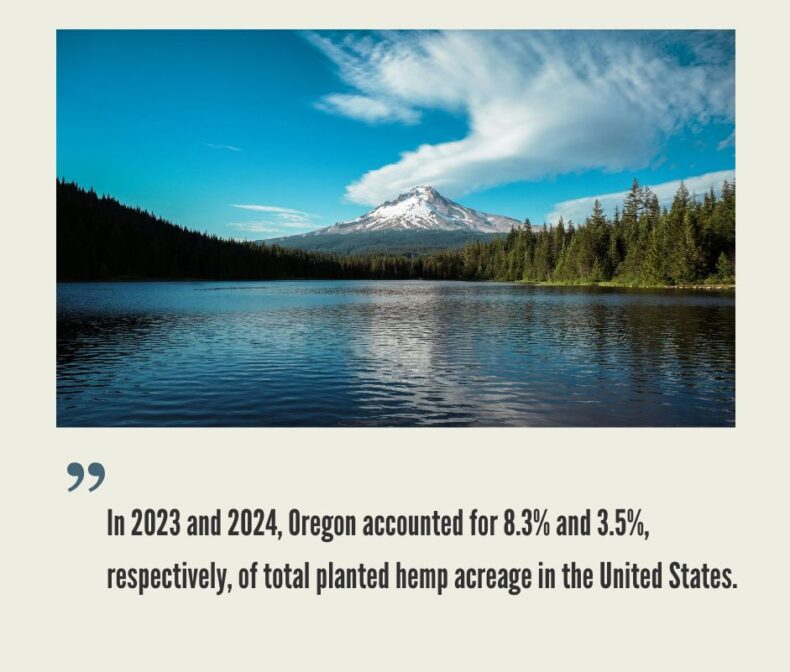
According to the National Hemp Report, Oregon actually accounted for 3.5% of total planted hemp acreage in the United States in 2024. In recent years, yield has been high, between 90%-97% from 2022 to 2024.
Grower and handler licensee numbers followed a similar trend to acreage licensed for hemp cultivation, peaking at 1,961 and 698, respectively, in 2019 and then falling to 188 and 215, respectively, in 2024.
However, as of May 2025, the number of hemp acres grown has increased for the first time since 2019 to 1,989 acres. This occurred despite a continuing fall in grower licensee numbers to 102 and, similarly, a fall in number of grow sites to just 100.
In 2023, the majority (90%) of hemp harvested in Oregon was floral. The state accounted for a quarter of the total US floral hemp production by harvested acreage. In 2023, for the first time, industrial hemp was ranked in Oregon’s top 20 agricultural commodities, placed on the 13th spot with a production value of $121 million.
The introduction of vendor licenses in July 2024 was met with clear enthusiasm as in the second half of 2024 already 177 vendor licenses were issued and from January to May 2025, this number has nearly doubled to reach 345 vendor licensees.
Oregon Hemp Industry Infographics
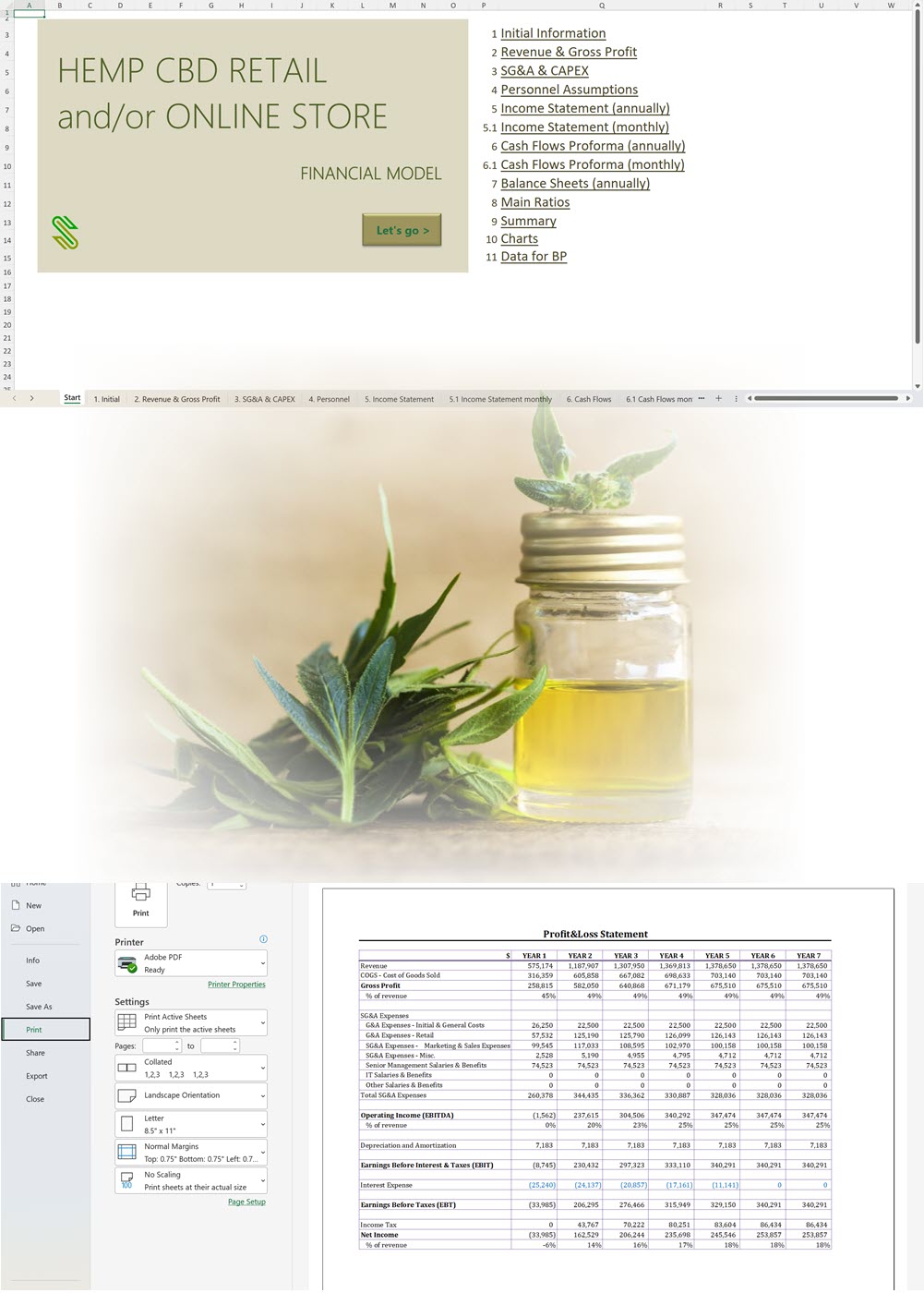
Hemp CBD Products Retail/Online Store Business Plan Sample, Oregon
'70% ready to go' business plan templates
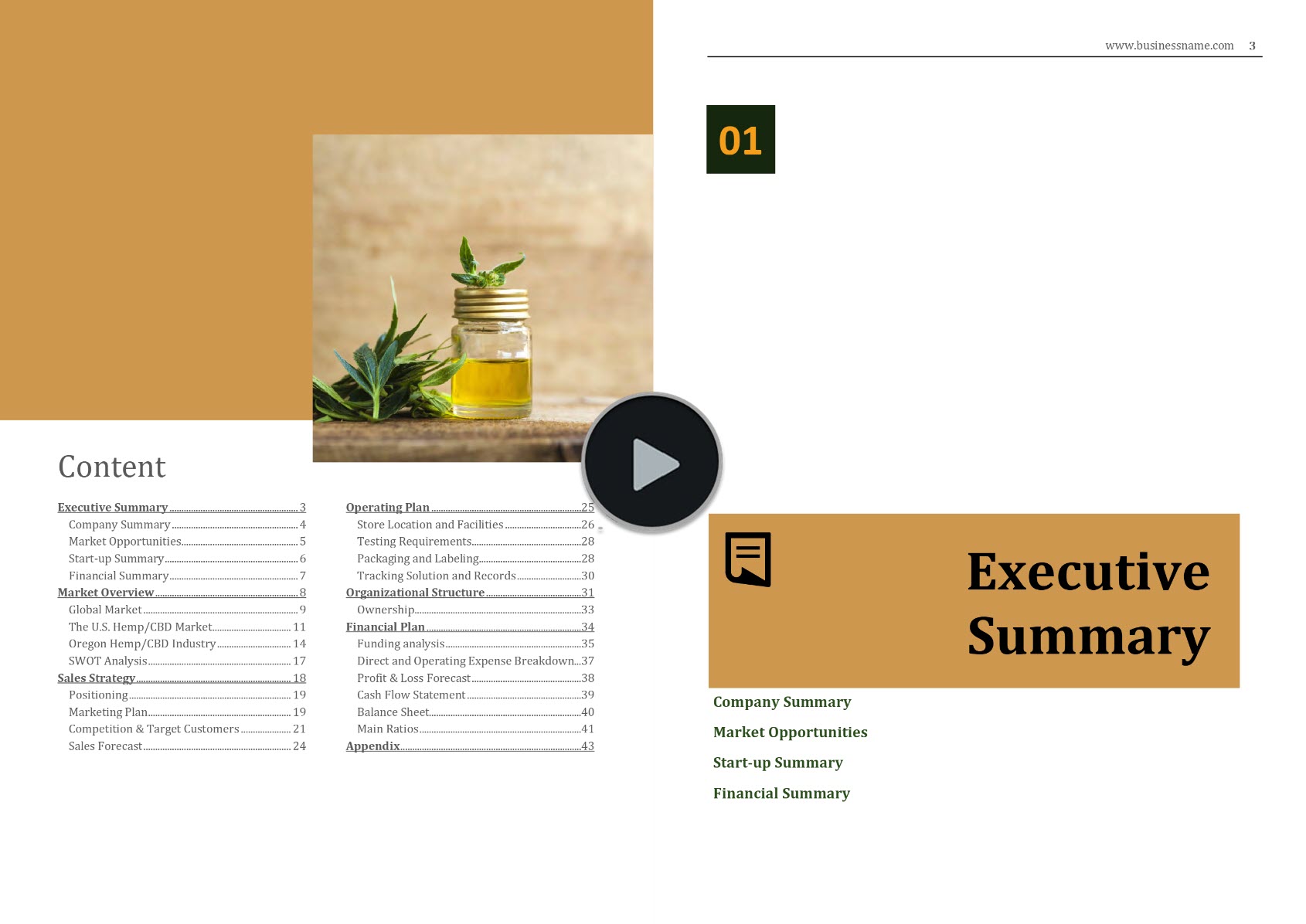
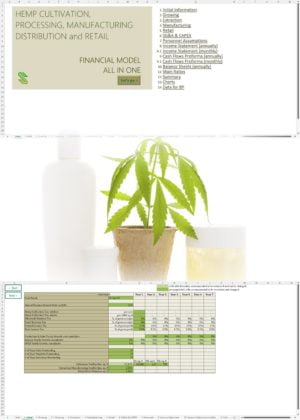
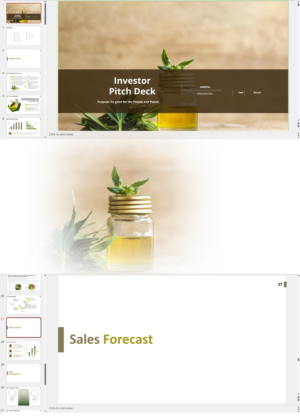
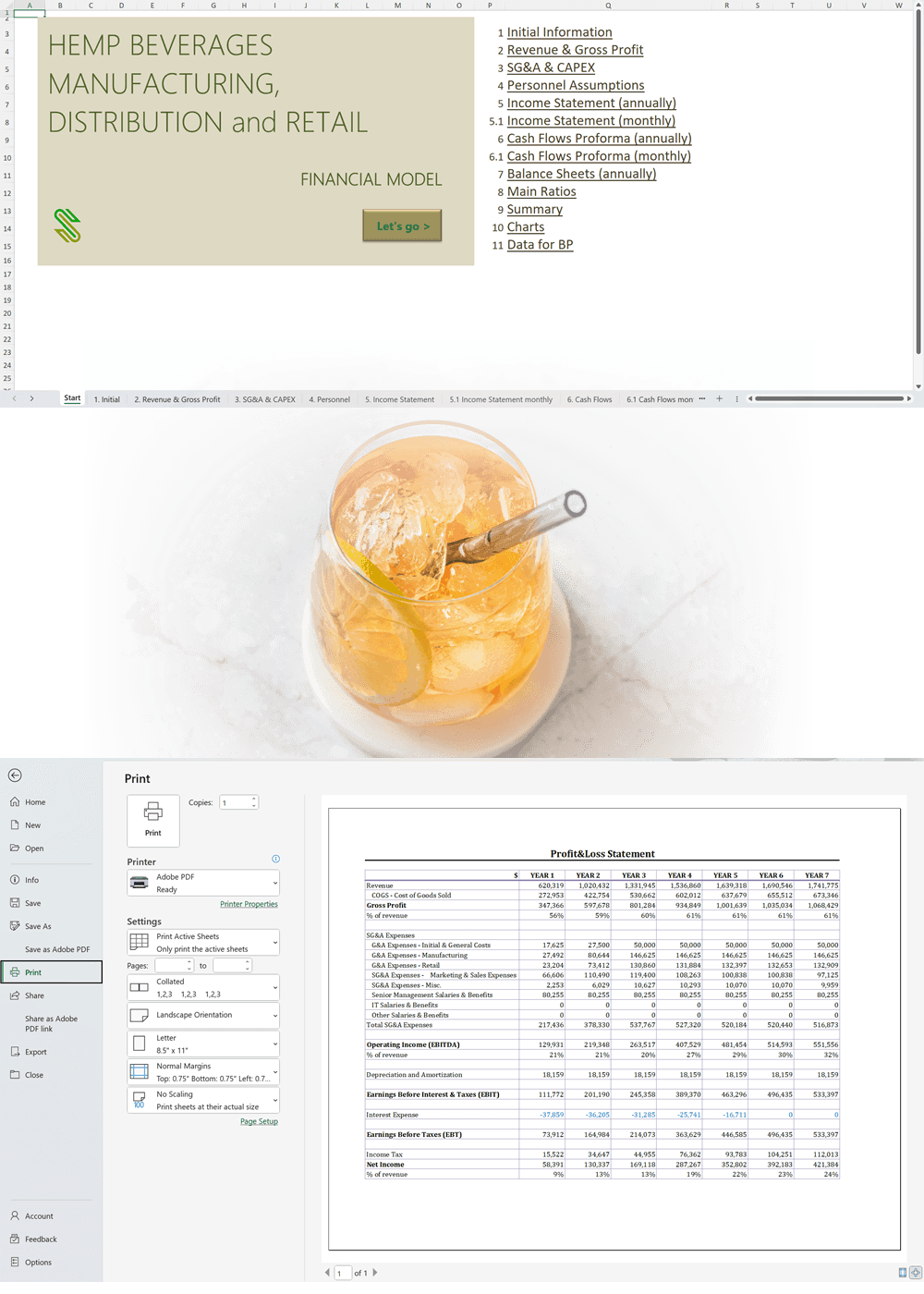
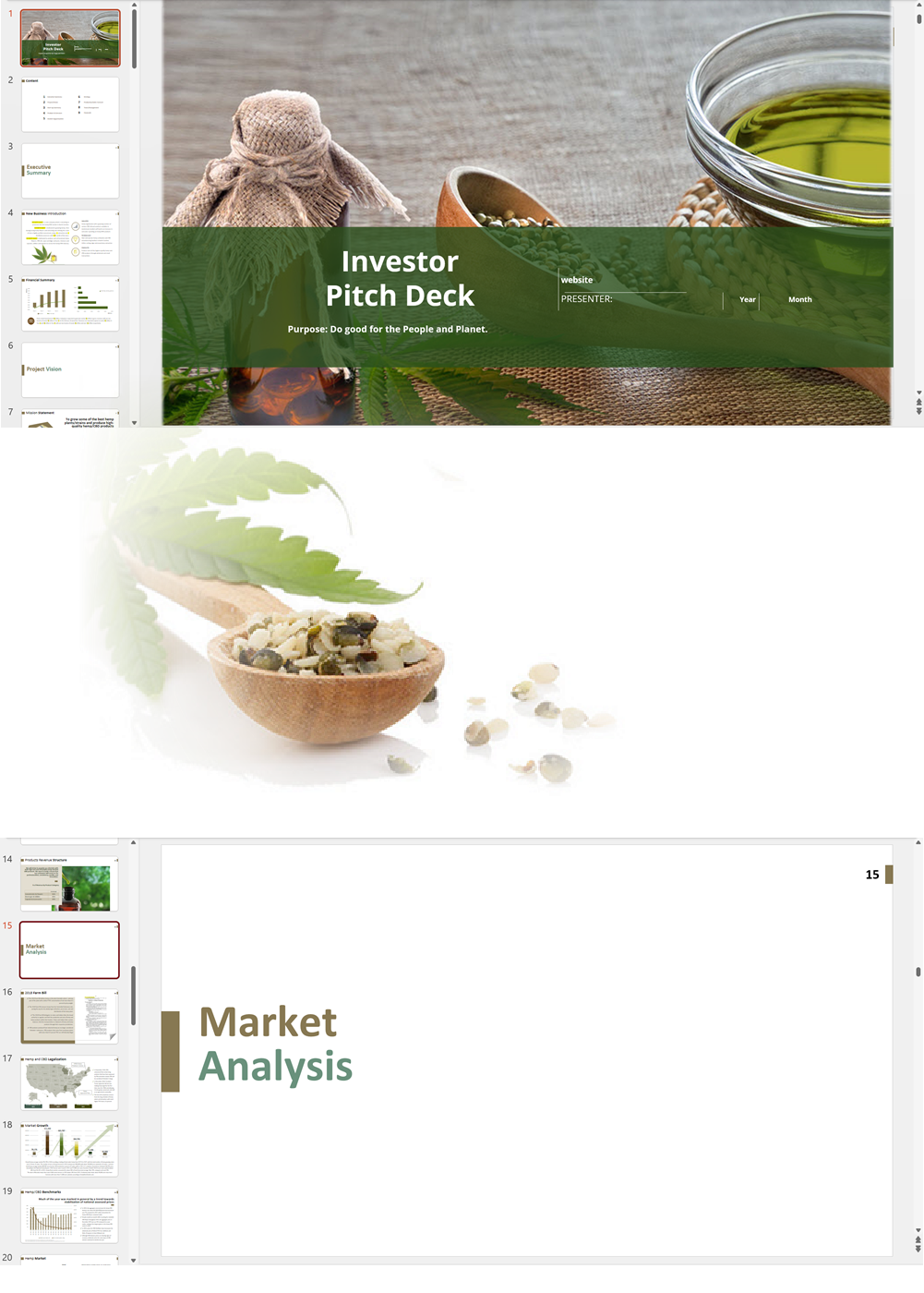
Our hemp/CBD financial models and business plan templates will help you estimate how much it costs to start and operate your own hemp/CBD business, to build all revenue and cost line-items monthly over a flexible seven year period, and then summarize the monthly results into quarters and years for an easy view into the various time periods. We also offer investor pitch deck templates.
Best Selling Templates
-

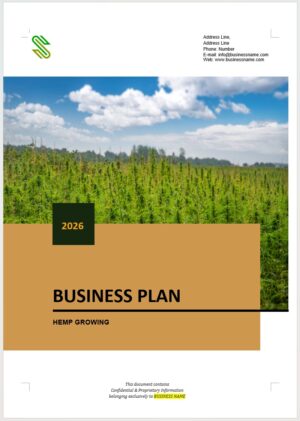
Hemp Cultivation Business Plan Template
Price range: $75.00 through $275.00 Select options This product has multiple variants. The options may be chosen on the product page -

Hemp CBD Financial Model All in One
$200.00 Select options This product has multiple variants. The options may be chosen on the product page -
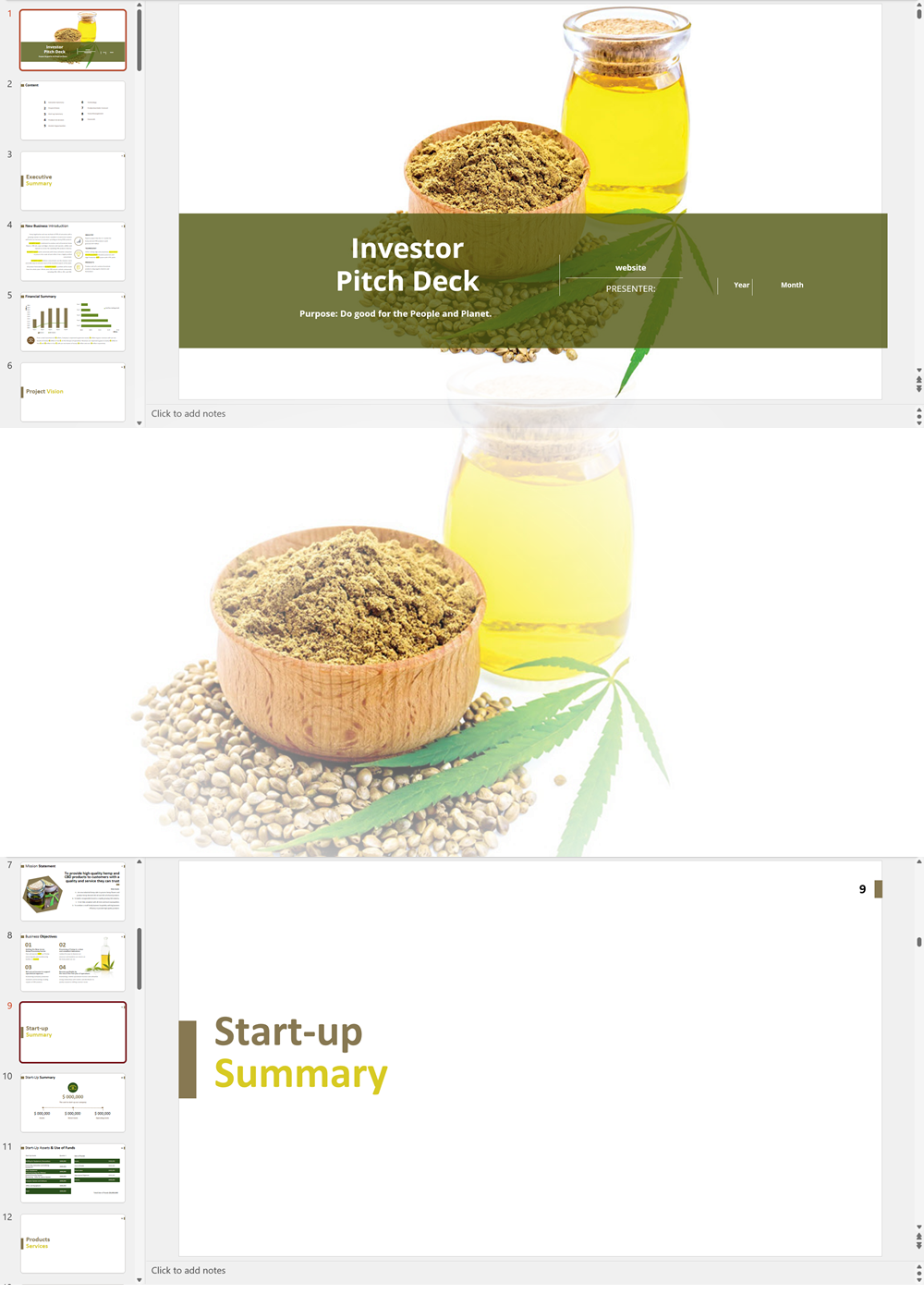
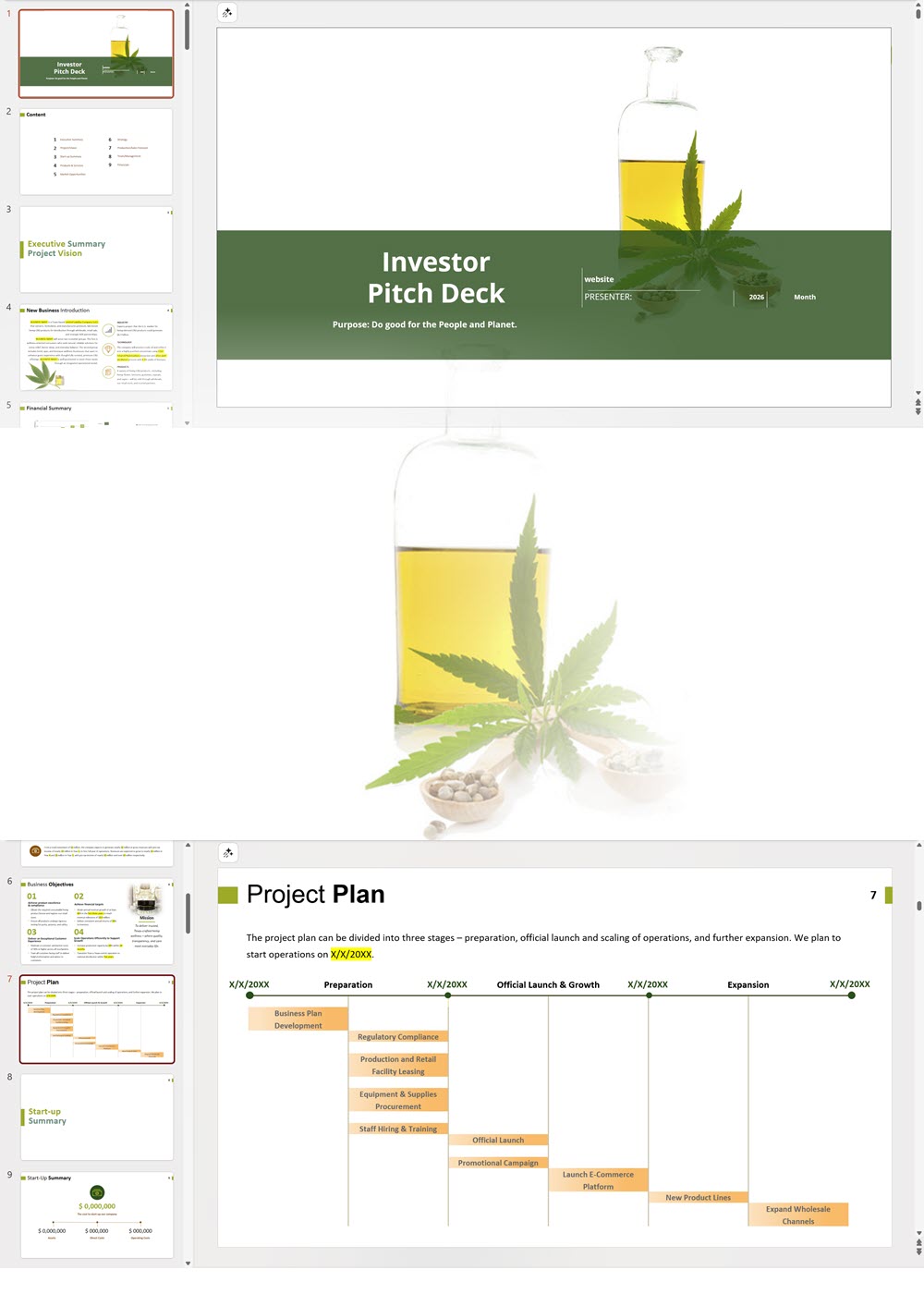
CBD Retail Investor Pitch Deck Template
$75.00 Select options This product has multiple variants. The options may be chosen on the product page
We also offer cannabis business plan templates on cannabusinessplans.com.
Our Templates
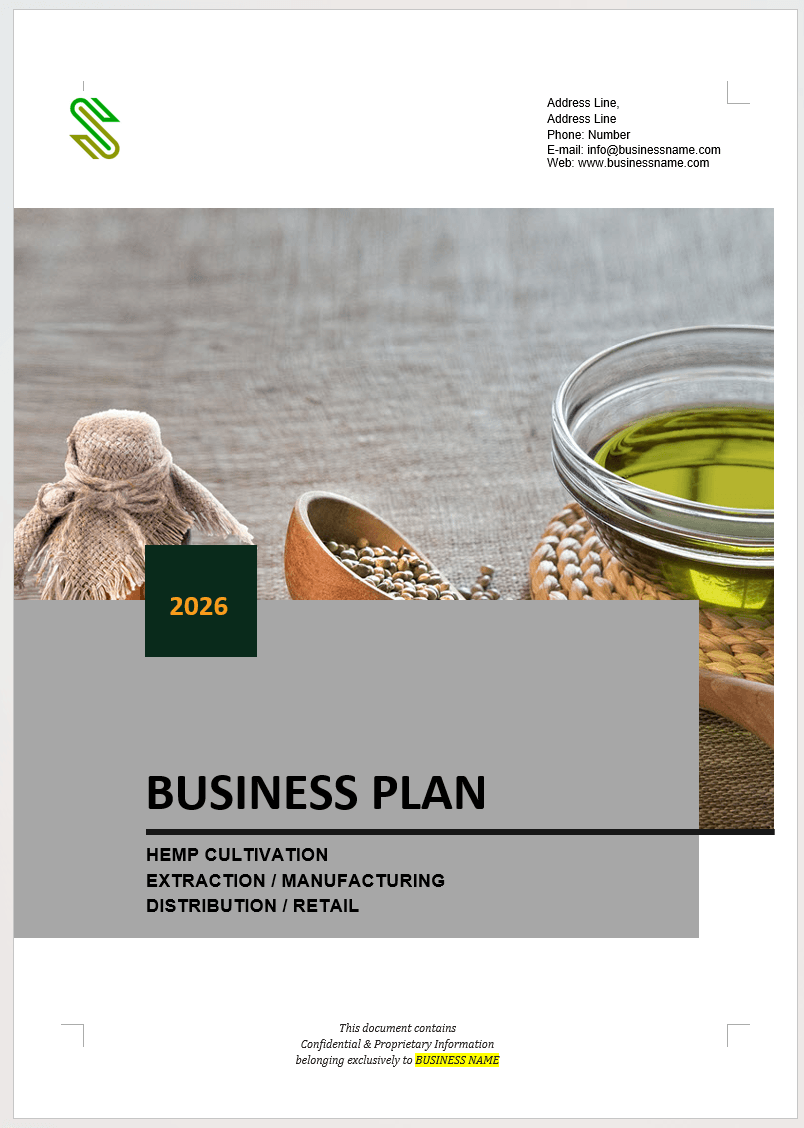
Hemp CBD Vertically Integrated Business Plan Template
Price range: $75.00 through $450.00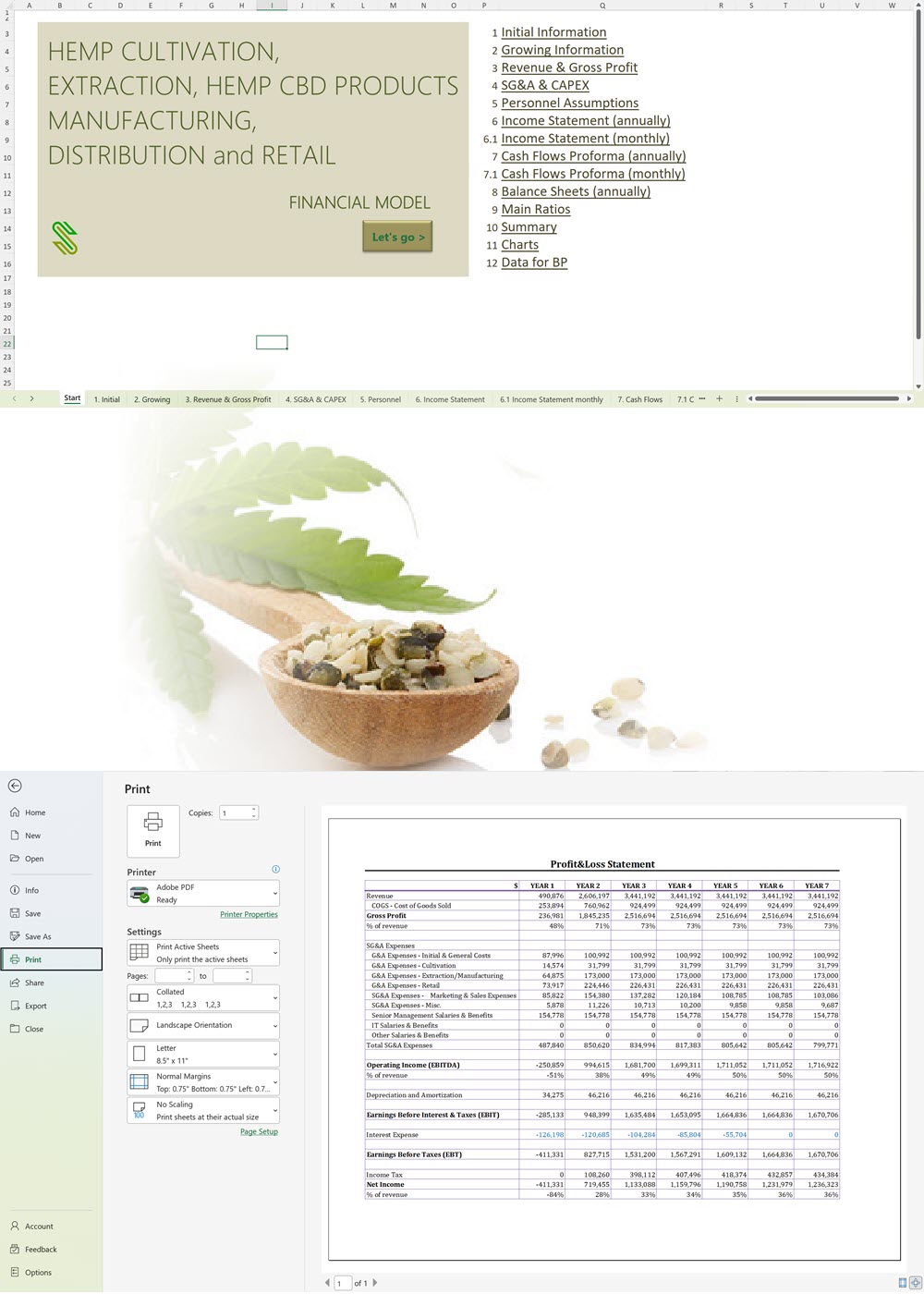

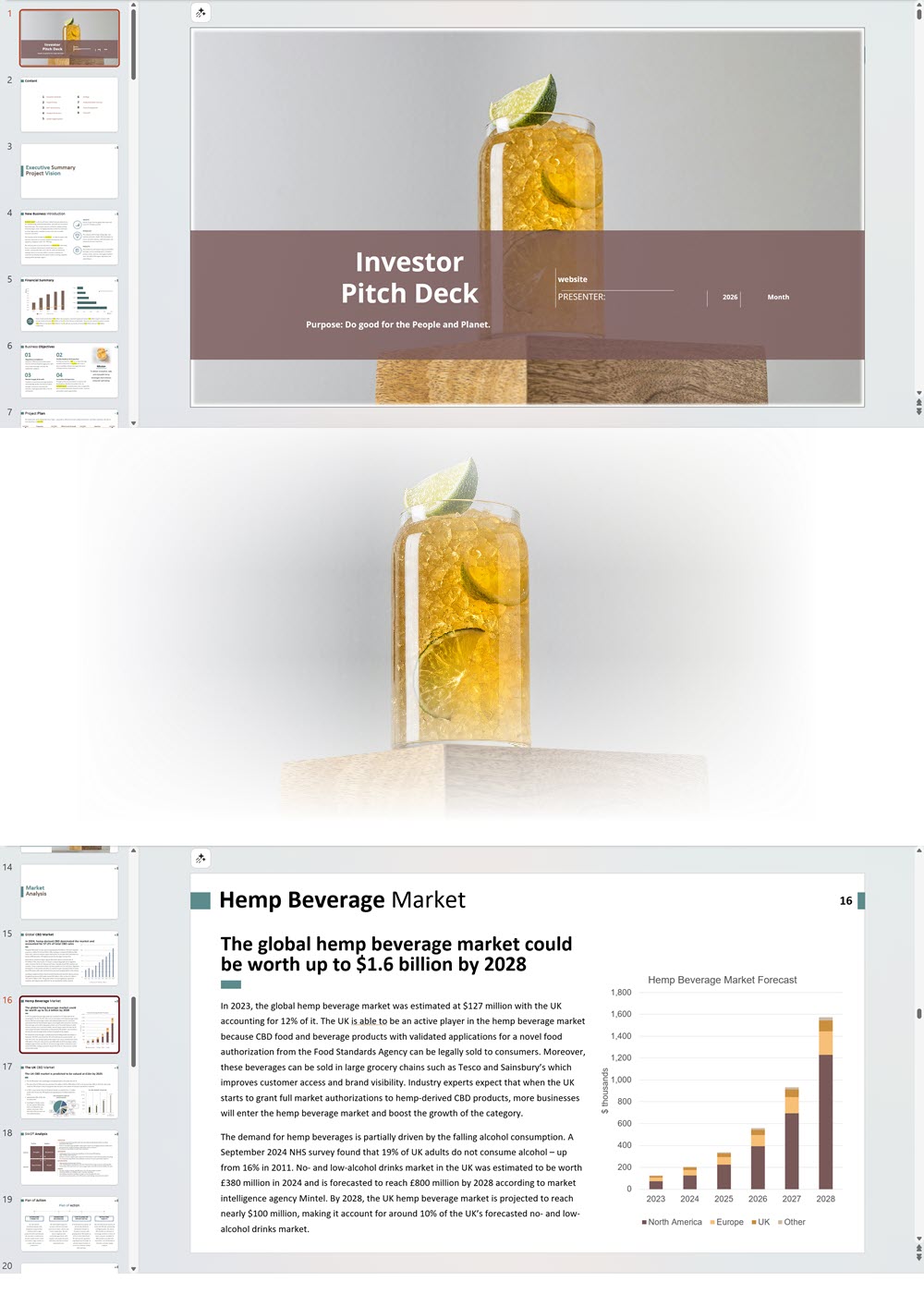
Hemp CBD Beverage Manufacturing, Wholesale and/or Retail Business Plan Template
Price range: $75.00 through $350.00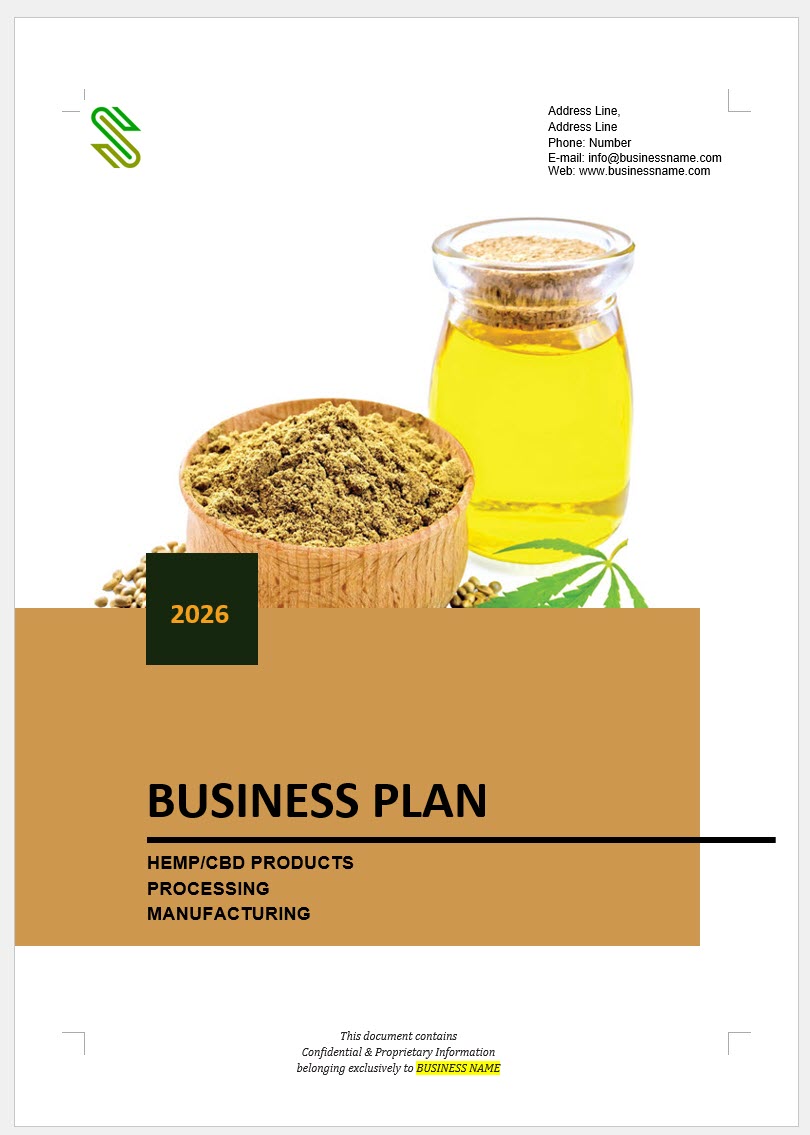
CBD Products Manufacturing Business Plan Template
Price range: $75.00 through $350.00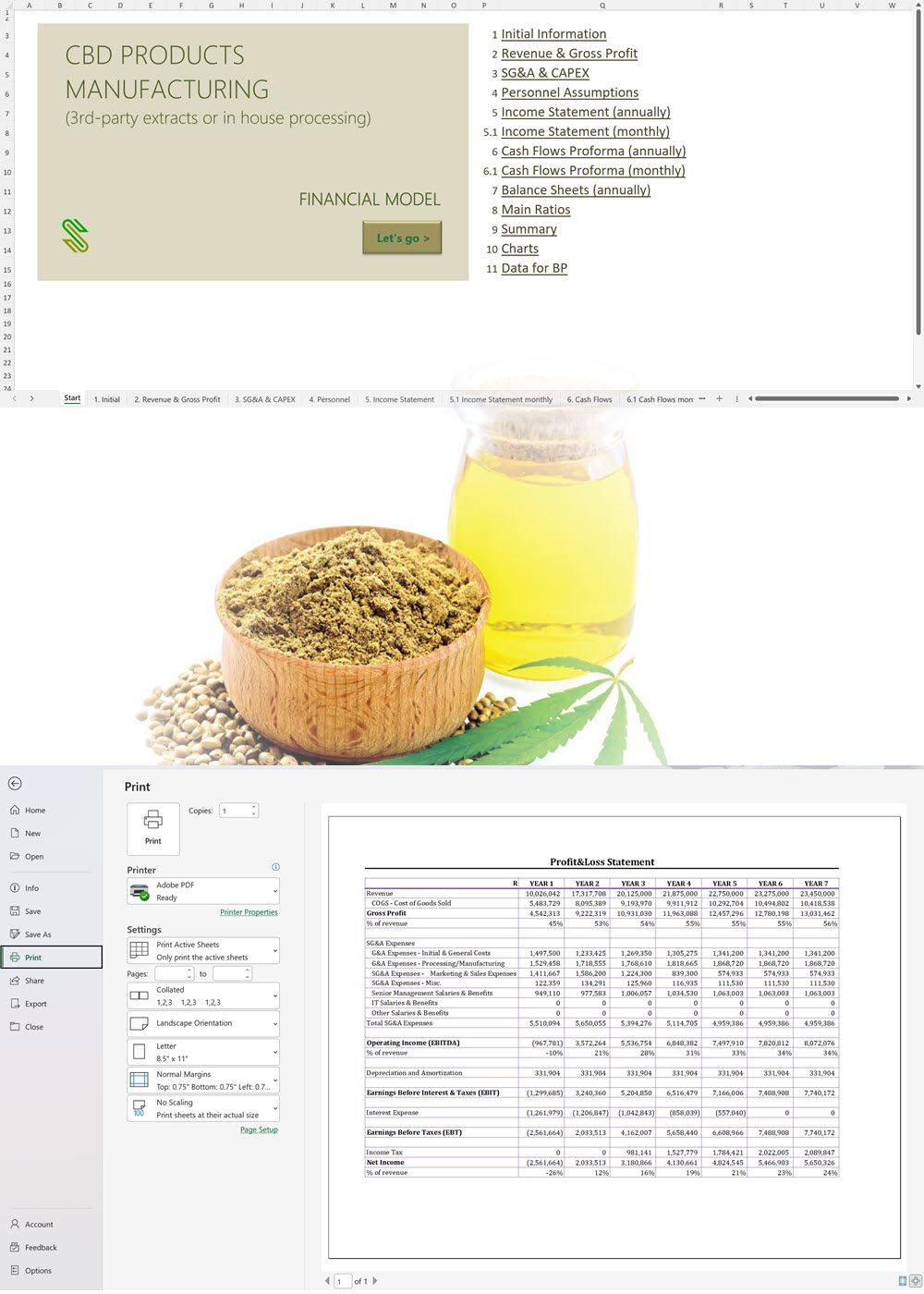
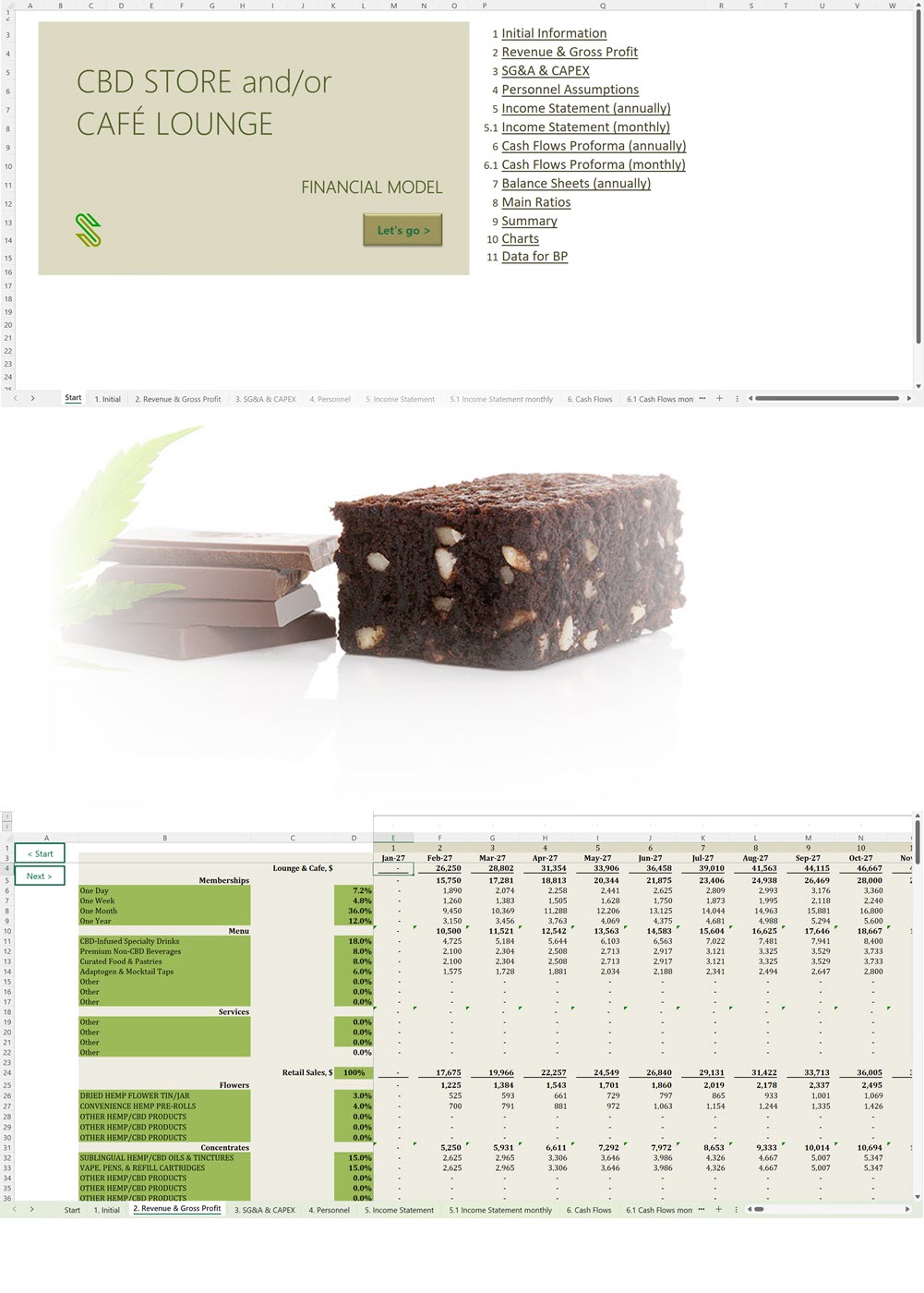
CBD Store and/or Cafe Lounge Business Plan Template
Price range: $75.00 through $275.00
CBD Products Retail/Online Store Business Plan Template
Price range: $75.00 through $275.00
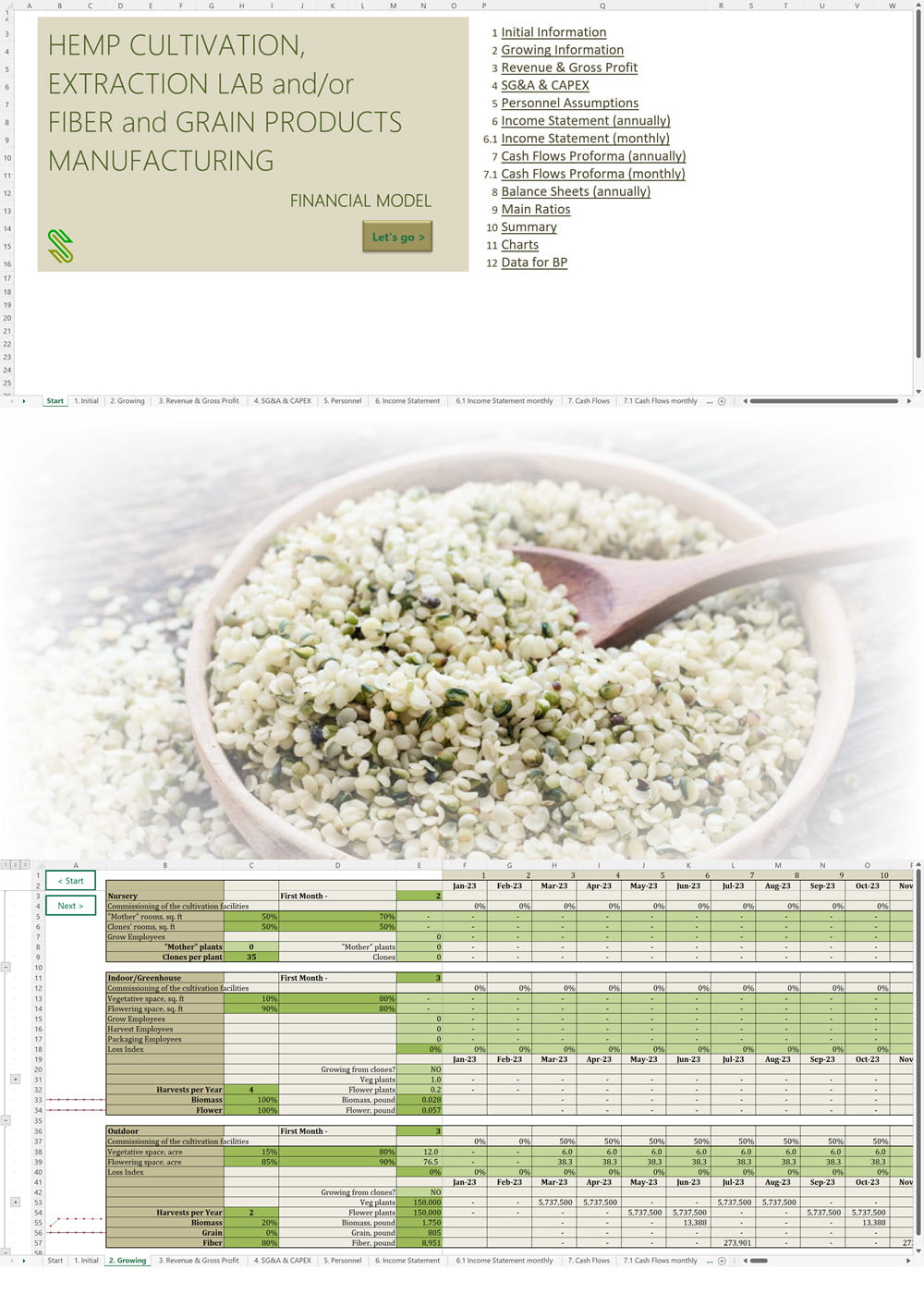
Hemp (Biomass, Fiber, Grain) Cultivation and Processing/ Manufacturing Business Plan Template
Price range: $75.00 through $350.00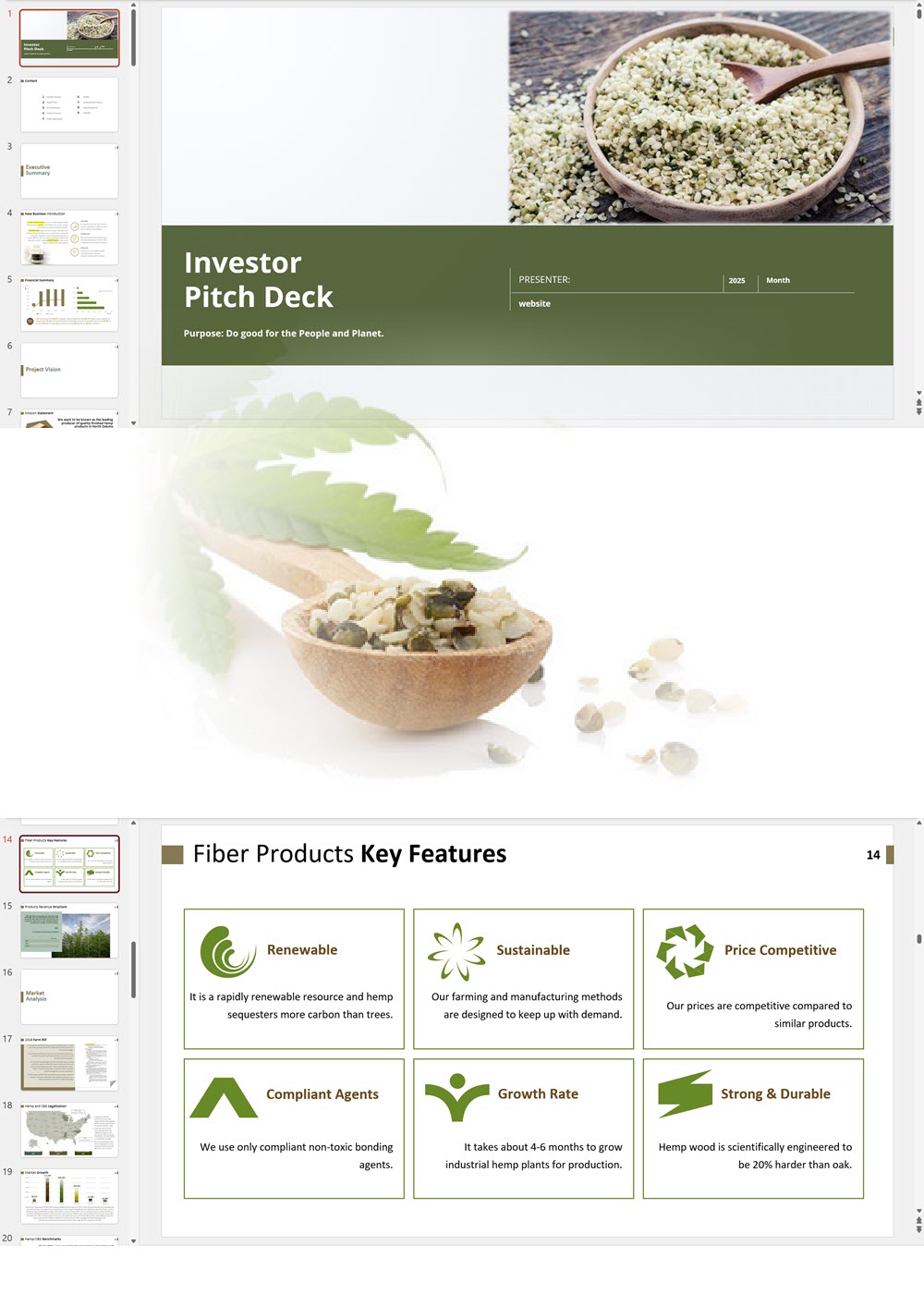
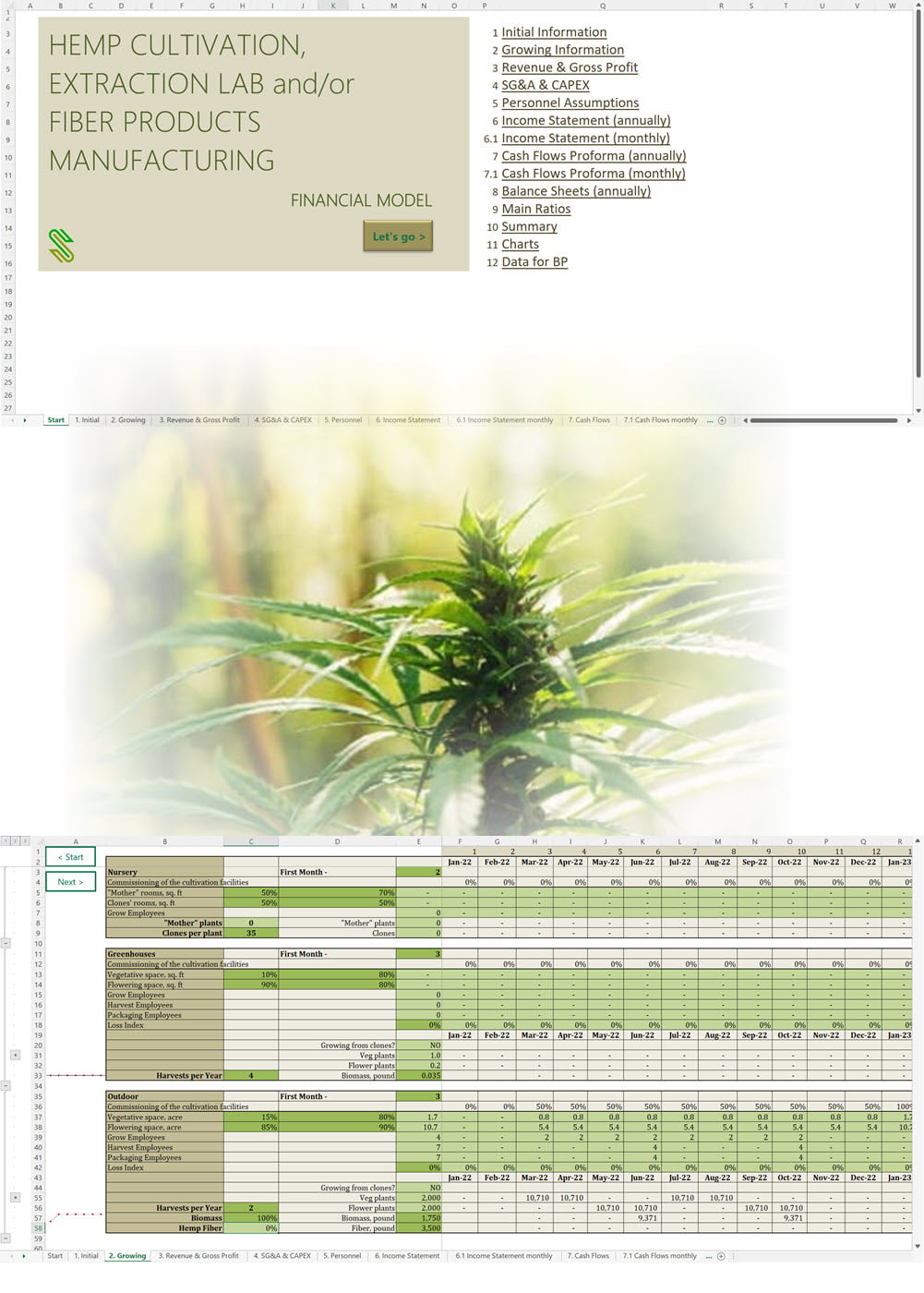
Hemp Cultivation and CBD Oil Extraction and/or Fiber Products Business Plan Template
Price range: $75.00 through $350.00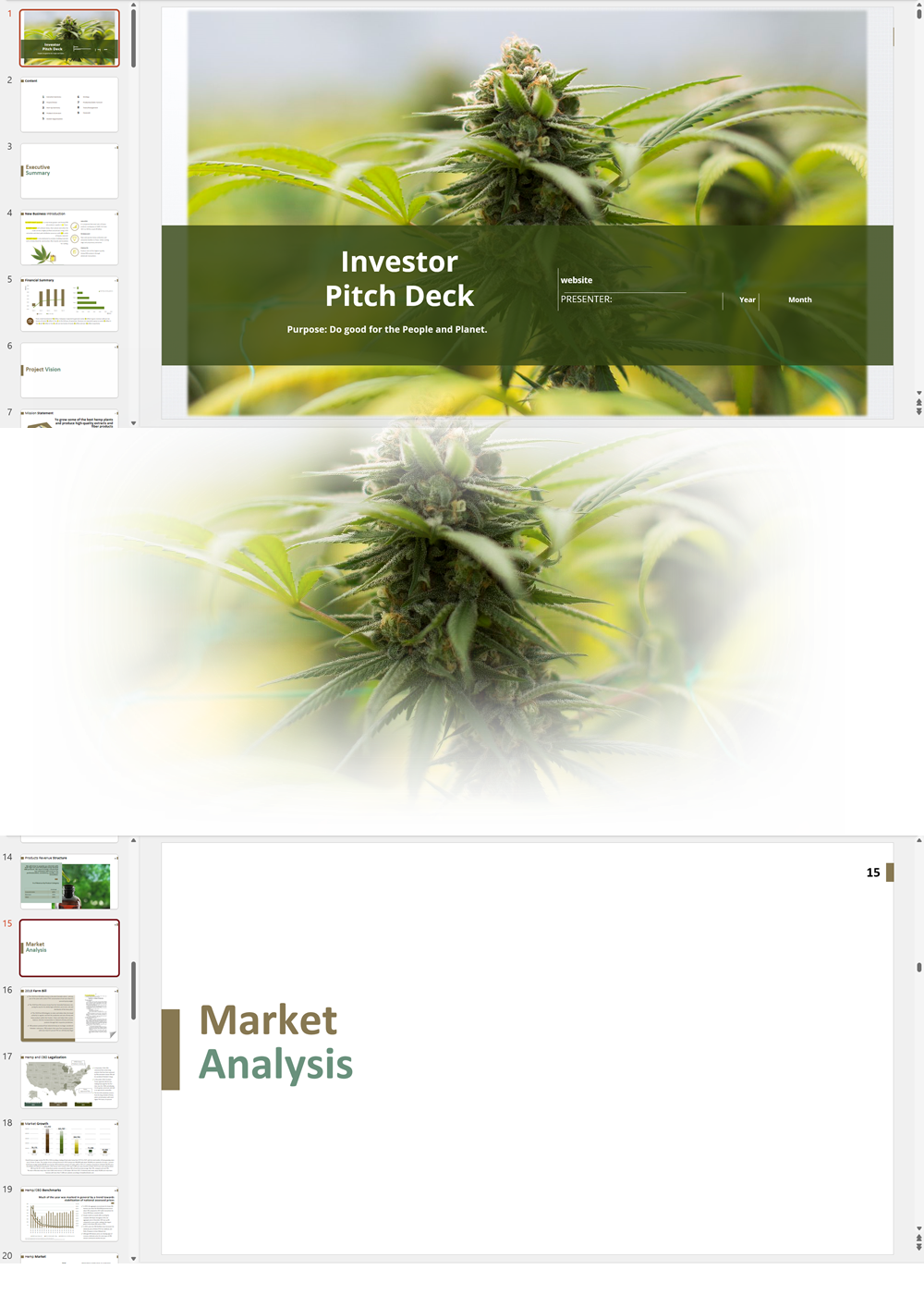
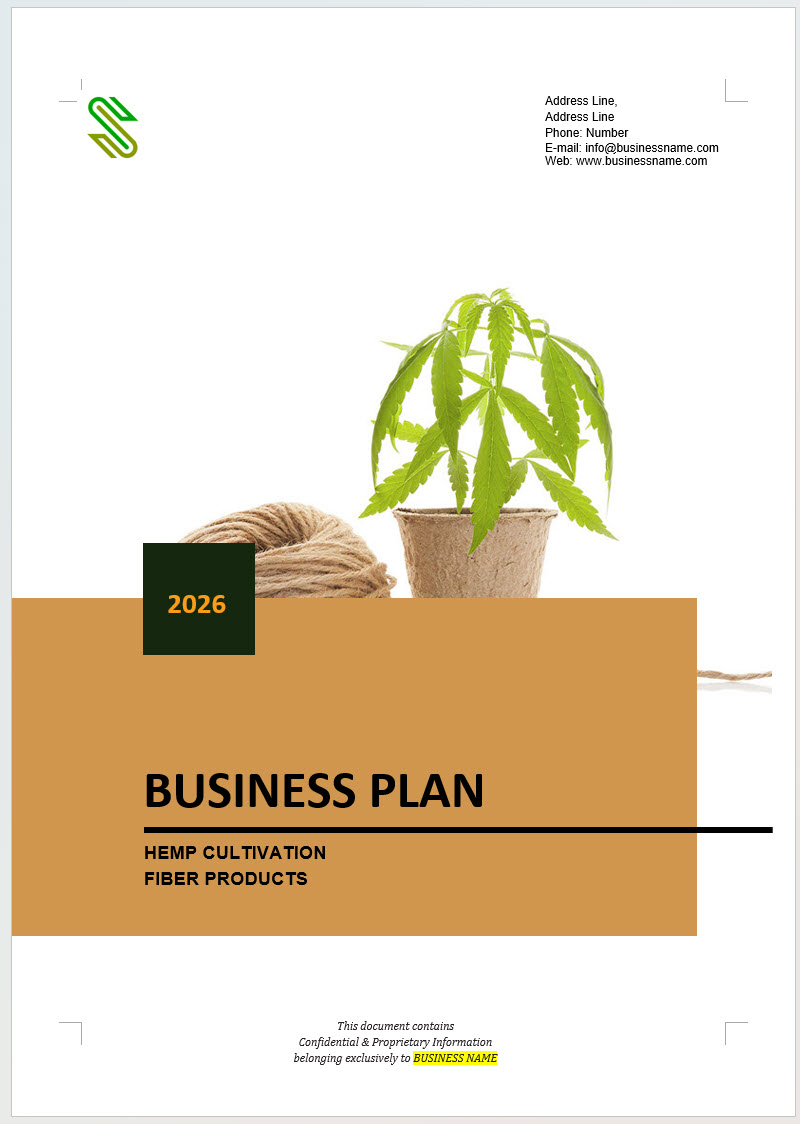
Hemp Fiber Growing and Manufacturing Business Plan Template
Price range: $75.00 through $275.00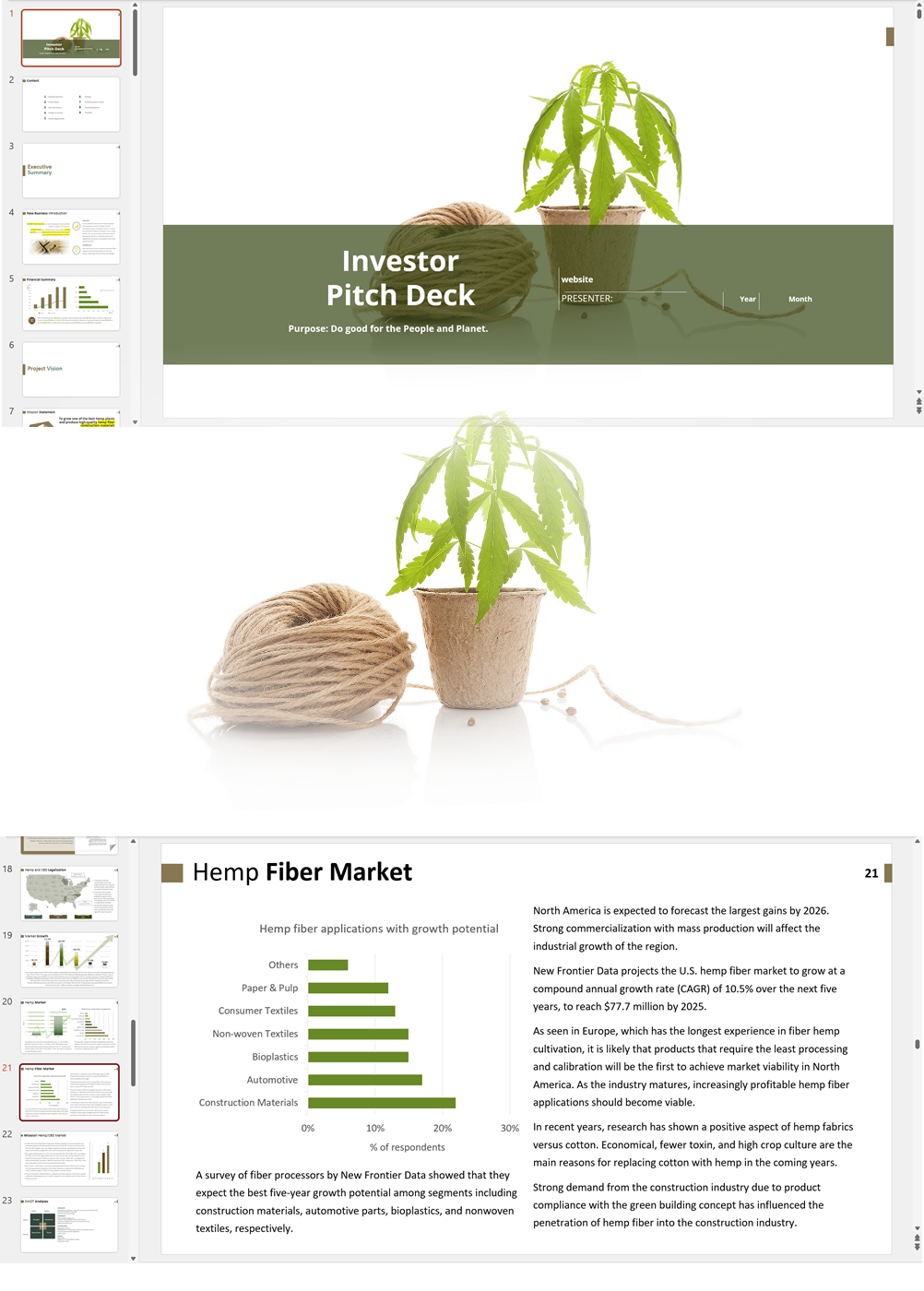
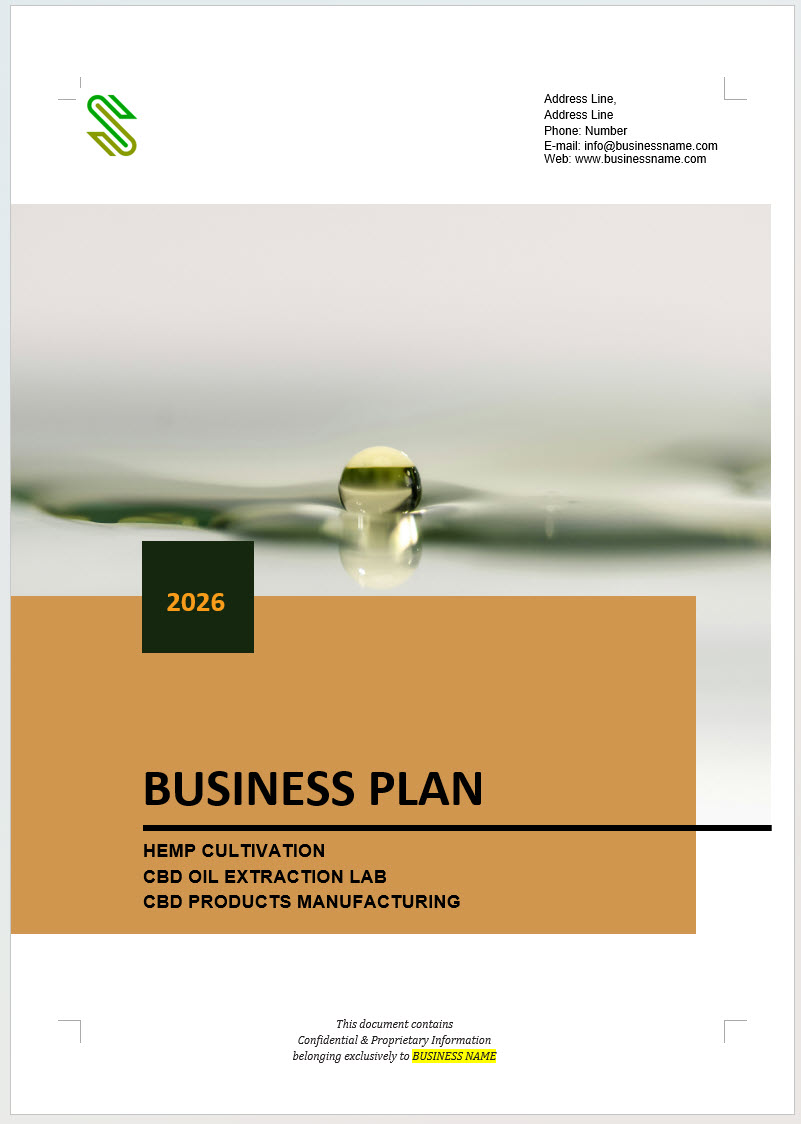
Hemp Cultivation + Extraction + Manufacturing Business Plan Template
Price range: $75.00 through $450.00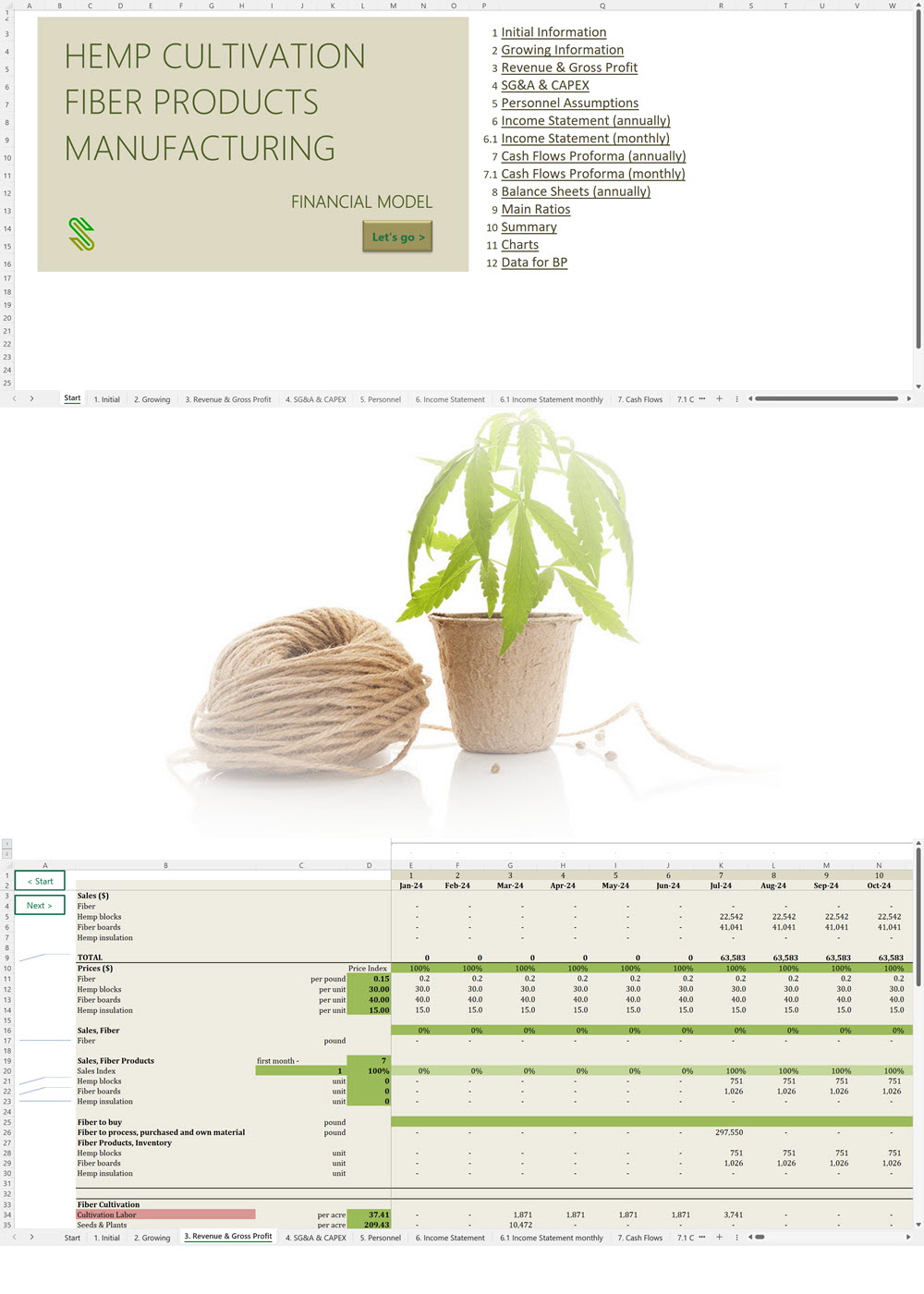
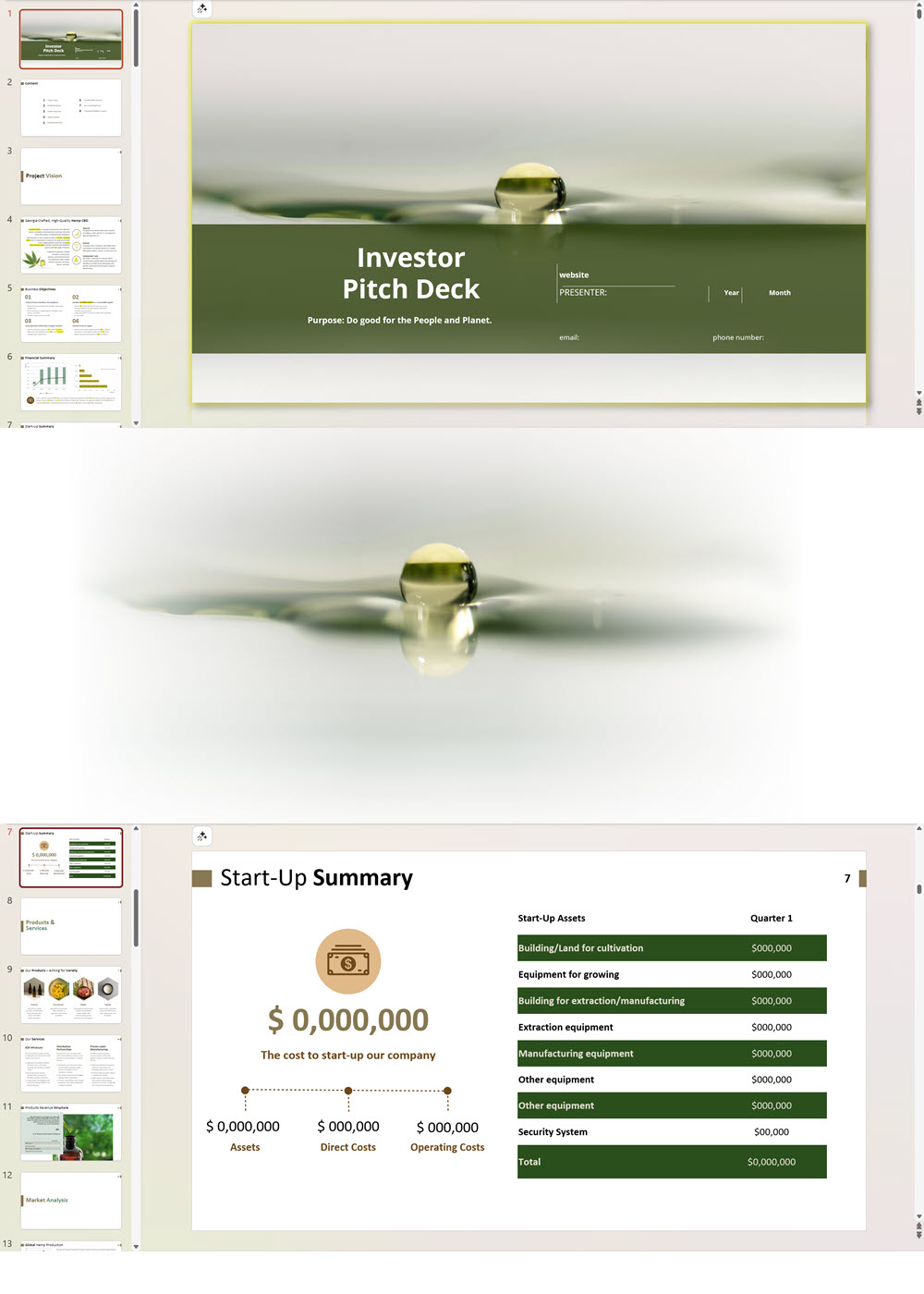
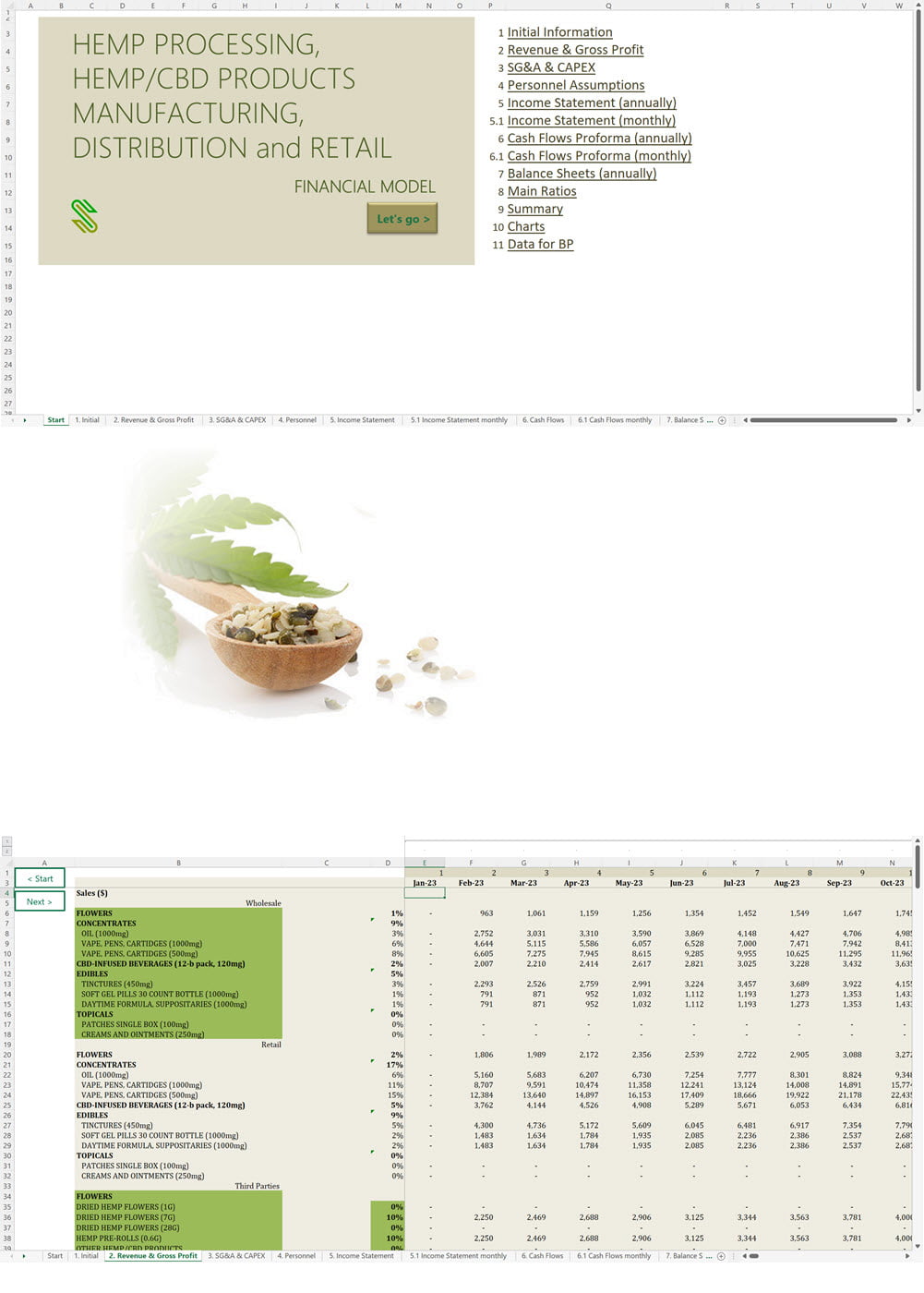
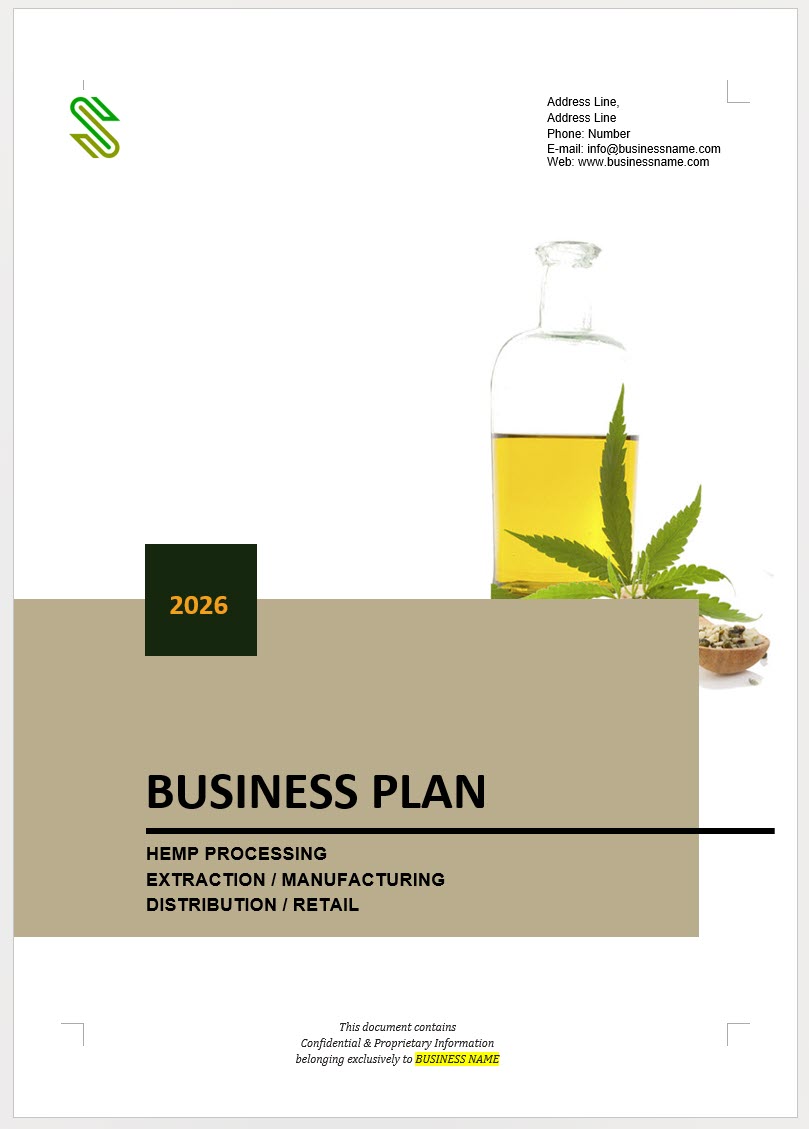
Hemp CBD Extraction + Manufacturing + Retail Business Plan Template
Price range: $75.00 through $450.00