Key Takeaways
- Hemp Industry Regulations currently in force:
- Hemp: Minnesota State Hemp Plan
- Hemp-Derived Cannabinoids: Chapter 342
- Licenses available:
- Hemp License (to grow and/or process hemp).
- Hemp businesses wishing to perform certain activities with hemp edibles and beverages must obtain the following licenses, as applicable:
- Lower-potency Hemp Edible Manufacturer (to create, package and label lower-potency hemp products as well as sell them to cannabis businesses)
- Lower-potency Hemp Edible Retail (to sell packaged lower-potency hemp edibles to consumers)
- Lower-potency Hemp Edible Wholesale (to buy lower-potency hemp edibles from cannabis and hemp businesses for sale to other cannabis and hemp businesses)
- Products legal: In Minnesota, all hemp products with less than 0.3% THC are legal, except products intended to be consumed by combustion or vaporization. Hemp-derived CBD edibles are legal provided that:
- Edibles contain no more than 5 mg of hemp-derived THC per serving and up to 50 mg of hemp-derived THC per package.
- Single-serving beverages can contain no more than 10 mg of THC and no more than 200 mg of CBD, CBG, CBN, or CBC. “Large-format” beverages containing at least 750 milliliters can have up to 17 servings with no more than 5 mg of THC per serving, giving a total of 85 mg of THC per bottle, and up to 400 mg of CBD, CBG, CBN, or CBC.
- Taxes:
- Effective July 1, 2025, Minnesota raised the cannabis tax on the retail price of hemp-derived CBD edibles to 15%. The 15% tax is in addition to the 6.875% state general rate sales tax and other applicable local sales taxes.
- Market:
- After contraction due to nationwide oversupply, Minnesota’s hemp cultivation has rapidly recovered, rising by 123% in 2023 to 834 acres and then surging by another 148% to 2,070 acres in 2024. The state’s planted outdoor acreage continued to rise in 2025, reaching 2,489 acres with 2,231 acres harvested. It is mainly grown for grain with 74% of planted acres dedicated to it.
- The total tax revenue collected from July 2023 to May 2024 surpassed $10 million with average monthly collections of $900,000. But monthly tax collections during 2024 were on average well over $1 million which resulted in hemp consumable product sales to be estimated at $130 million in 2024.
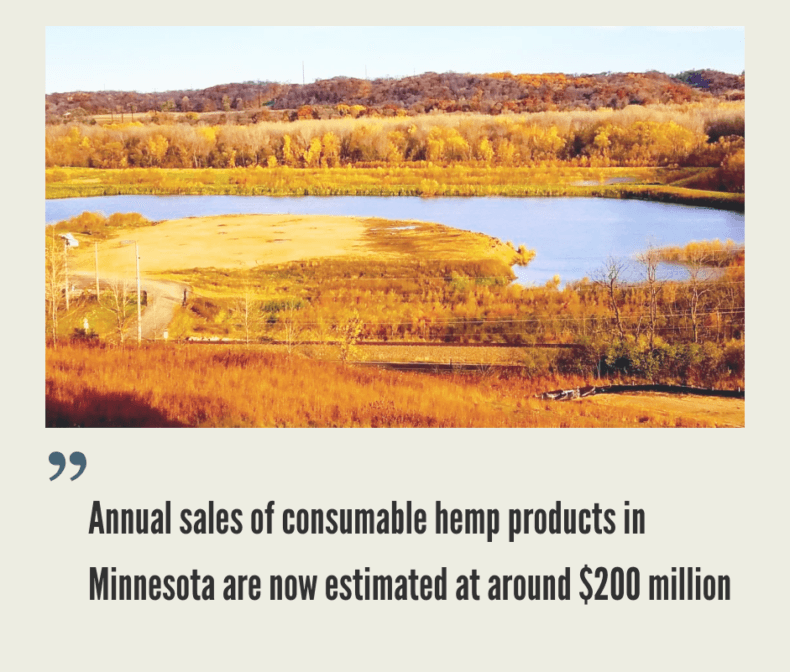
- According to business owners and elected officials, the Minnesota hemp-derived THC market now generates approximately $200 million in annual sales. Some market participants believe that Minnesota’s hemp-derived beverage market alone is worth nearly $100 million.
- As of May 26, 2026, there were more than 1,800 licensed LPHE businesses in Minnesota: 1,726 retailers, 62 manufacturers, and 47 wholesalers.
Jump to:
Minnesota Hemp Legalization
Following the introduction of the 2014 Farm Bill, the Minnesota Industrial Hemp Development Act (Minnesota Statutes 18K) became law in 2015. Through this law, the Minnesota Department of Agriculture (MDA) created a hemp pilot program which operated from 2016 to 2020.
On October 31, 2019, the USDA released the Interim Final Rule (7 CFR part 990), which formed the regulatory framework for all hemp cultivation nationwide. The Minnesota State Plan was approved in July 2020 and became effective January 1, 2021.
On January 15, 2021, the USDA released the Final Rule (86 FR 5596). Following this, Minnesota’s hemp plan was revised to incorporate the federal Final Rule. The revised Minnesota State Hemp Plan was approved by the USDA and became effective on May 6, 2021. During the 2023 legislative session, several changes were made to the state’s statutes, and these changes have been incorporated into the updated hemp state plan linked above.
The MDA regulates industrial hemp cultivation and processing. All individuals or businesses that wish to grow, process, research, or test hemp, must obtain an MDA Hemp Program license.
In June 2022, House File 4065 legalized the sale of hemp-derived THC products, containing less than 0.3% THC, in grocery and convenience stores to individuals older than 21. Hemp-derived THC edibles can contain no more than 5mg of hemp-derived THC per serving and there is a maximum limit of 50mg of hemp-derived THC per package. Hemp-derived THC beverages can contain no more than 5mg of hemp-derived THC per serving for a total of 10mg per package. This law came into effect on July 1, 2022.
In May 2023, Minnesota legalized adult-use cannabis through House File 100 and brought immediate rules to the existing hemp market. Sellers of hemp-derived CBD products were required to register with the Office of Cannabis Management (OCM) by October 1, 2023. From July 1, 2023, edible CBD products are subject to a 10% Cannabis Tax. On July 1, 2023, a 10% retail cannabis tax went into effect on edible hemp products, while non-intoxicating topicals remained exempt. Additional restrictions imposed on hemp-derived CBD products were:
- Hemp-derived CBD products cannot contain any artificially derived cannabinoids except delta-8 and delta-9 THC.
- Hemp-derived CBD products cannot contain any synthetic cannabinoids.
- Non-intoxicating topical CBD products intended for consumption through inhalation, ingestion or injection are prohibited.
On March 1, 2025, regulatory authority for hemp-derived products was moved from Minnesota’s Board of Pharmacy to the OCM. The statutory definition of a “Lower-Potency Hemp Edible” (LPHE) went into effect under Chapter 342 (codified adult-use cannabis law). This established clear serving caps (5 mg THC, 25 mg CBD/CBG) and prohibited any non-THC cannabinoids over 0.5 mg per serving. Only individuals aged 21 and older can purchase lower-potency hemp edibles.
Three new licenses were created: lower-potency hemp edible manufacturer, lower-potency hemp edible retailer, and lower-potency hemp edible wholesale. Additionally, there are several endorsements that licensed lower-potency hemp edible businesses can obtain depending on the activities that they want to perform.
From October 1, 2025, all businesses wishing to undertake manufacturing, wholesale, or retail sale of lower-potency hemp edibles must obtain applicable licenses and endorsements from the OCM.
The state originally passed a mandate requiring all hemp testing to occur at licensed in-state laboratories starting January 1, 2026. However, in March 2026, Gov. Tim Walz signed an emergency bipartisan bill explicitly allowing Minnesota lower-potency hemp edible businesses to continue using out-of-state testing facilities through May 31, 2027.
2026 Omnibus Cannabis Bill & Changes to Minnesota Hemp Law
The 2026 Omnibus Cannabis Bill, signed into law in May 2026, introduced several pivotal updates to the state’s hemp regulations. Recognizing the burden of low minor cannabinoid caps on therapeutic products, lawmakers raised the non-psychoactive caps to allow up to 100 mg per serving (and 1,000 mg per package) of CBD, CBG, CBN, and CBC. It also authorized large-format multi-serving beverages sold in 750 mL+ containers with up to 17 servings per bottle (85 mg total THC). These bottles are strictly for off-site retail sales, meaning they cannot be opened or consumed on-site at a bar or taproom.
Another significant change made by the new law was the elimination of the previous ban preventing an individual or company from holding both a hemp business license and an adult-use cannabis license. This essentially allows hemp businesses to transition into adult-use cannabis licenses and protect their business infrastructure from the new federal hemp rules set to come into effect in November 2026 (0.3% total THC, including THCA, and a strict 0.4 mg per-container limit for hemp-derived products). For more information, please see our update on U.S. hemp regulations.
What Types of Hemp Products are Legal in Minnesota
All hemp products (except products intended to be consumed by combustion or vaporization) with less than 0.3% THC are legal for production and sale in Minnesota. Regarding hemp-derived CBD products: edibles, beverages or nonintoxicating topical products are allowed for production and sale but their sale is limited to individuals aged 21 and older only. They are also subject to restrictions on the amount of THC they contain:
- Edibles can contain no more than 5 mg of hemp-derived THC per serving and there is a maximum limit of 50 mg of hemp-derived THC per package. They can also have up to 1,000 mg of CBD, 1,000 mg of CBG, 1,000 mg of CBN, or 1,000 mg of CBC.
- Single-serving beverages can contain no more than 10 mg of THC and no more than 200 mg of CBD, CBG, CBN, or CBC. “Large-format” beverages containing at least 750 milliliters can have up to 17 servings with no more than 5 mg of THC per serving, giving a total of 85 mg of THC per bottle, and up to 400 mg of CBD, CBG, CBN, or CBC. These large bottles are restricted to off-site retail sales.
- Each container can contain up to 100 mg of CBD, up to 100 mg of CBG, up to 100 mg of CBN, and up to 100 mg of CBC as long as the combination or the individual amounts of each cannabinoid does not exceed 400 mg.
- Each serving may not contain more than 0.5 mg of all other non-intoxicating cannabinoids.
Hemp CBD Taxes In Minnesota
Effective July 1, 2023, Minnesota imposed a new 10% cannabis tax on the retail price of hemp-derived CBD edibles. The 10% tax is in addition to the 6.875% state general rate sales tax and other applicable local sales taxes.
Hemp Licenses and Registrations Available in Minnesota
Hemp grower and processor licenses are issued by the Minnesota Department of Agriculture. There used to be two separate licenses for hemp growers and processors but on November 17, 2025, the USDA approved a revision to the Minnesota State Plan, consolidating grower and processor license types into one hemp license. On October 1, 2025, the new lower-potency hemp edible regulations came into effect with licenses that have to be received from the OCM – jump to lower-potency hemp edible licensing information.
Hemp License: $150
Per Location: $250
How the fee is calculated: the minimum cost of a hemp license is $400 ($150 + $250 for one location).
Licensing process:
Submit a complete application along with a nonrefundable registration and inspection fee to the Commissioner of Agriculture.
Information required to be submitted with the application includes:
- The applicant’s full name, business address, telephone number and e-mail address, if available. If the applicant is a business entity: the full business name, the main business location address, telephone number and the full name, title and e-mail address, if available, of each key participant of the entity.
- A list of authorized representatives to be registered under the license.
- The proposed acreage and indoor square footage to be planted, if applicable.
- The legal description and geospatial location of any proposed registered area for cultivation or processing.
- A map of the location for cultivation, showing the boundaries and dimensions of the location in acres or square feet, if applicable to the license type.
- An official fingerprint card of the applicant must be submitted to the Bureau of Criminal Apprehension as well as a completed informed consent form authorizing the Commissioner of Agriculture to obtain the applicant’s criminal history report. The criminal history report must be dated no more than 60 days before the date of the application.
Note: An individual who has been convicted of a felony relating to a controlled substance, is ineligible to receive a hemp grower or processor license in the ten years following the date of conviction.
Renewal:
The licensee must pay a nonrefundable license renewal fee in order to renew their license.
Next steps for a Grower:
Once the license is obtained, the applicant is required to:
- Report all plantings by variety to their local Farm Service Agency office.
- Submit an FSA 578 form to the Farm Service Agency within 10 days after planting a hemp lot.
- Within 10 days of submitting an FSA 578 report, the licensee must submit a planting report to the Commissioner of Agriculture.
- Between 5 and 30 days before harvest, the licensee must submit a harvest report to the Commissioner of Agriculture, including a certificate of analysis for any hemp lot which demonstrates the THC levels of a representative sample of the hemp lot, collected within 30 days before the harvest date.
Next steps for a Processor:
The processor must:
- Only acquire or process hemp from a licensed Minnesota hemp grower or from sources approved through another state or federally approved plan. All hemp material must be accompanied by a copy of the Fit for Commerce certificate or certificate of analysis demonstrating compliance with the THC level.
- Provide upon request to the commissioner or to law enforcement information documenting the source material for any hemp plants, plant parts, grain, seeds, and products that the licensee possesses or has processed, including any test results validating that the acceptable hemp THC level has not been exceeded.
Lower-Potency Hemp Edible Licenses
Previously, Minnesota’s old hemp-derived cannabinoid products business registration system simply required retailers to notify the state to legally sell hemp-derived products.
Under the new regulations of Minnesota Statutes, Chapter 342, all hemp businesses wishing to manufacture, engage in wholesale or retail sale of hemp-derived edibles, beverages and tinctures have to acquire a lower-potency hemp edible (LPHE) license from the OCM. The first license application window for LPHE licenses opened on October 1 and closed on October 31. On April 1, 2026, the OCM officially began accepting ongoing, rolling applications for LPHE manufacturer, wholesaler, and retailer licenses.
Can create, package, and label lower-potency hemp edibles, and sell them to cannabis and hemp businesses.
Endorsements available:
- extraction and concentration
- edible cannabinoid product handler
- hemp product exporter
Application fee: $250
Initial license fee: $1,000
Renewal license fee: $1,000
Can sell packaged lower-potency hemp edibles to consumer aged 21 and over, as well as deliver lower-potency hemp edibles to consumers aged 21 and over, with applicable endorsement. From January 1, 2027, LPHE retailers are no longer locked into physical brick-and-mortar storefronts, and can legally operate as delivery-only services.
Endorsements available:
- retailer
- delivery
- on-site consumption
- edible cannabinoid product handler
Application fee: $250 per retail location
Initial license fee: $250 per retail location
Renewal license fee: $250 per retail location
Can buy lower-potency hemp edibles from specified cannabis and hemp businesses and sell lower-potency hemp edibles to specified cannabis and hemp businesses.
Endorsements available:
- transporter
- lower-potency hemp edible importer
- hemp product exporter
Application fee: $250
Initial license fee: $10,000
Renewal license fee: $10,000
LPHE licenses can be held simultaneously with additional LPHE licenses or an industrial hemp license under Minnesota Statutes, Chapter 18K. They cannot simultaneously hold a cannabis business license.
Certain business activities require additional endorsements:
- Edible cannabinoid product handler – required to manufacture, process, sell, handle, or store LPHEs (unless in final packaging). This endorsement is necessary for all LPHE manufacturer license holders.
- Extraction and Concentration – required to manufacture hemp concentrate or artificially derived cannabinoid products.
- On-site consumption – required for an LPHE retailer license holder to allow on-site consumption at their establishment.
- Retailer operations – required for an LPHE retailer license holder intending to operate a retail establishment to sell LPHE products to customers who are aged 21 and over.
- Delivery – required for an LPHE retailer license holder intending to deliver LPHE products directly to customers aged 21 and over. To obtain this endorsement, the applicant must submit proof of insurance for each vehicle or general liability insurance with a limit of at least $1 million for each occurrence, as well as a business plan demonstrating policies to prevent sale of LPHE products to individuals below the age of 21.
- LPHE hemp edible importer – required for an LPHE wholesale license holder intending to import LPHEs that are manufactured outside of the state with the intent to resell the products.
- Transporter – required for an LPHE wholesale license holder intending to transport LPHE products to other businesses. LPHE manufacturer and retailer license holders do not require this endorsement as transportation of LPHE products is already authorized for them.
- Hemp product exporter – required if an LPHE manufacturer or wholesale license holder intends to manufacture or purchase, store, transport, or sell products containing cannabinoids that do not quality as LPHE products and are intended for sale outside of Minnesota.
Information required to be submitted with the application for an LPHE license shall include at minimum:
- the name, address, and date of birth of the applicant.
- the address and legal property description of the business.
- proof of trade name registration.
- certification that the applicant will comply with the requirements of Chapter 31 relating to the ownership and operation of a hemp business.
- identification of one or more controlling persons or managerial employees as agents who shall be responsible for dealing with the office on all matters.
- a statement that the applicant agrees to respond to OCM’s supplemental requests for informed.
Licensing process:
- Application must complete a license application, including a signed labor peace agreement, and submit application fees. Applicant must also identify and apply for desired endorsements.
- Application is vetted for minimum requirements by the OCM.
- The OCM conducts a site inspection.
- If the site inspection is successfully passed, the OCM issues the license and all relevant endorsements. Operations may commence.
- The OCM notifies local government of the license being issued.
To begin operations, an LPHE retailer license holder must also complete the additional step of obtaining a local retail registration from the local government.
Minnesota Hemp Market Statistics
Hemp Cultivation
Licensed grower numbers peaked at 461 in 2020, from where they slowly fell to 230 in 2023. Meanwhile, processor licenses reached their peak of 247 in 2021 and after a fall to 151 in 2022, recovered to 158 in 2023 which was likely the result of the passage of a new law that allowed hemp-derived CBD edibles and beverages to be sold to consumers from July 1, 2022. From 2024, both numbers began to decline, likely due to adult-use cannabis legalization which prompted some hemp licensees to become interested in entering the adult-use cannabis market. The MDA expects the reduction in hemp licensees to continue as those interested in cannabinoid production shift to the adult-use cannabis market.
| Year | Growers | Processors | Key Driver |
| 2018 | 43 | 21 | |
| 2019 | 353 | 214 | |
| 2020 | 461 (peak) | 232 | Early market expansion |
| 2021 | 348 | 247 (peak) | |
| 2022 | 240 | 151 | CBD edible/beverage law (July 2022) |
| 2023 | 230 | 158 | |
| 2024 | 132 | 96 | Adult-use cannabis market entry |
| 2025 | 62 | 35 | Continued migration to adult-use |
At first, outdoor planted acreage surged to a peak of 7,353 acres in 2019, from where it began its correction, dropping to 2,830 planted acres in 2021 and 1,897 harvested acres, making it the state with the largest number of acres harvested in that year, after Colorado and Montana. In those early years of hemp cultivation, Minnesota’s farmers mainly grew hemp for CBD, dedicating 74% of their planted acreage in 2019 and 51% in 2021.
While licensee numbers began to decline from 2021, cultivated acreage tells a different story. In 2022, planted outdoor acreage plummeted to just 375 acres as the hemp industry contracted nationwide following oversupply. However, it then began to recover: in 2023, Minnesota’s hemp farmers planted 834 acres (123% up from the previous year) and harvested 814 acres. There was a dramatic shift in the purpose for which most of hemp in Minnesota was grown; only 5% acres were planted for CBD, 12% for grain, 1% for CBG and 82% acres were grown for fiber.
According to the 2024 Hemp Annual Report, Minnesota planted outdoor hemp acreage surged again in 2024, reaching 2,070 acres – up by 148% up from 2023 – with 1,970 acres harvested. Around half of the acreage was grown for grain, followed by 29% dedicated to fiber and 18% dedicated to CBD. According to the USDA Farm Service Agency reporting, in 2024 Minnesota was the state with the largest amount of acres planted for grain production.
Minnesota’s planted outdoor acreage continued its rise in 2025, reaching 2,489 acres with 2,231 acres harvested (2025 Hemp Annual Report). The proportion of acres planted for grain surged again to reach 74% while only 2% were planted for CBD and 24% were planted for fiber. This reinforced the continuation of the strong trend towards growing hemp for grain in Minnesota. Minnesota’s Department of Agriculture believes that in the future Minnesota will progress towards higher grain and fiber production.
Hemp-derived CBD Products
At the time of the closing of the old hemp-derived cannabinoid products business registration system on August 31, 2025, 5,380 hemp businesses were registered with the OCM, revealing the significant number of retail stores that were selling hemp-derived products statewide prior to the introduction of the new regulations for manufacturing and sale of hemp products.
The OCM processed over 2,200 application for lower-potency hemp edible (LPHE) licenses received during the October 2025 application window. As of May 26, 2026, there were more than 1,800 licensed LPHE businesses in Minnesota: 1,726 retailers, 62 manufacturers, and 47 wholesalers.
The 10% cannabis sales tax applied to hemp-derived CBD edible sales had raised $1,217,450 in May 2024 from 1,873 businesses. The total tax revenue collected from July 2023 to May 2024 surpassed $10 million with average monthly collections of $900,000. But monthly tax collections during 2024 were on average well over $1 million which resulted in hemp consumable product sales to be estimated at $130 million in 2024. Meanwhile, Denver-based cannabis law firm Vicente estimated that $145.1 million worth of consumable hemp products were sold in Minnesota from October 2023 to September 2024.
In 2025, monthly tax collections rose even further to an average of nearly $2 million a month, based on one Minnesota lawmaker’s statement that from January to September 2025, hemp products brought in $16 million in state revenue. According to business owners and elected officials, the Minnesota hemp-derived THC market now generates approximately $200 million in annual sales. Some market participants believe that Minnesota’s hemp-derived beverage market alone is worth nearly $100 million.
Minnesota Hemp Industry Infographics
How Can HempCBDbusinessplans Templates Help Start or Grow Your Hemp CBD Business?
A business plan is essential for securing funding. It will also help you understand how much money it will take to start a hemp CBD business and how much profit it could make. A well-structured business plan can make all the difference in demonstrating your proposed hemp CBD business’ compliance with regulations and its operational viability.
Our complete hemp CBD business plan template package is everything you need to create a professional business plan for a hemp CBD business with expert financials and projections. A complete hemp CBD business plan template package includes:
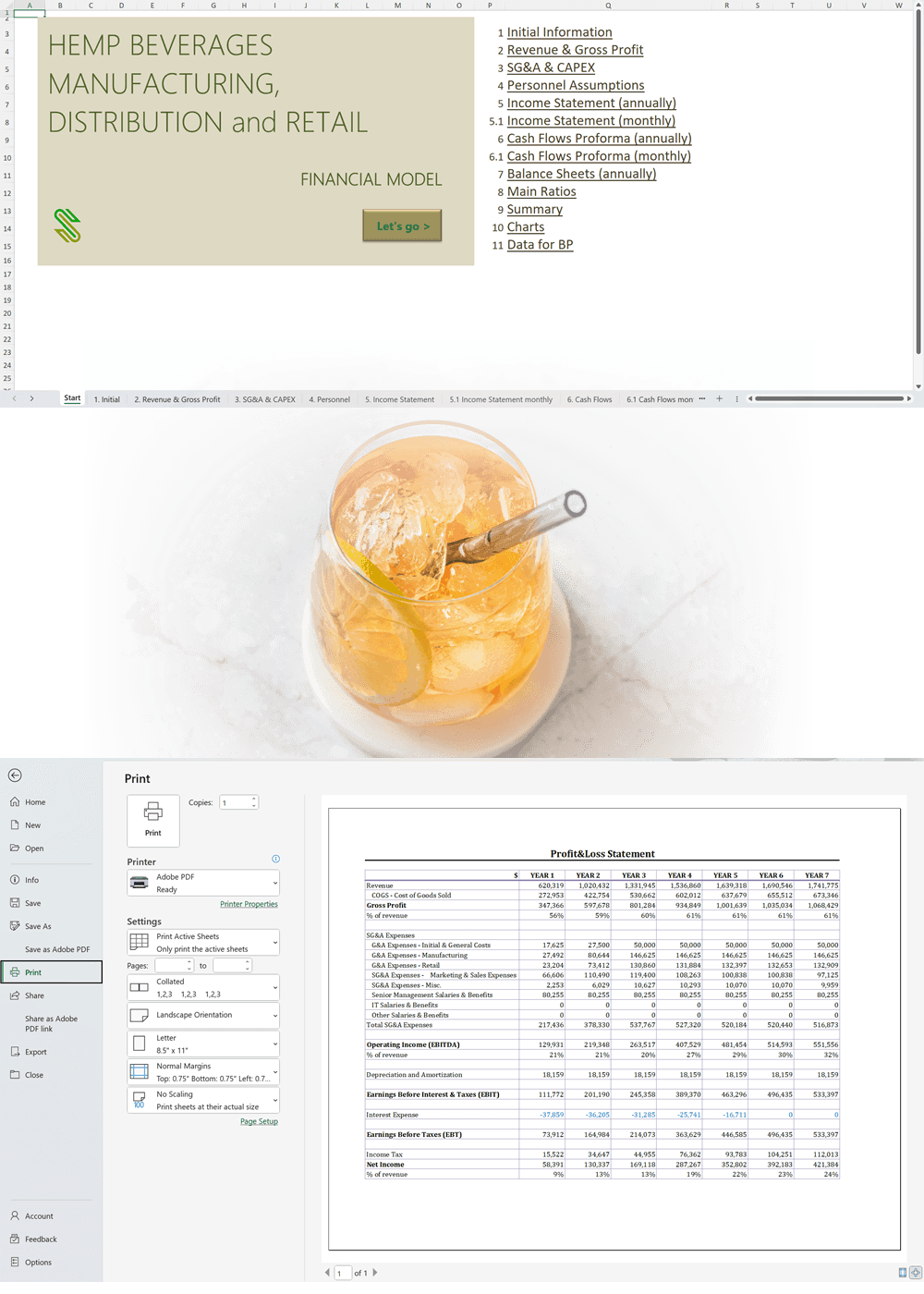
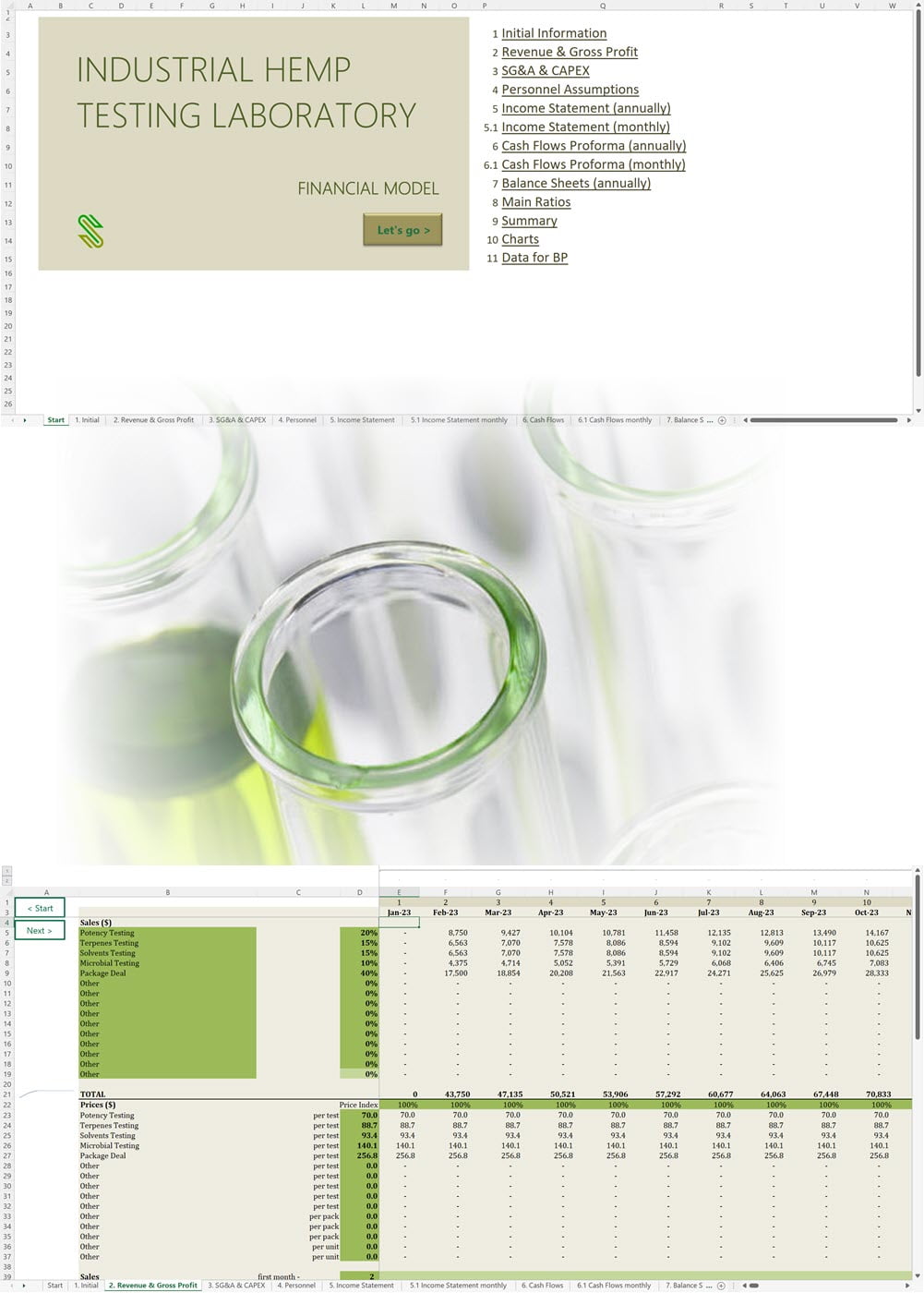
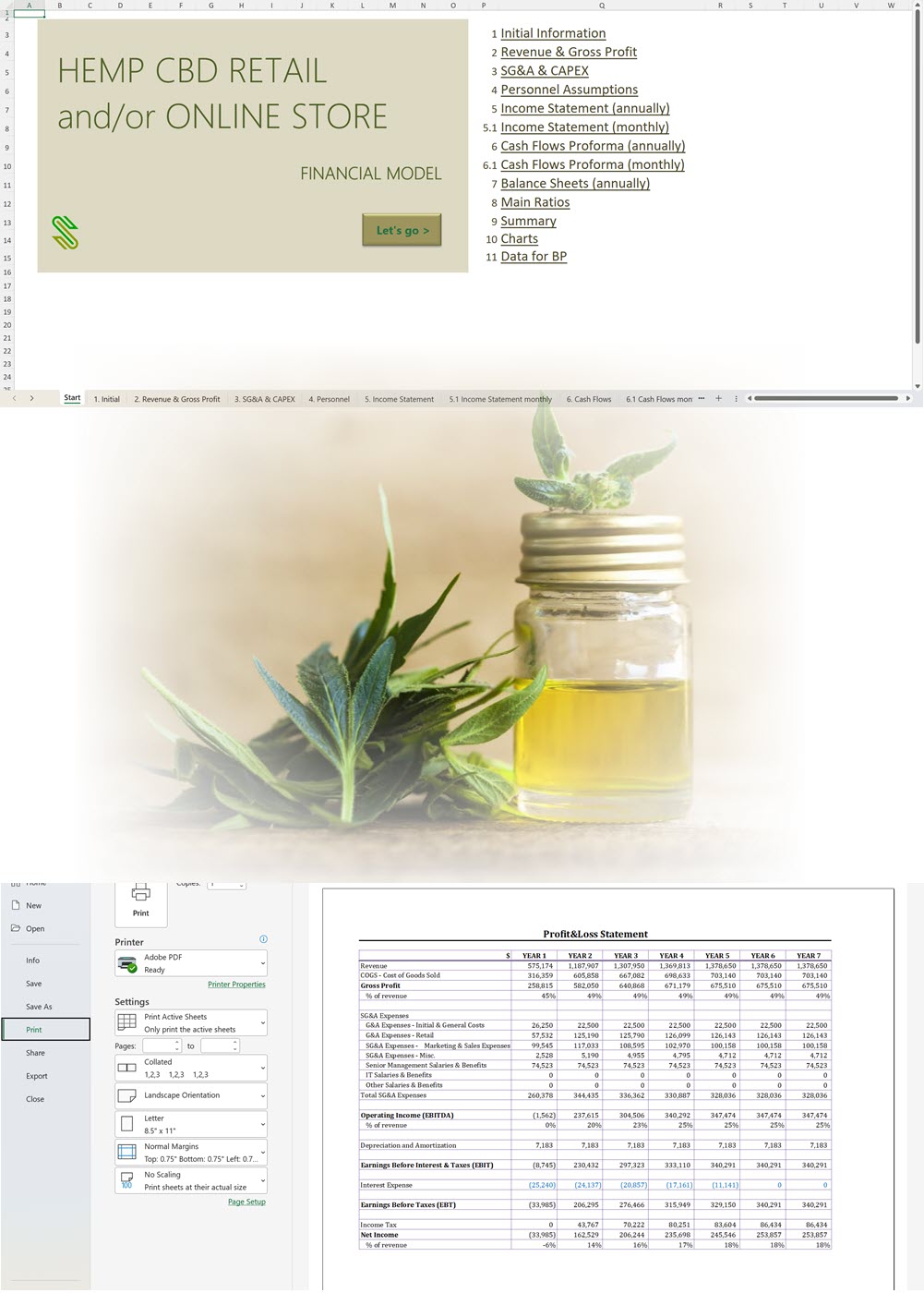
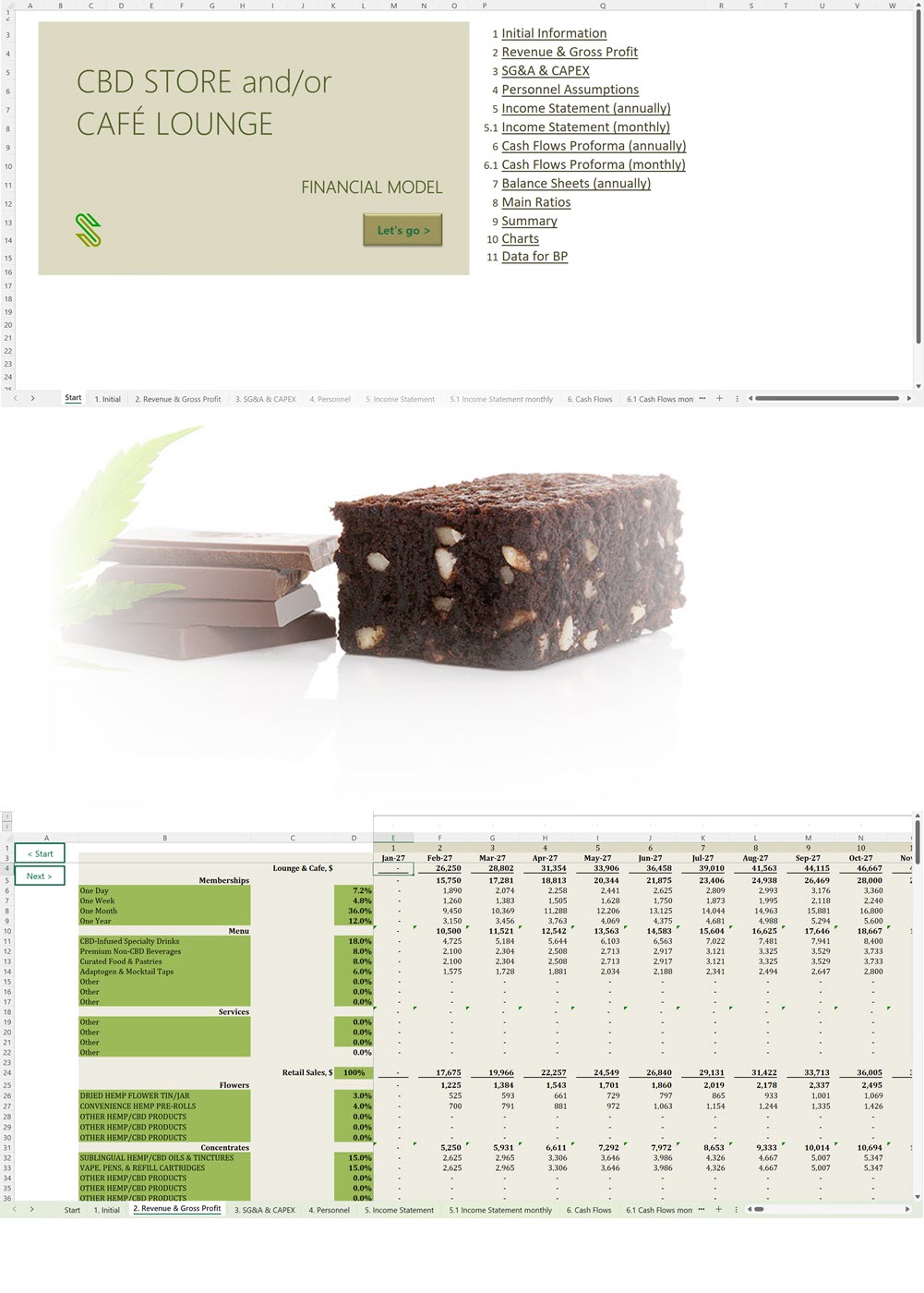
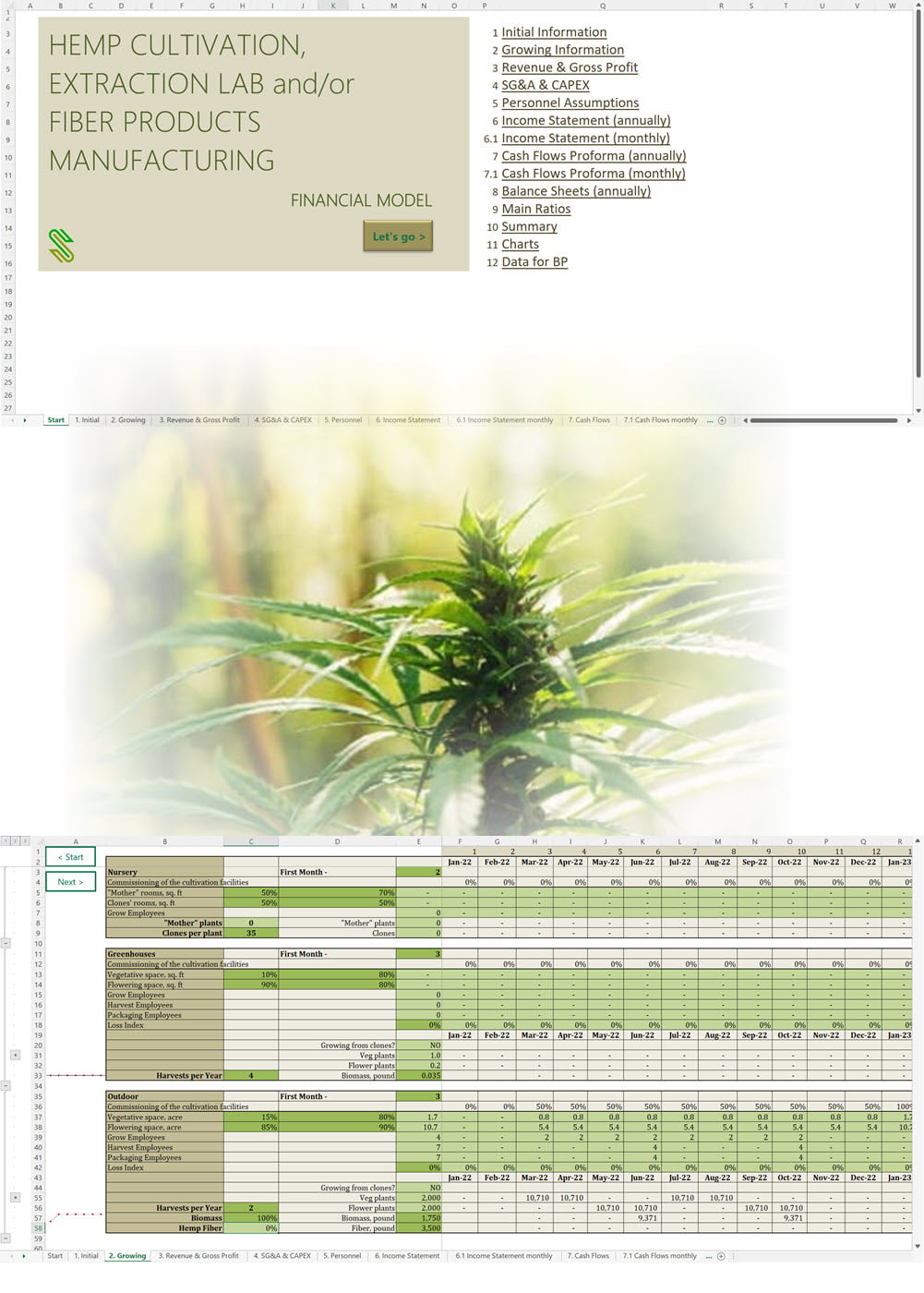
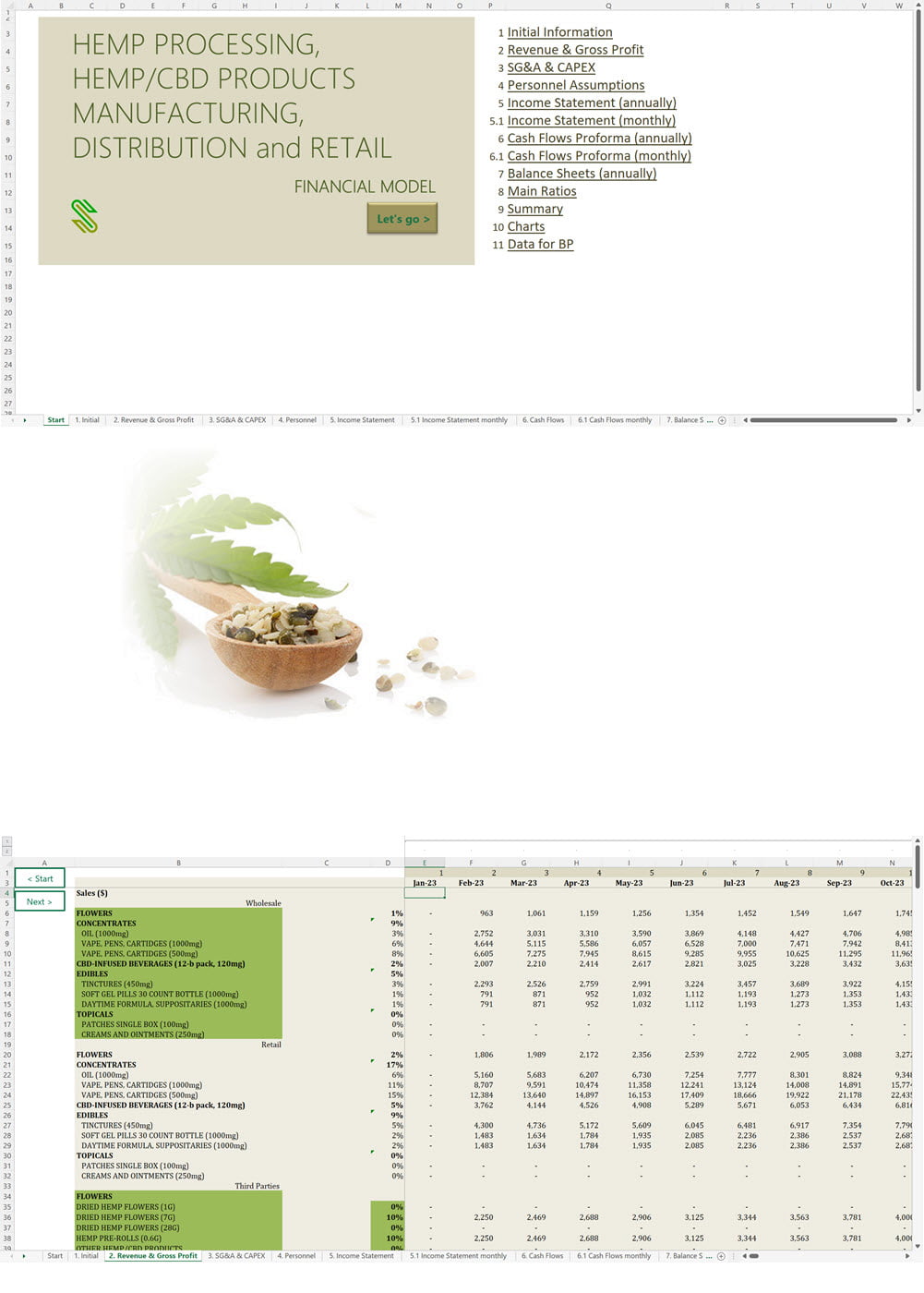
- Excel Financial Model: change variables and immediately see the impact, break down operational and capital costs, know how much it will take to get into the business and the potential profits.
- Word Business Plan: value proposition, market analysis, marketing strategy, operating plan, organizational structure, financial plan and more.
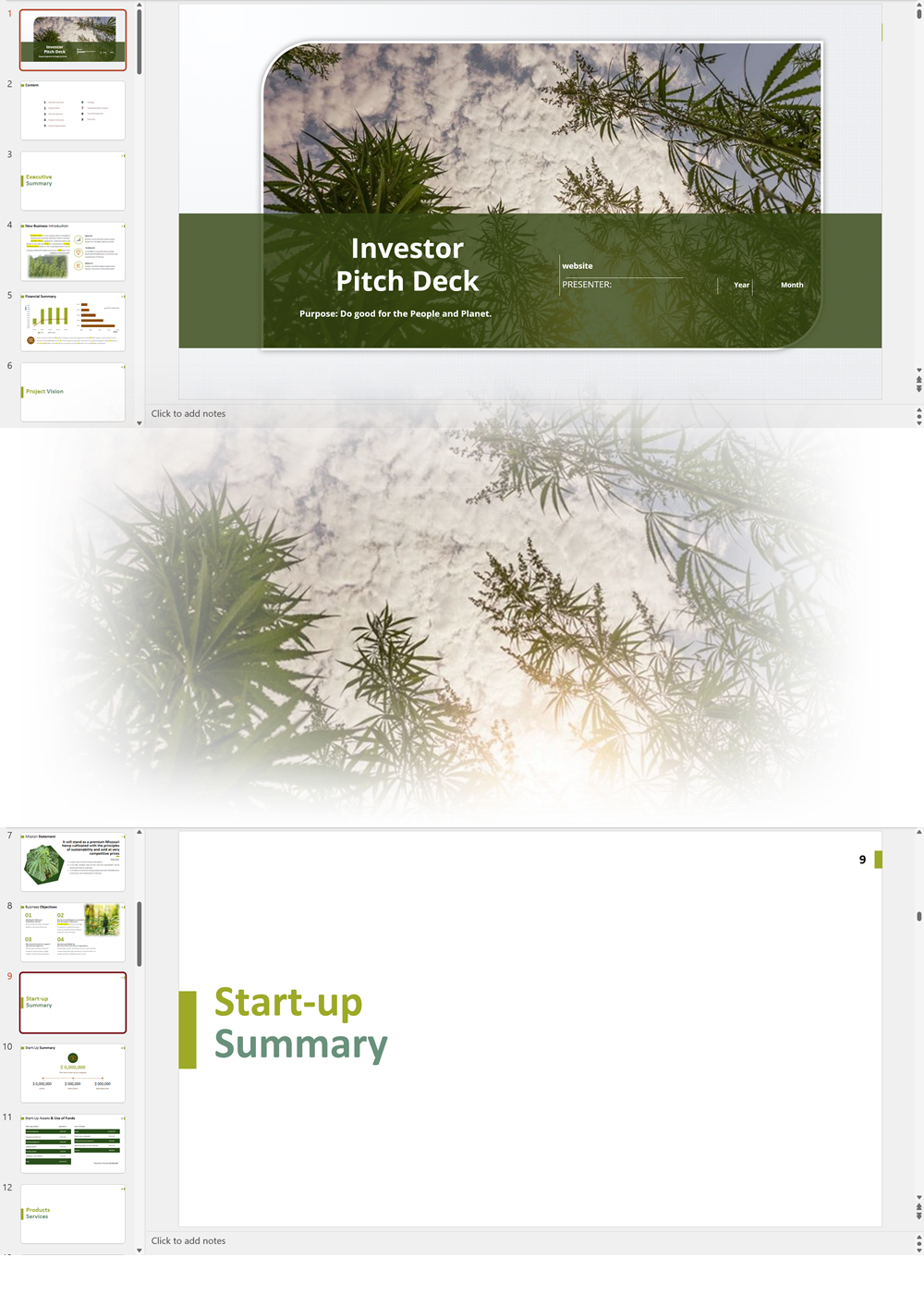
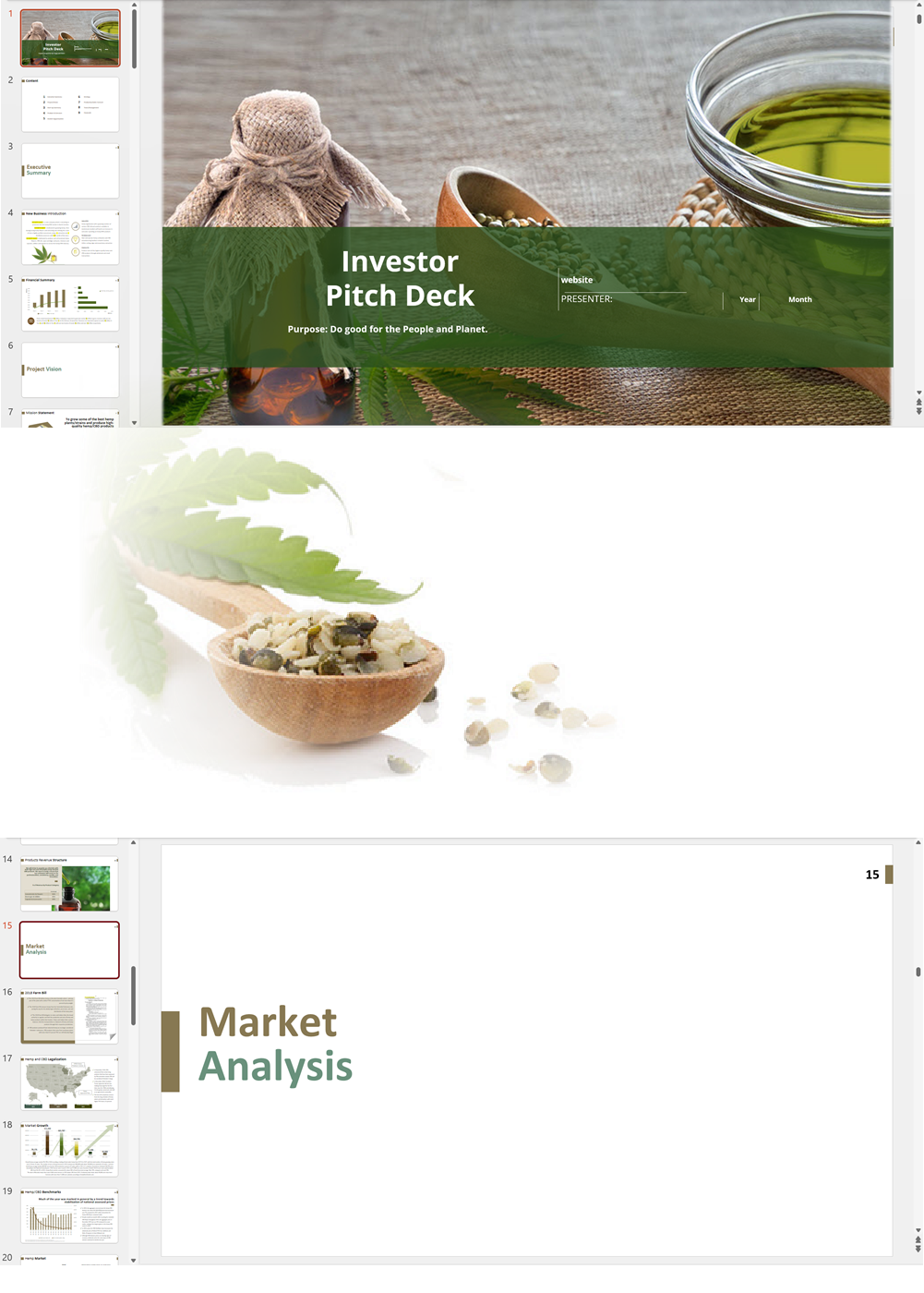
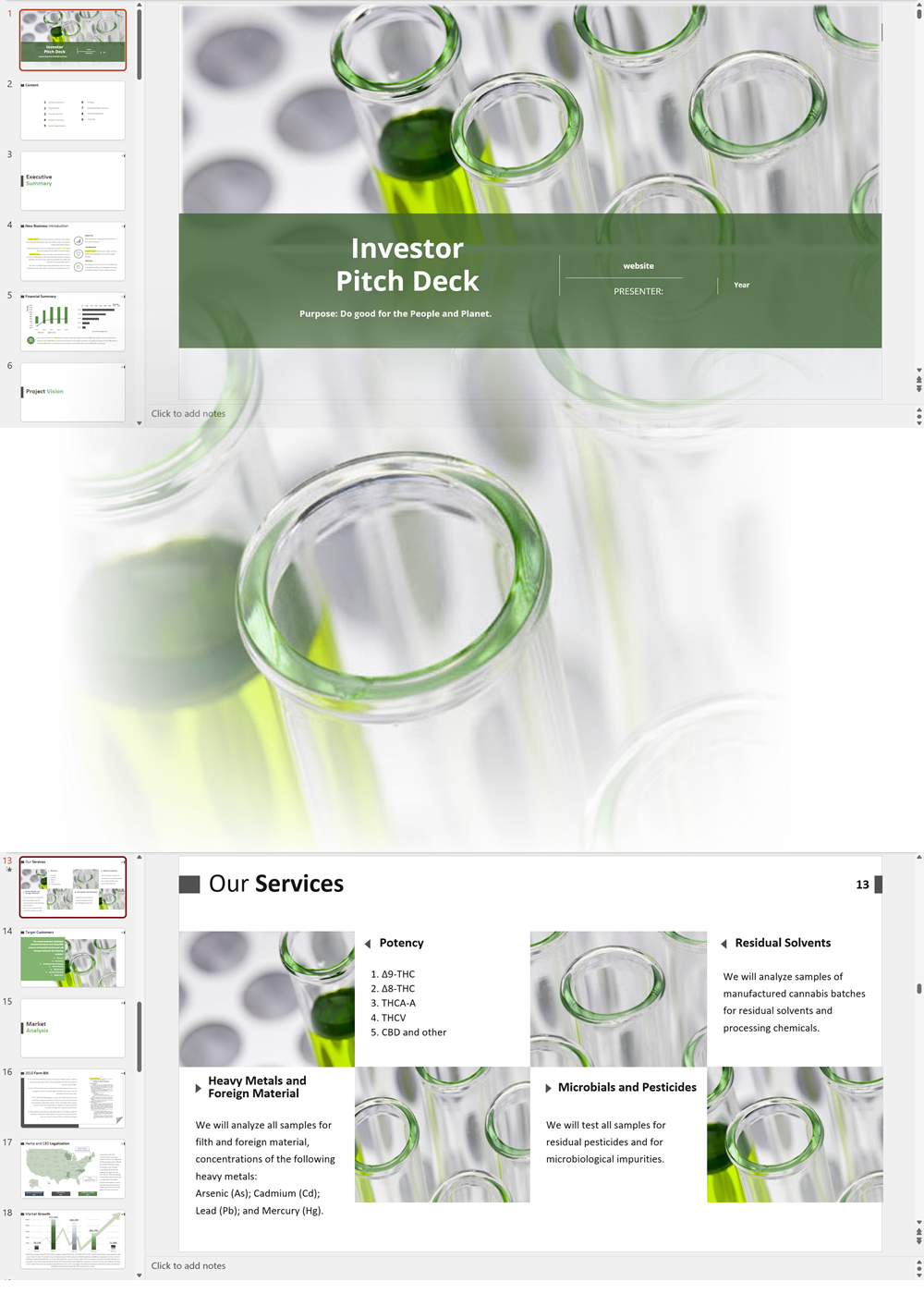
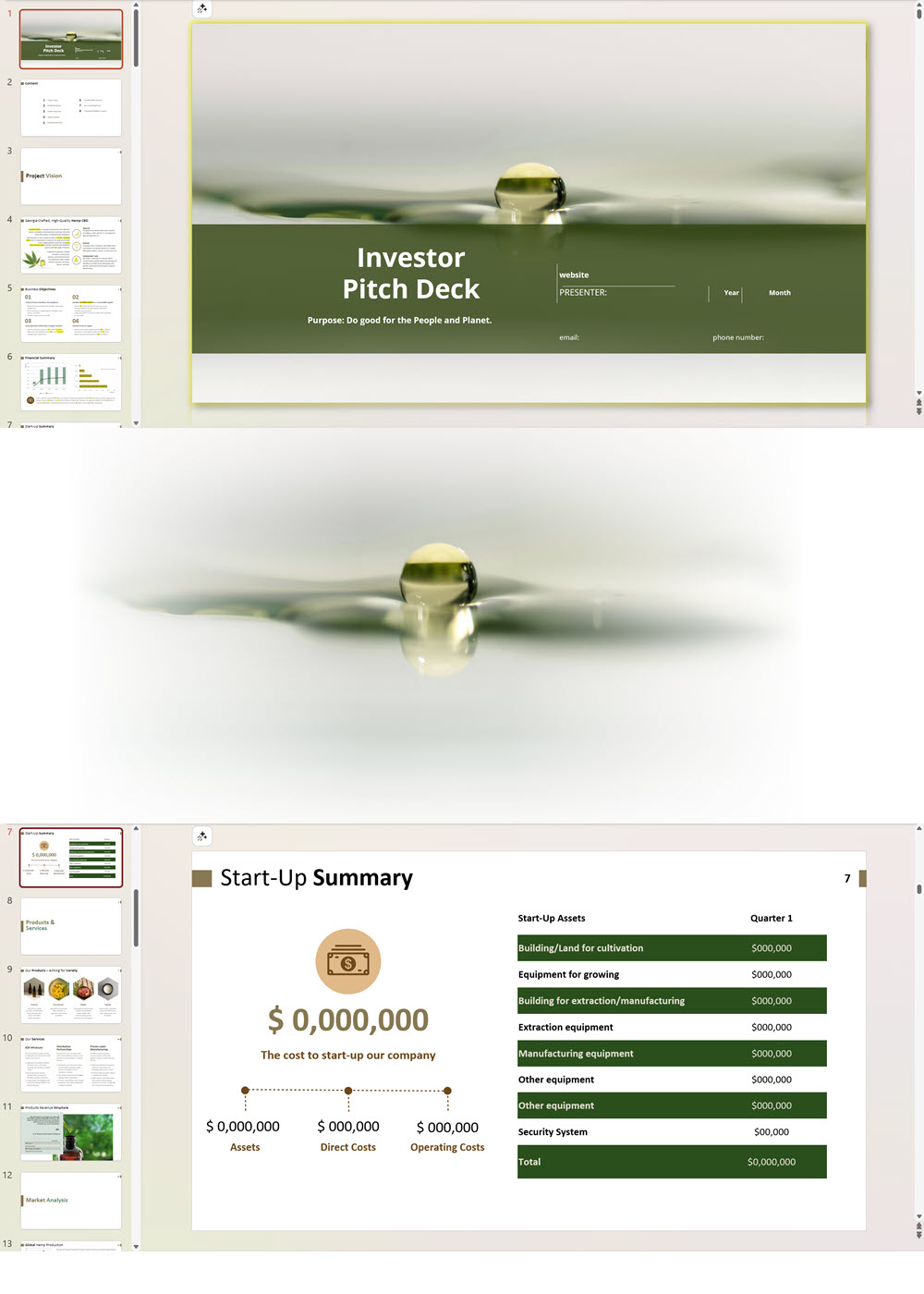
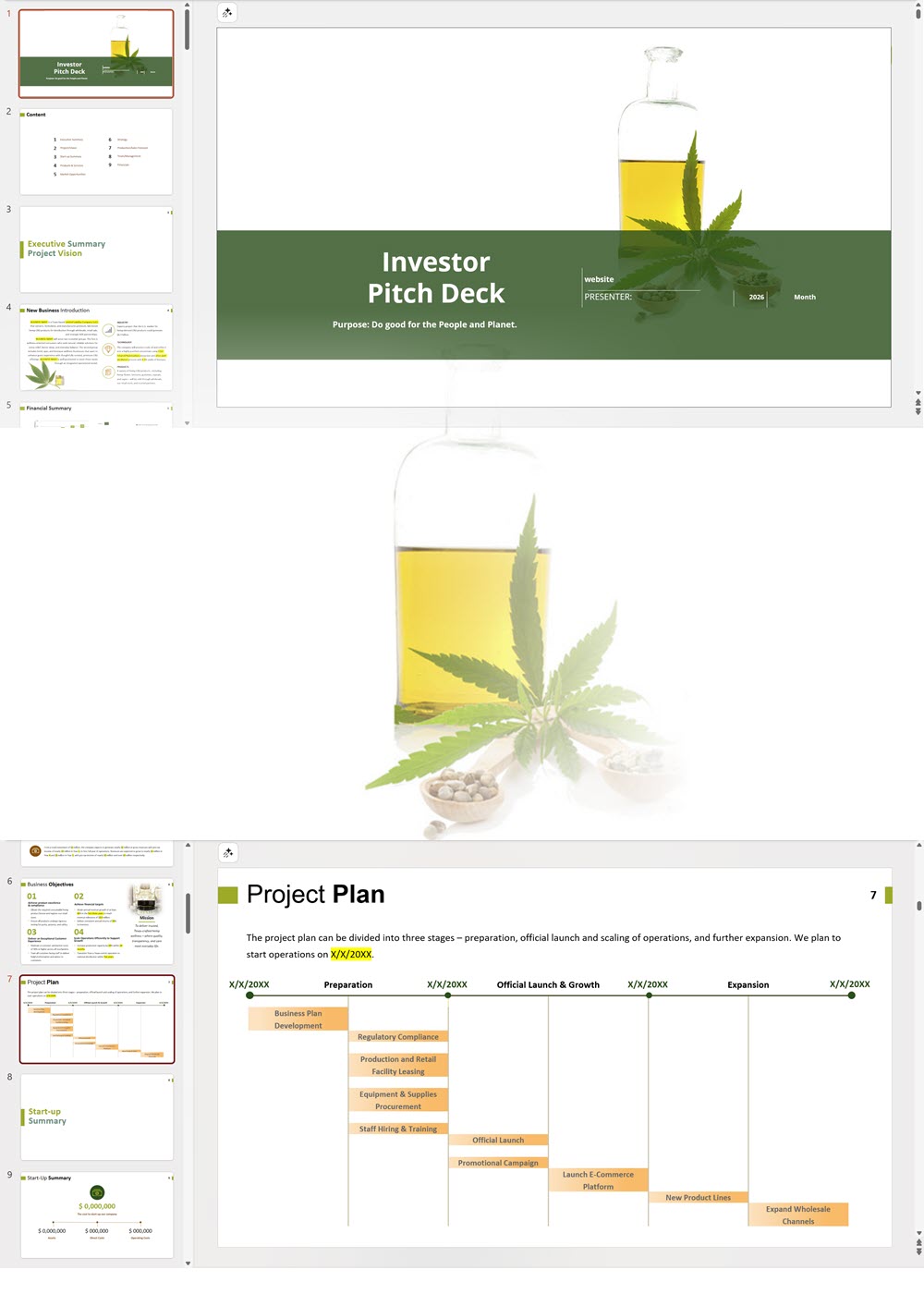
- PowerPoint Pitch Deck: provide a quick overview of your hemp CBD business plan.
'70% ready to go' business plan templates
Our hemp/CBD financial models and business plan templates will help you estimate how much it costs to start and operate your own hemp/CBD business, to build all revenue and cost line-items monthly over a flexible seven year period, and then summarize the monthly results into quarters and years for an easy view into the various time periods. We also offer investor pitch deck templates.
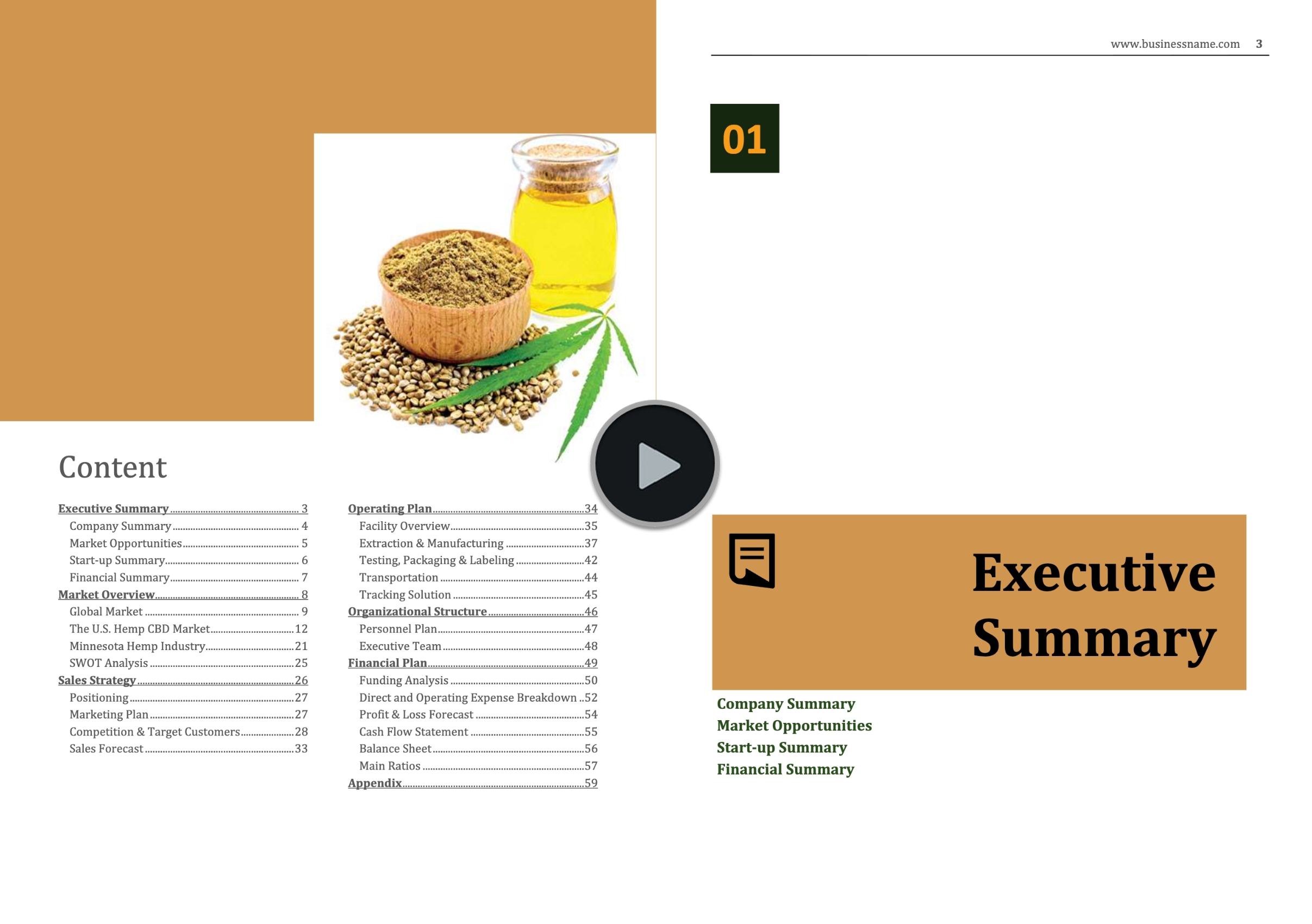
Hemp CBD Products Manufacturing Business Plan Template Sample, Minnesota
Best Selling Templates
-

Hemp Cultivation Business Plan Template
Price range: $75.00 through $275.00 Select options This product has multiple variants. The options may be chosen on the product page -

Hemp CBD Financial Model All in One
$200.00 Select options This product has multiple variants. The options may be chosen on the product page -
CBD Retail Investor Pitch Deck Template
$75.00 Select options This product has multiple variants. The options may be chosen on the product page
Our Templates
CBD Store and/or Cafe Lounge Business Plan Template
Price range: $75.00 through $275.00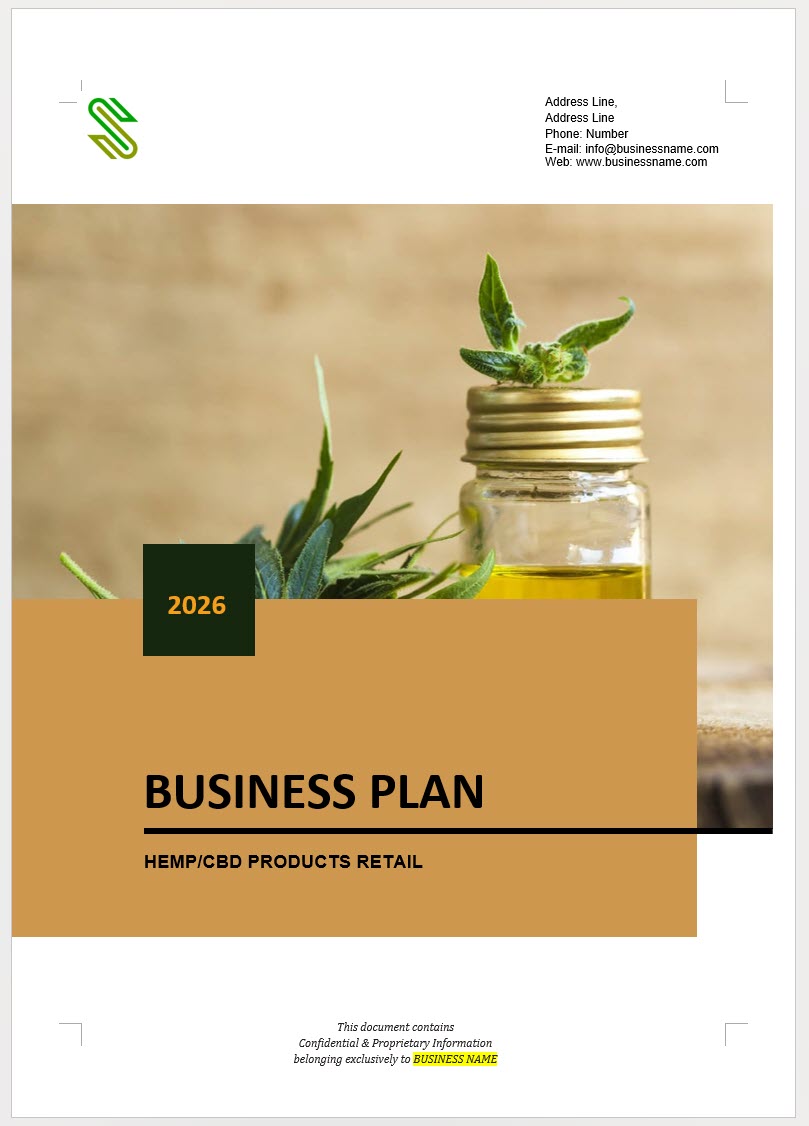
CBD Products Retail/Online Store Business Plan Template
Price range: $75.00 through $275.00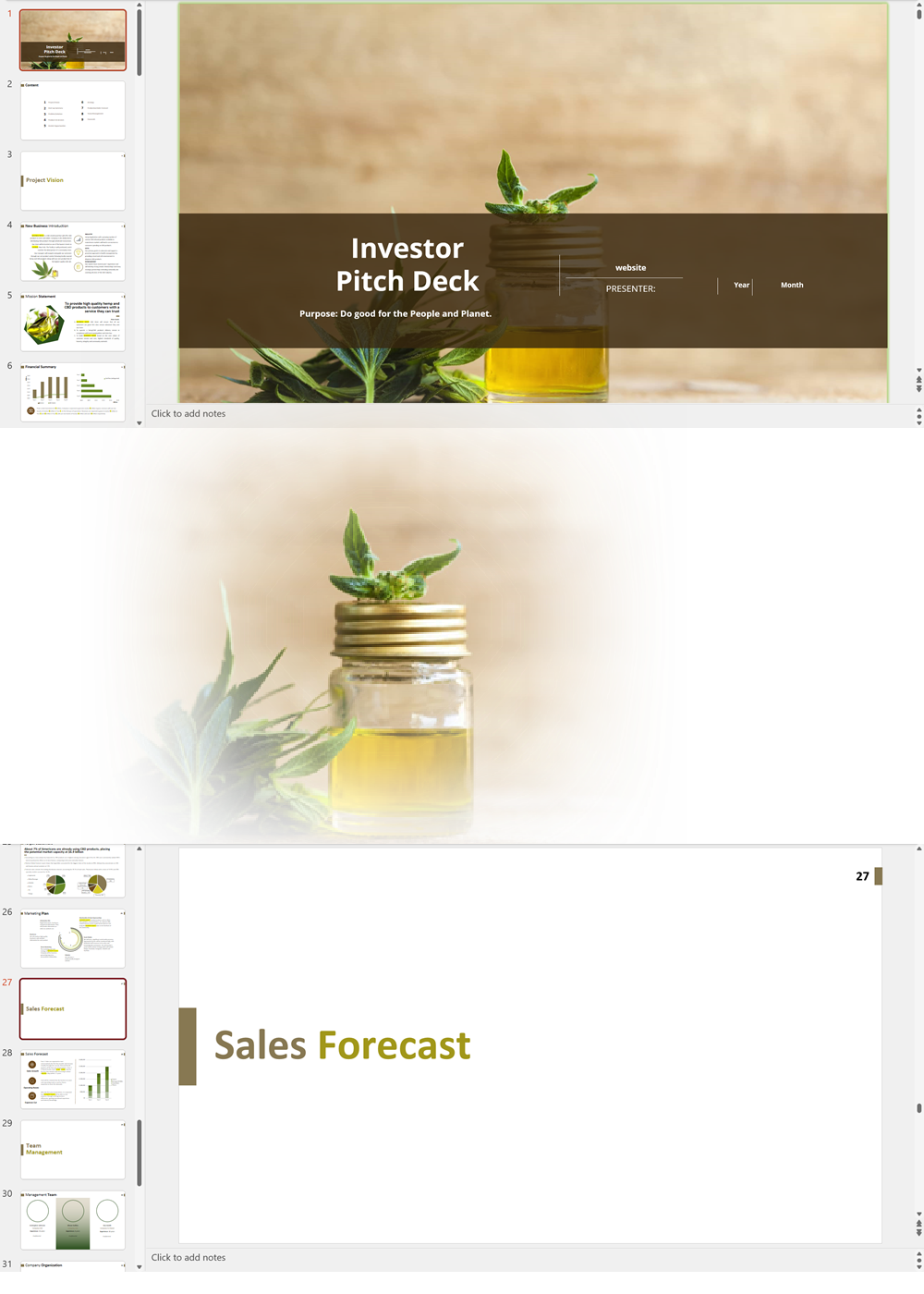
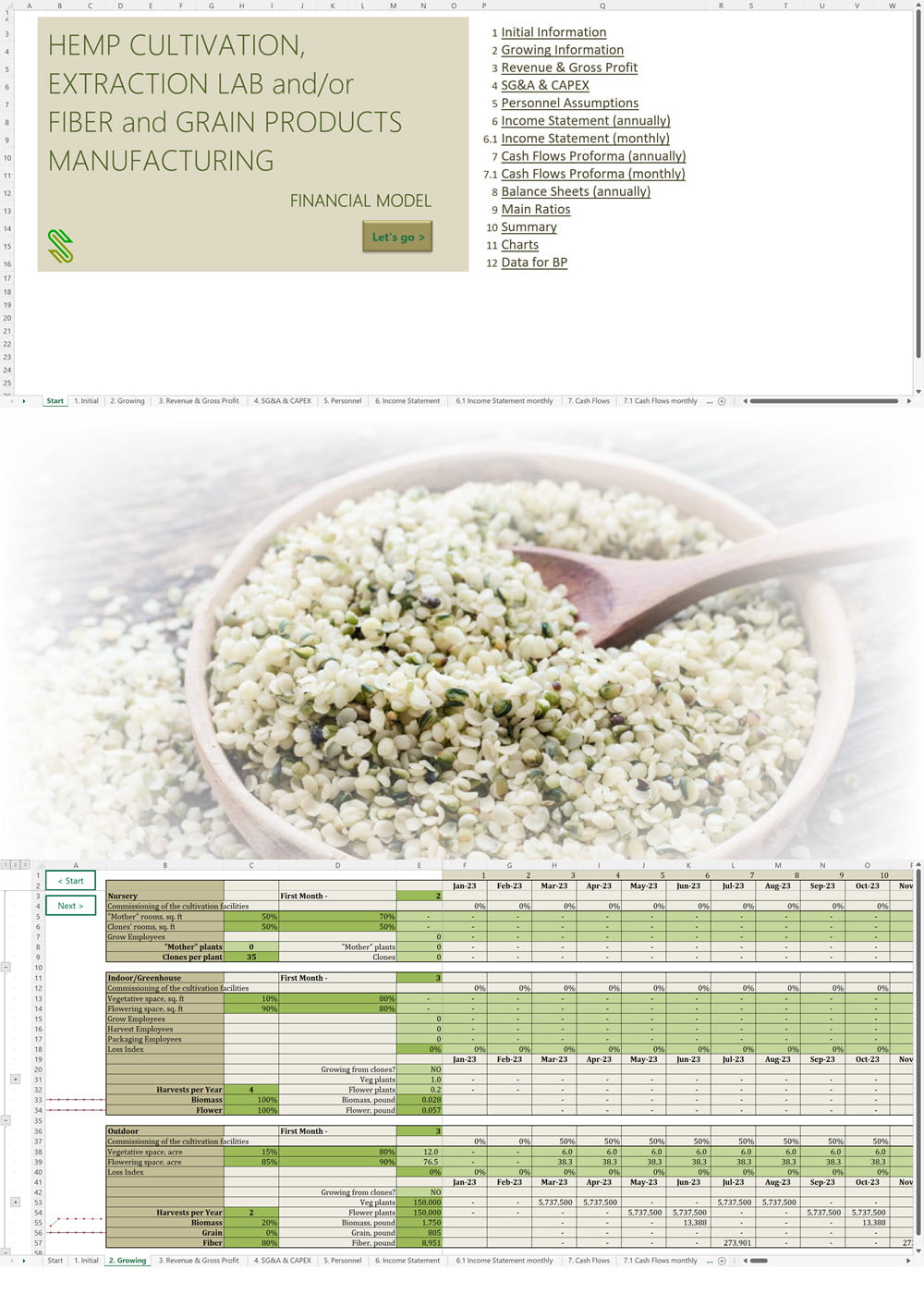
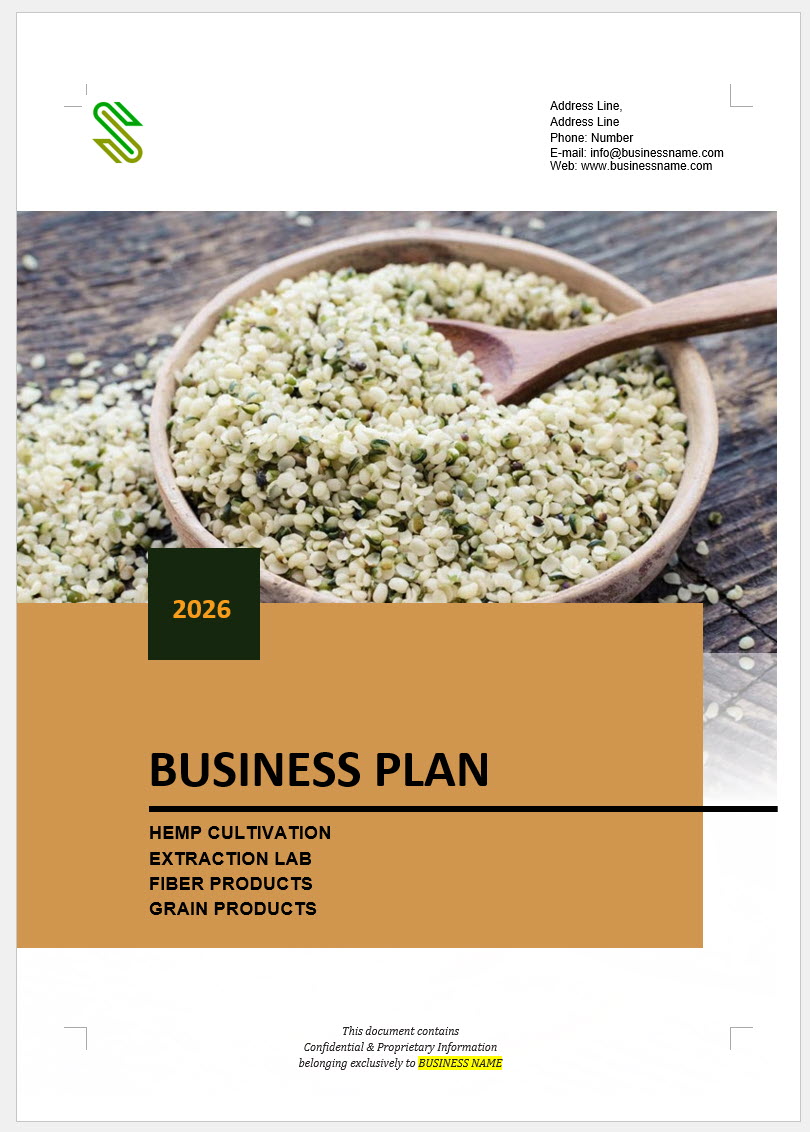
Hemp (Biomass, Fiber, Grain) Cultivation and Processing/ Manufacturing Business Plan Template
Price range: $75.00 through $350.00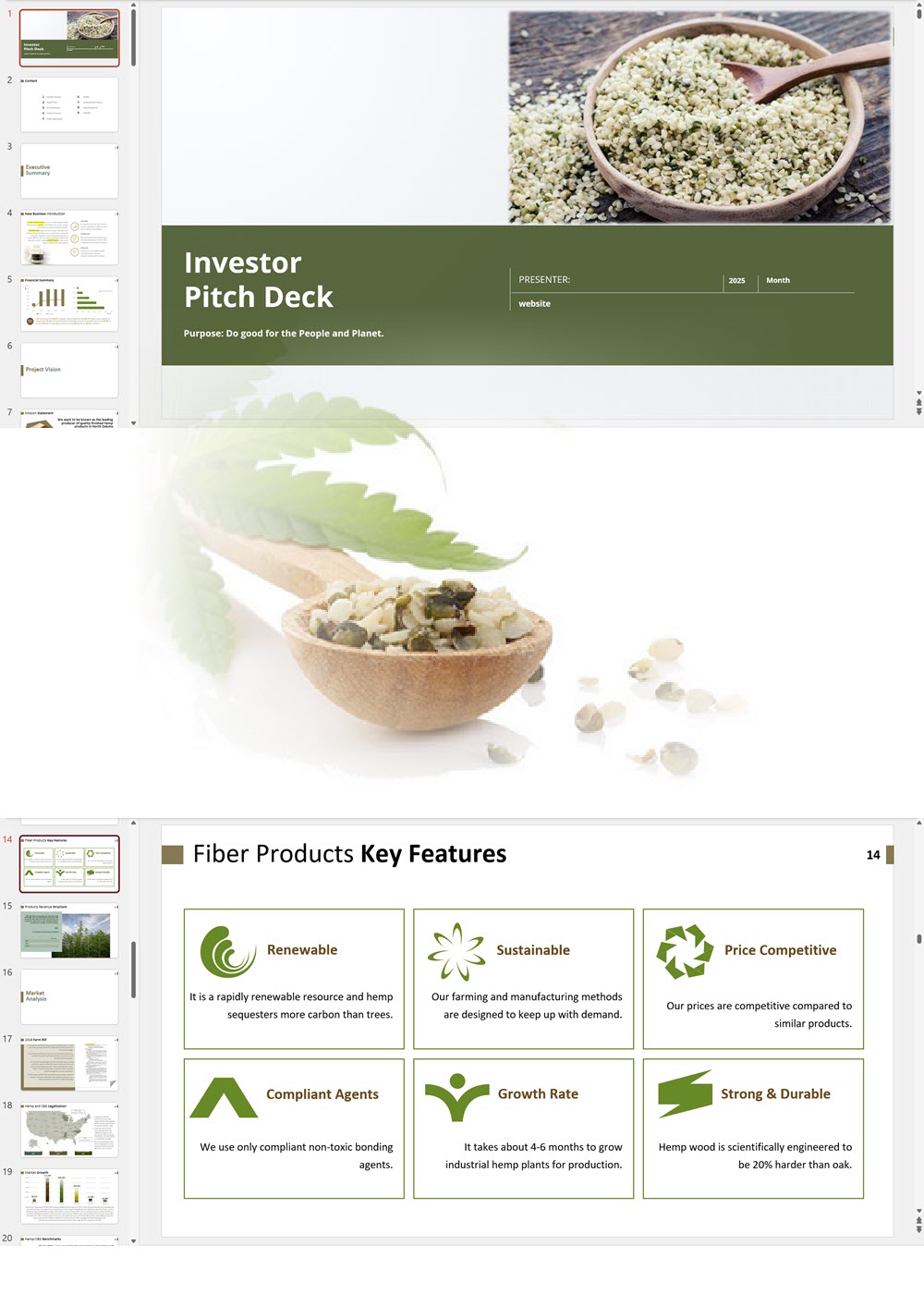
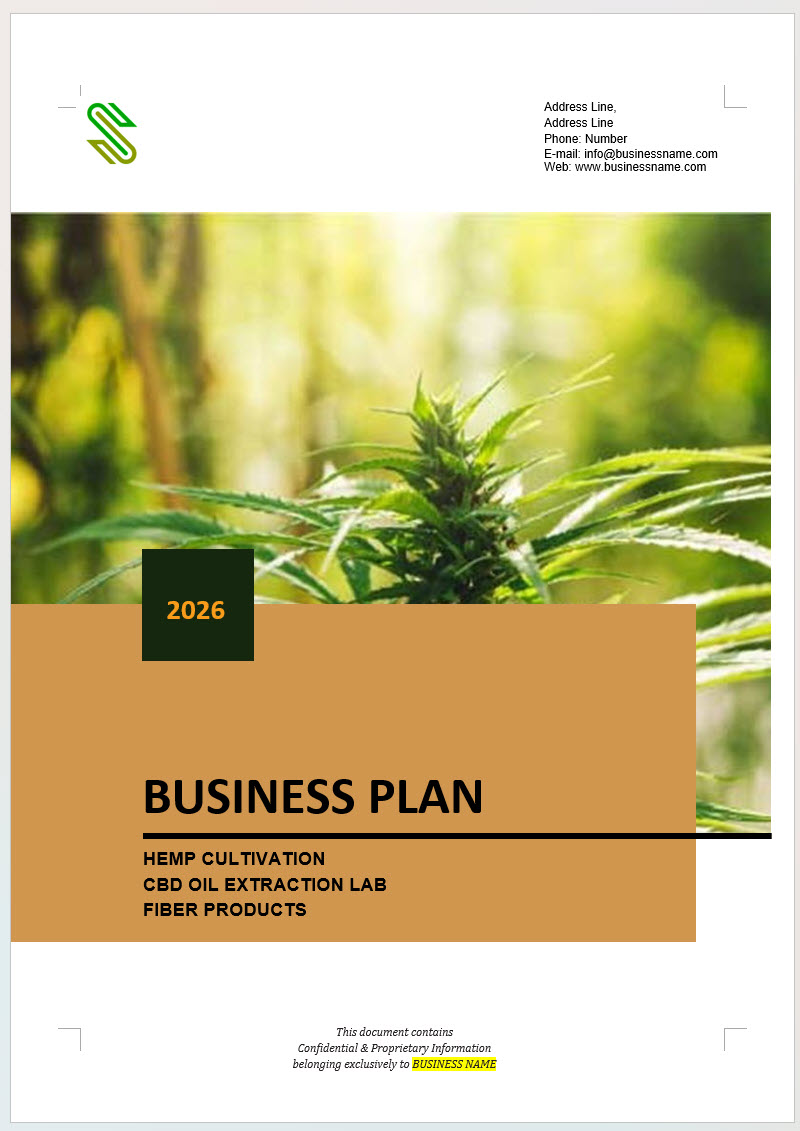
Hemp Cultivation and CBD Oil Extraction and/or Fiber Products Business Plan Template
Price range: $75.00 through $350.00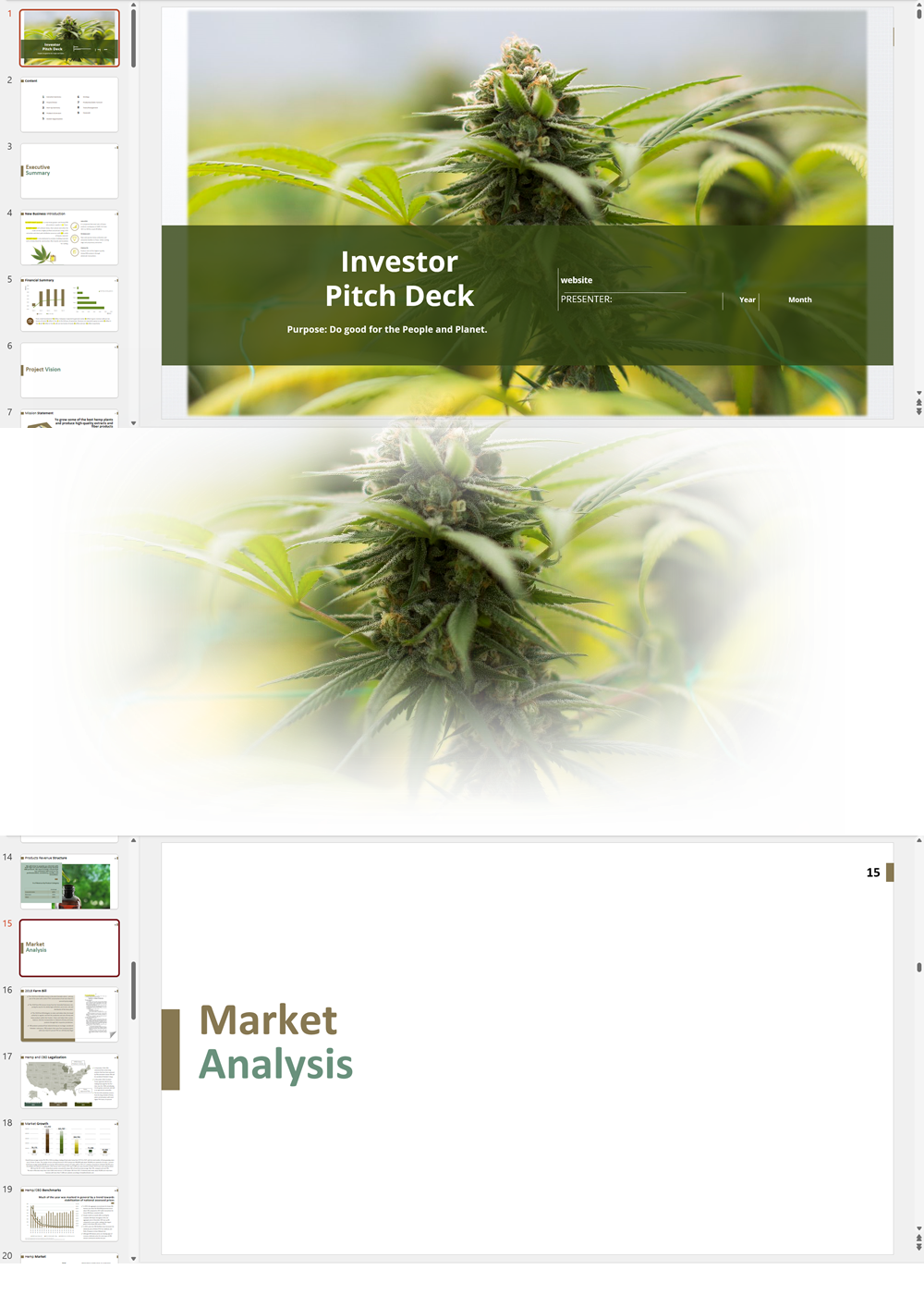
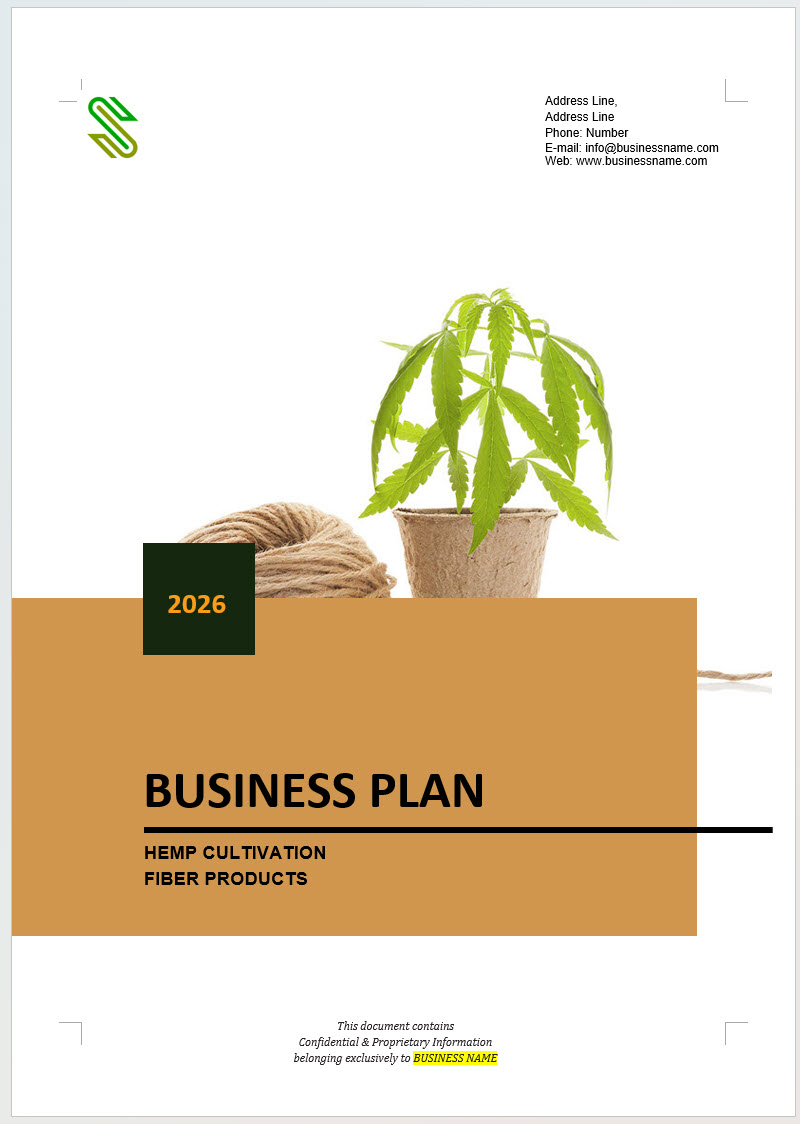
Hemp Fiber Growing and Manufacturing Business Plan Template
Price range: $75.00 through $275.00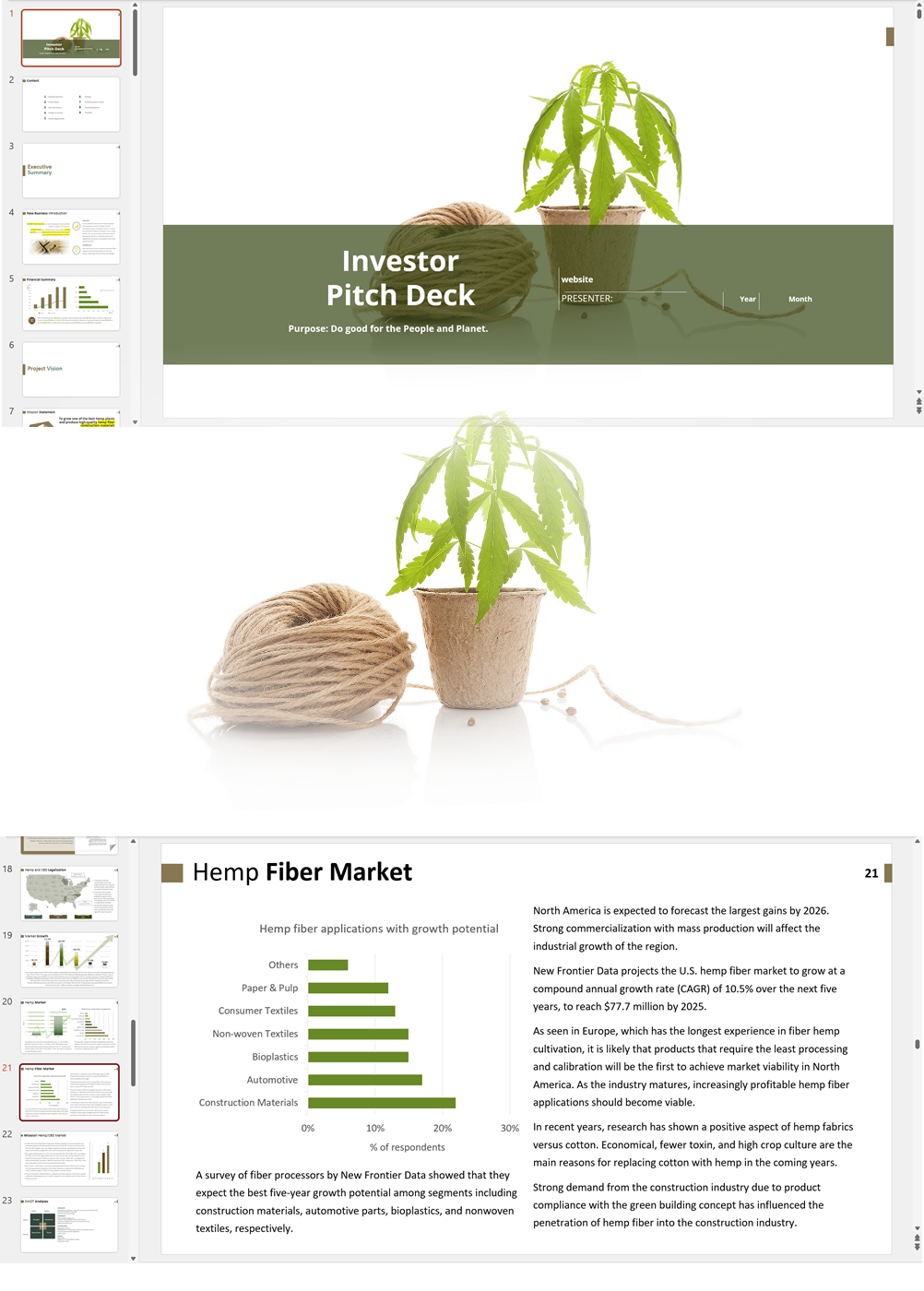
Hemp Cultivation + Extraction + Manufacturing Business Plan Template
Price range: $75.00 through $450.00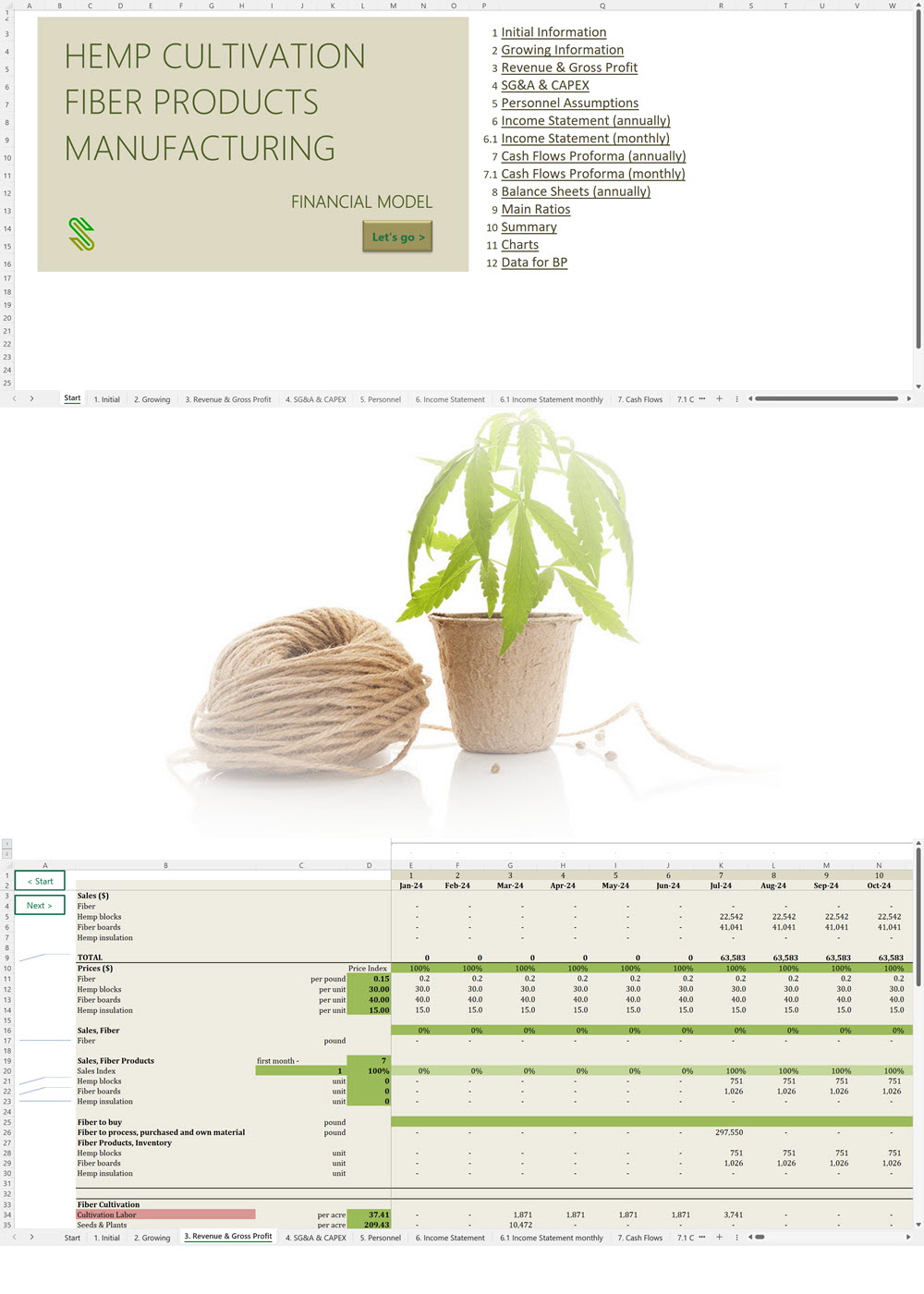
Hemp CBD Extraction + Manufacturing + Retail Business Plan Template
Price range: $75.00 through $450.00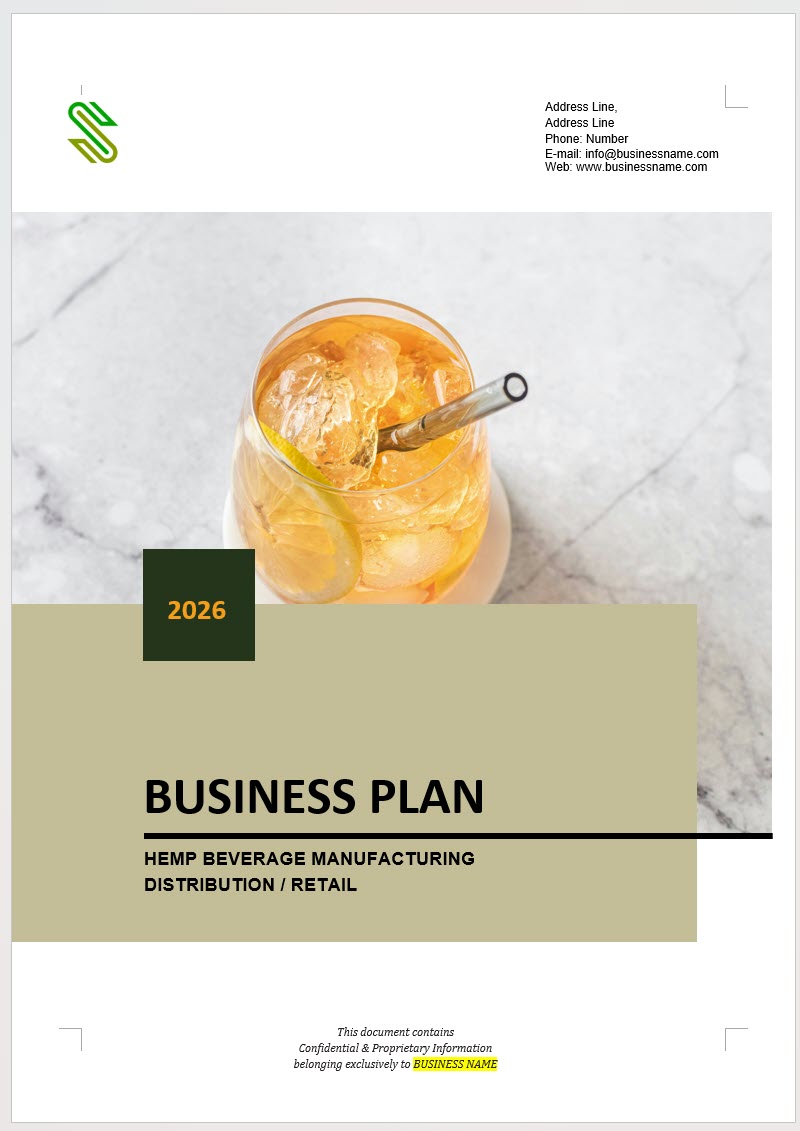
Hemp CBD Beverage Manufacturing, Wholesale and/or Retail Business Plan Template
Price range: $75.00 through $350.00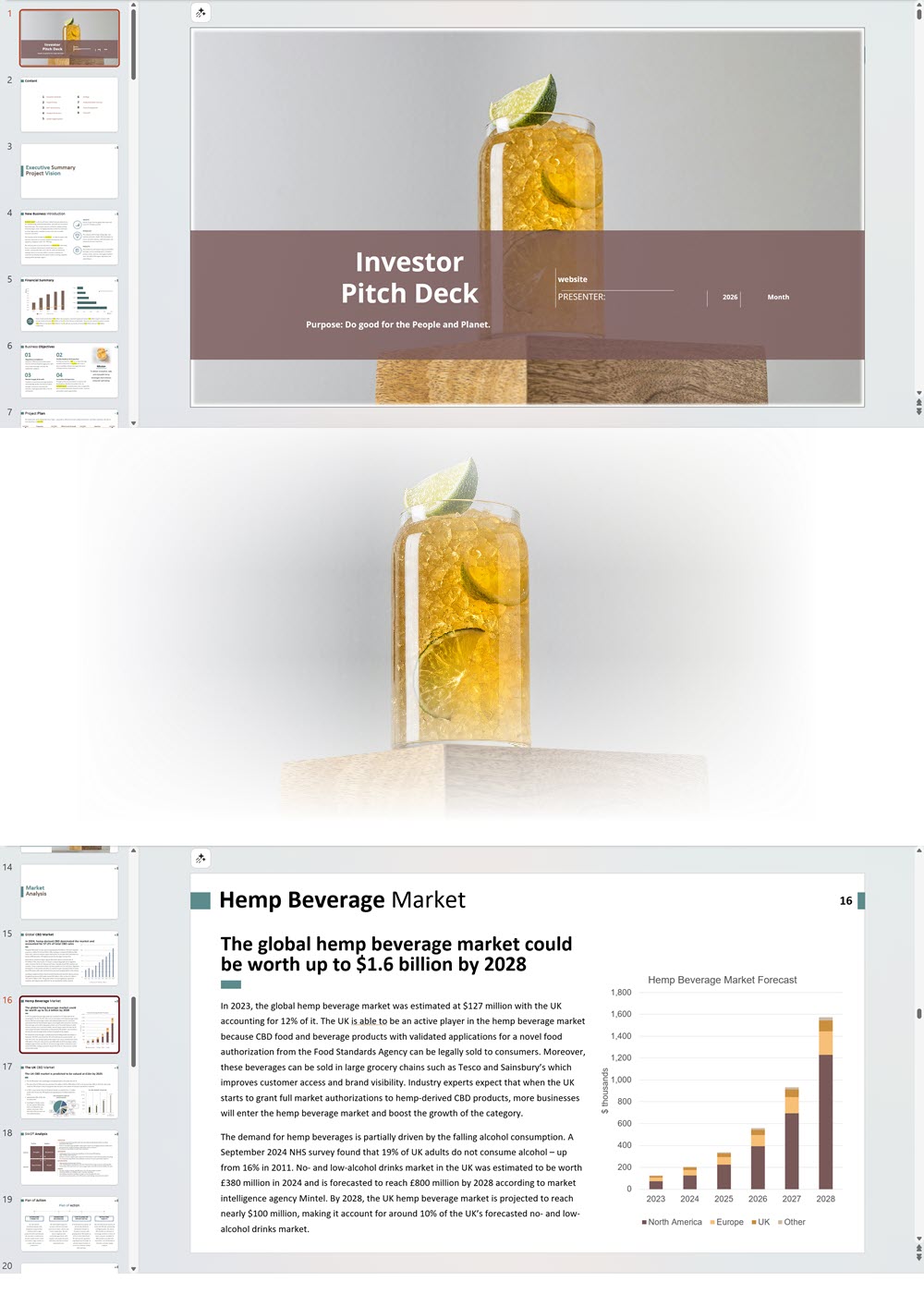
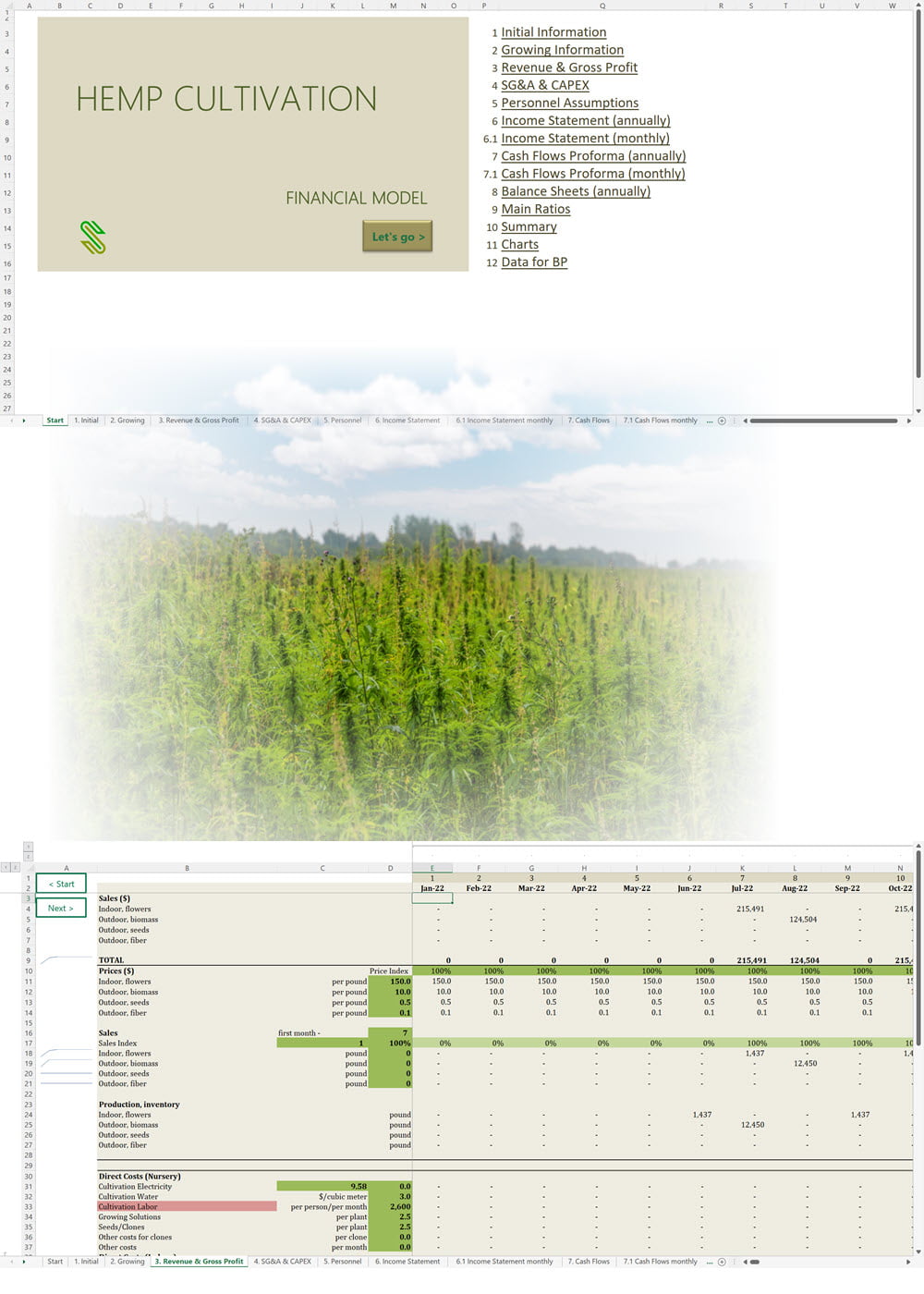
Hemp Cultivation Financial Model
$100.00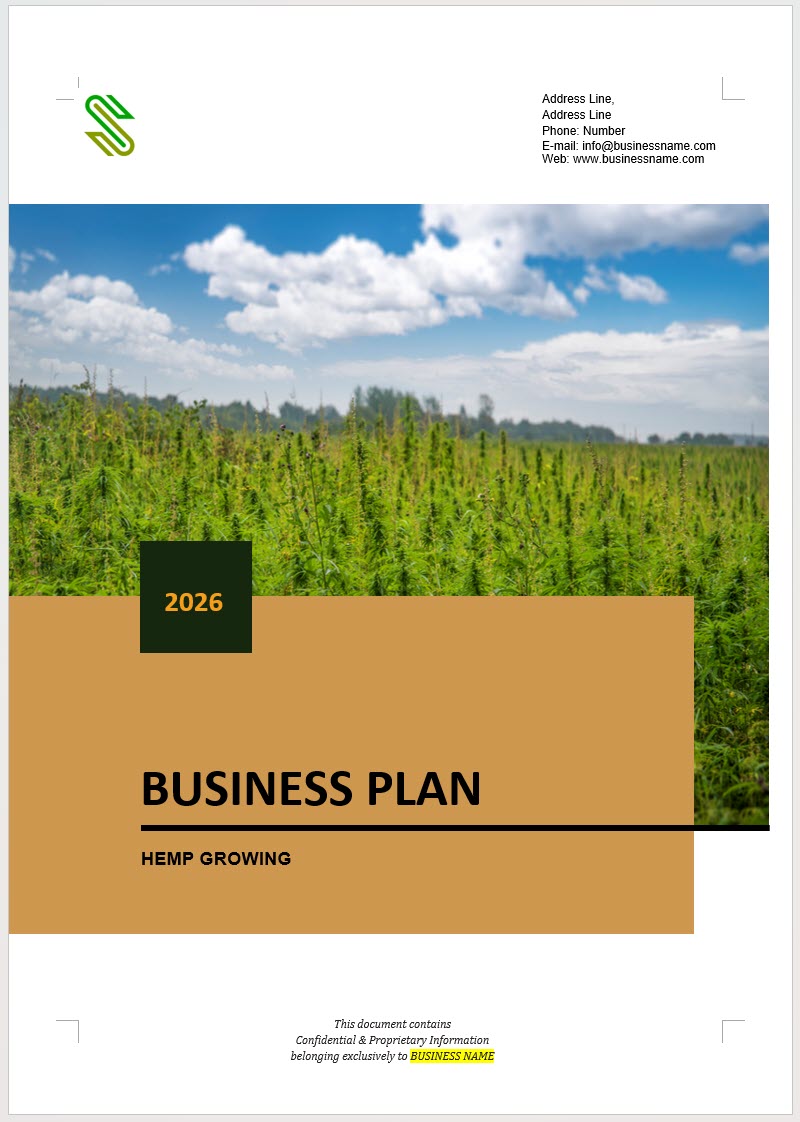
Hemp Cultivation Business Plan Template
Price range: $75.00 through $275.00