Key Takeaways
- Hemp Industry Regulations:
- Industrial hemp: New York State Hemp Plan
- Hemp used or marketed for its cannabinoid content: Part 114 of Title 9 of the Official Compilation of Codes Rules and Regulations of the State of New York.
- Licenses available:
- Hemp grower, cannabinoid hemp processor, cannabinoid hemp retail
- Products legal:
- Flower, oil cartridges, pre-filled vaporization pens, shatter, crumble, wax, resin, tinctures, oils, topicals, pills, capsules, and food or beverages intended for human consumption.
- Market:
- As of April 2026, there was a total of 106 licensed hemp growers in New York organized into four categories: 85 under CBD growing, 9 under ‘growing’ (fiber and/or grain), 11 under research, and and one seed retailer.
- As of May 2026, the Cannabinoid Hemp Program had 2,416 active retailers, 167 active distributors, 41 active processors (including 6 farm processors, 17 manufacturing only processors, and 18 extraction and manufacturing processors). There were also 9 active temporary retail permits.
- In 2025, the acreage of hemp planted held stead at 150 acres while harvested acreage improved to 130 acres, reflecting a yield rate of around 87%.
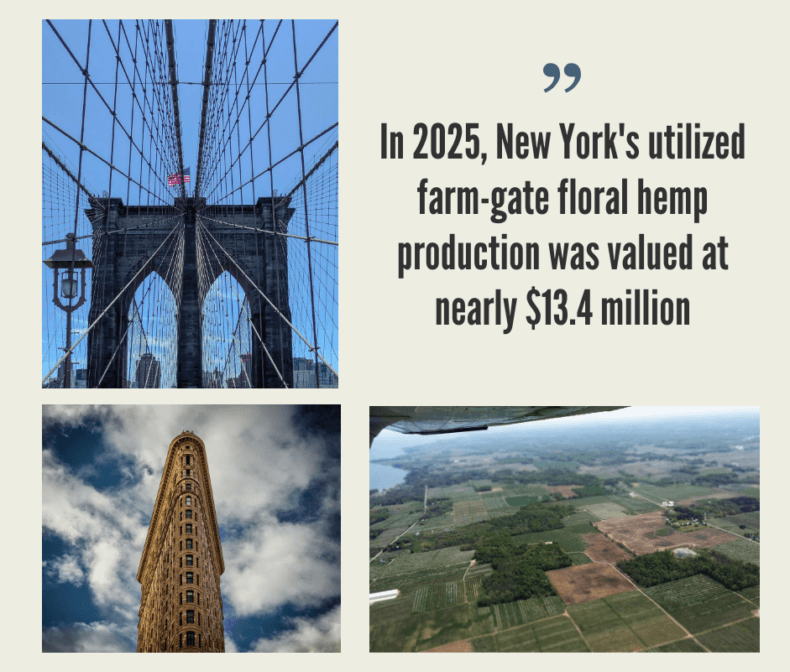
- Despite declining acreage since 2022, floral hemp output has grown, suggesting improvement in cultivation practices as well as other possible strategic changes such as selecting higher-yielding varieties. In 2025, 34,000 pounds of floral hemp were produced with 33,000 utilized. The value of the utilized production surged to nearly $13.4 million, potentially reflecting a move toward higher-quality, consumer-ready trimmed flower rather than bulk biomass.
New York Hemp Industry Regulations
New York authorized hemp growing in 2015, allowing for up to 10 educational institutions, farms or businesses to grow and research hemp. In early 2017, New York removed the 10-grower limit and opened the door to an unlimited number of cultivators. The New York State Hemp Plan was approved by the USDA on October 5, 2021.
The New York State Department of Agriculture and Markets (Department) oversees hemp cultivation. The New York State Office of Cannabis Management (Office) regulates hemp used or marketed for its cannabinoid content. Those wishing to process, manufacture, or sell hemp CBD products must first obtain a license from the Office through the Cannabinoid Hemp Program established by Part 114 of Title 9 of the Official Compilation of Codes Rules and Regulations of the State of New York.
Hemp CBD Product Forms Legal in New York
In New York, according to the published guidance document, the following hemp CBD product forms are legal as long as they comply with the potency limits established for them:
| Category | Description | Potency Limit |
| Hemp Flower Product | Any form of cannabinoid hemp product consisting of the flower, buds, leaves, or stems of the hemp plant, including trimmings, intended for retail sale to consumers 21+ with minimal processing. | ≤ 0.3% Delta-9-THC concentration |
| Hemp Topical Product | Any form of cannabinoid hemp product that is applied externally to the skin. | ≤ 0.3% Delta-9-THC concentration |
| Concentrated Cannabinoid Hemp Product | A concentrated form of cannabinoid hemp intended for retail sale to consumers 21+. Examples include, oil cartridges, pre-filled vaporization pens, shatter, crumble, wax, resin. | ≤ 0.3% Delta-9-THC concentration; 15:1 CBD to THC or higher (if CBD is not the primary marketed cannabinoid, the sum of cannabinoids excluding THC must have a ratio of 15:1 THC or higher). |
| Orally Consumed Cannabinoid Hemp Product (except tincture) | Any cannabinoid hemp product intended for use or consumption through ingestion, including sublingual or oral absorption. Examples include food, beverages, supplements, etc. | ≤ 0.3% Delta-9-THC concentration; 15:1 CBD to THC or higher (if CBD is not the primary marketed cannabinoid, the sum of cannabinoids excluding THC must have a ratio of 15:1 THC or higher);1 milligram THC per serving and 10 milligrams THC per package;100 milligrams total cannabinoids per serving and 3,000 milligrams total cannabinoids per package.Note: Cannabinoid hemp beverages are limited to a single serving per package, however multiple packages of beverage products can be sold together. Each can (package) must contain no more cannabinoids than the maximum allowed in a single serving of an orally consumed cannabinoid hemp product. |
| Cannabinoid Hemp Tincture | A non-potable edible hemp product that is a cannabis extract solution, intended for human consumption, dissolved in alcohol, glycerin, or plant-based oil which includes a calibrated dropper or other similar device capable of accurately measuring servings. | ≤ 0.3% Delta-9-THC concentration; 15:1 CBD to THC or higher (if CBD is not the primary marketed cannabinoid, the sum of cannabinoids excluding THC must have a ratio of 15:1 THC or higher);1 milligram THC per serving;100 milligrams THC per package;4,000 milligrams total cannabinoids per package. |
Hemp CBD Licenses Available in New York
There are different types of grower, retailer, and distributor licenses available in the state of New York.
The Hemp Grower license allows to grow, cultivate, and handle hemp plant material for market as well as carry out processing in connection with the cultivation of hemp such as harvesting, stripping, and drying.
(application fee: $500; license fee: $500; license term: 3 years)
The Nursery Grower license authorizes the sale of rooted hemp plants/seedlings.
(application fee: $100; license fee: $100; license term: 2 years)
The Hemp Seed Retail License authorizes the sale of hemp seeds.
(application fee: $100; license fee: $100; license term: 3 years)
The Hemp Research license “authorizes the growth or cultivation of hemp for scientific, academic, or commercial research purposes but does not authorize that hemp to move in commerce.”
(application fee: $500; license fee: $500; license term: 3 years)
The Cannabinoid Hemp Farm Processor license “allows licensed hemp growers to trim, dry and manufacture cannabinoid hemp flower products but they may only produce up to 1,000 pounds of dried hemp annually.”
(application fee: $100; license fee: $300; license term: 2 years)
The Cannabinoid Hemp Processor (Extracting and Manufacturing) license “allows a processor to extract or isolate cannabinoids from hemp to create crude oil, distillate, isolate or other intermediary product to be further refined or manufactured into a final cannabinoid hemp product. This license also permits the manufacturing of final cannabinoid hemp products.”
(application fee: $1,000; license fee: $3,500; license term: 2 years)
The Cannabinoid Hemp Processor (Manufacturing Only) license “allows a processor to purchase crude oil, distillate, isolate or other intermediary product to manufacture final cannabinoid hemp products.”
(application fee: $500; license fee: $1,000; license term: 2 years)
The Cannabinoid Hemp Retail license allows to sell cannabinoid hemp products (both online and in person) to consumers in New York State.
(license fee: $300 per retail location; license term: 1 year)
The Cannabinoid Hemp Temporary Retail permit allows the temporary sale of cannabinoid hemp products to consumers. The permit is meant for retailers who do not have a static storefront and is not connected to a specific business location. The retail permit can be obtained for retail sale online, farmer’s market, vendor show retailers, and other temporary retail locations.
(license fee: $25 per month; license term: 3 months)
The Cannabinoid Hemp Distributor permit allows to purchase cannabinoid hemp products manufactured outside of New York State and sell them to licensed Cannabinoid Hemp Retailers.
(license fee: $300; license term: 1 year)
All THC testing facilities must apply to be included on the Department’s list of Identified Hemp Testing Laboratories in order to be able to carry out regulatory THC testing for hemp growers.
(no fees)
Application Process:
- Submit a completed application form along with the required nonrefundable application fee, maps, and FBI Identity History Summaries.
- The Department / Office will review the complete application to ensure it complies with all program requirements.
- Once the Department / Office review is complete, the applicant will be notified of the outcome.
- If the application is approved, a New York State Hemp License will be mailed to the applicant.
Documents and information required to be submitted for each license/permit category:
Each application and renewal application for a license issued under the Department’s hemp program to growers and seed retailers must include:
- The business name and contact information of the applicant.
- The focus of the business.
- A description and map of each proposed location where hemp will be cultivated, processed, or stored by physical address, GPS coordinates, and area measurements (outdoor area measurements should be in acres and indoor area measurements should be in sq. ft).
- The name and location of the intended seed source(s) and the variety or varieties that will be purchased.
- FBI Identity History Summaries (background checks) for all key participants of the business.
- A nonrefundable application fee.
Each application and renewal application for Cannabinoid Hemp Processor Licenses must include:
- Overview of Processor business plan.
- Extraction method (if applicable).
- Planned Source of Cannabinoid Hemp and/or Cannabinoid Hemp Extract.
- Workers Compensation verification (if applicable).
- Proof of product liability insurance.
- Proof of certificate of occupancy.
- Proof of Good Manufacturing Practices (GMP) audit.
- Any other licenses issued at facility location (if applicable).
- Ownership and management information for business (owners and % ownership).
- Submission of the required application and license fees.
Each application and renewal application for Cannabinoid Hemp Retail & Distributor Licenses must include:
- A summary and description of the type of cannabinoid hemp product(s) you intend to sell (e.g. tincture, food, vape, topicals).
- Source(s) of the cannabinoid hemp products from whom you intend to purchase, which includes the name and contact information of any manufacturer or distributor.
- Proof from the Department of Taxation and Finance that you are registered to collect sales tax in New York State (applicants will upload a copy of their Certificate of Authority for each applicable retail location).
- An attestation that you will comply with the rules and regulations of the New York State Cannabinoid Hemp Program.
- Submission of the required application and license fees.
Each application for approval as an Identified Hemp Testing Laboratory must include:
- The laboratory’s name, address, phone number, and email address.
- An ISO 17025 Certification number.
- A DEA Certification number.
- Public information preferences.
- The acceptance of all listed laboratory requirements such as:
- Using post-decarboxylation or other similarly reliable methods approved by the USDA that considers the potential conversion of THCA into THC.
- Reporting all regulatory tests with the total THC amount.
- Reporting a measurement of uncertainty (MU) for each test result.
- Having an effective disposal procedure for all non-compliant samples.
- Agreeing to report all regulatory test results to the Department and the USDA.
Renewal: Industrial Hemp Program
The Department will provide an application for renewal to the licensee 90 days prior to the expiration of the current license. The licensee must submit the renewal application, along with new FBI background checks for all key participants, to the Department at least 30 days before the expiration of the current license.
Renewal: Cannabinoid Hemp Program
A renewal application must be filed with the Office between 30 and 90 days prior to the expiration of the license, accompanied by the non-refundable application and license fees.
New York Cannabinoid Hemp Advertisement Requirements
Advertisements of cannabinoid hemp products cannot:
- Contain false or misleading statements, images, or other content including, but not limited to, any health claims.
- Claim that the product can, or is intended to, diagnose, cure, mitigate treat, or prevent disease.
- Lead a reasonable person to believe that a cannabinoid hemp product is adult-use cannabis, medical cannabis, or that a licensee is authorized to sell or dispense adult-use cannabis or medical cannabis.
- Have the purpose or effect of targeting or being attractive to individuals under 21 years of age.
- Use images of children or minors consuming cannabinoid hemp products.
- Use words, designs, or brands that resemble products commonly associated with children, minors, or marketed to children or minors.
New York Hemp Industry Statistics
Acreage & Cultivation Trends (2017-2025)
New York’s hemp industry experienced rapid initial growth, expanding from 2,000 acres in 2017 to 2,240 in 2018 (Vote Hemp), before surging ninefold to 18,000 acres in 2019. By 2020, planted acreage climbed another 65% to 29,777 acres across 667 farms. However, in 2021 and 2022, the amount of registered outdoor acreage and indoor square footage significantly declined as a result of oversupply and market correction across the industry; 900 and 310 acres were planted, and 310 and 120 acres were harvested, respectively. The decline continued into 2023, with 120 acres planted and 100 acres harvested. A modest recovery began in 2024, with 150 acres planted and 110 acres harvested, according to the 2024 National Hemp Report.
In 2025, planted acreage held steady at 150 acres (2025 National Hemp Report) but harvested acreage improved to 130 acres – reflecting a yield rate of around 87%.
Licensed Growers & Industry Composition
The cultivation contraction was mirrored in the number of licensed growers, which fell by 59% from 261 in May 2024 to 108 by December 2025. The figure stabilized around that level as in April 2026, there were 106 licensed growers according to data from the New York Department of Agriculture and Markets. The 106 growers were organized into four sections: 85 under CBD growing, 9 under ‘growing’ (fiber and/or grain), 11 under research, and one seed retailer. However, individual licensees frequently perform multiple cultivation activities. Review of business focus areas shows that among all 108 licenses, approximately 87 listed CBD as their business focus, 44 listed fiber, 36 listed grain/food, 24 listed microgreens, 10 listed research, 13 listed seed stock, and 14 listed nursery. Additionally, there were 22 hemp testing laboratories in the Department’s list of identified hemp testing laboratories that are allowed to perform regulatory testing for participants of New York’s hemp program.
Floral Hemp Production & Market Value
Despite declined acreage since 2022, floral hemp output has consistently grown. This trend could have likely been driven by improved cultivation practices as well as other possible strategic changes made by New York’s hemp farmers such as selecting higher-yielding varieties. In 2022, all harvested hemp was floral with total production at 14,000 pounds and utilized production at 4,000 pounds, worth $404,000. In 2023, despite less acres planted and harvested, New York hemp farmers produced 36,000 pounds of floral hemp (accounting for 45% of harvested area) with nearly all of it utilized but valued at just $271,000, due to price per pound falling from $101 in 2022 to just $8.21 in 2023. In 2024, 72.7% of harvested hemp acreage was floral hemp biomass and again despite smaller growing area, total output rose to 48,000 pounds with 44,000 pounds of it utilized and valued at $1.6 million, helped by the increase in price per pound to $37.40.
The 2025 season marked a strategic shift: floral hemp accounted for only 61.5% of harvested acres, and total production dipped to 34,000 pounds, of which 33,000 pounds were utilized. Yet, the value of the utilized production surged to nearly $13.4 million. The exact reason for this surge is unknown but it likely represents a move toward higher-quality, consumer-ready trimmed flower rather than bulk biomass.
Downstream Retail & Processing Sector
While agricultural hemp cultivation licenses have declined, New York’s downstream cannabinoid hemp retail sector remains robust. As of May 2026, the state’s Cannabinoid Hemp Program had 2,416 active retailers, 167 active distributors, 41 active processors (including 6 farm processors, 17 manufacturing only processors, and 18 extraction and manufacturing processors). There were also 9 active temporary retail permits. This underscores continued commercial interest despite the consolidation at the farm level.
New York Hemp Industry Infographics
How Can HempCBDbusinessplans Templates Help Start or Grow Your Hemp CBD Business?
A business plan is essential for securing funding. It will also help you understand how much money it will take to start a hemp CBD business and how much profit it could make. A well-structured business plan can make all the difference in demonstrating your proposed hemp CBD business’ compliance with regulations and its operational viability.
Our complete hemp CBD business plan template package is everything you need to create a professional business plan for a hemp CBD business with expert financials and projections. A complete hemp CBD business plan template package includes:
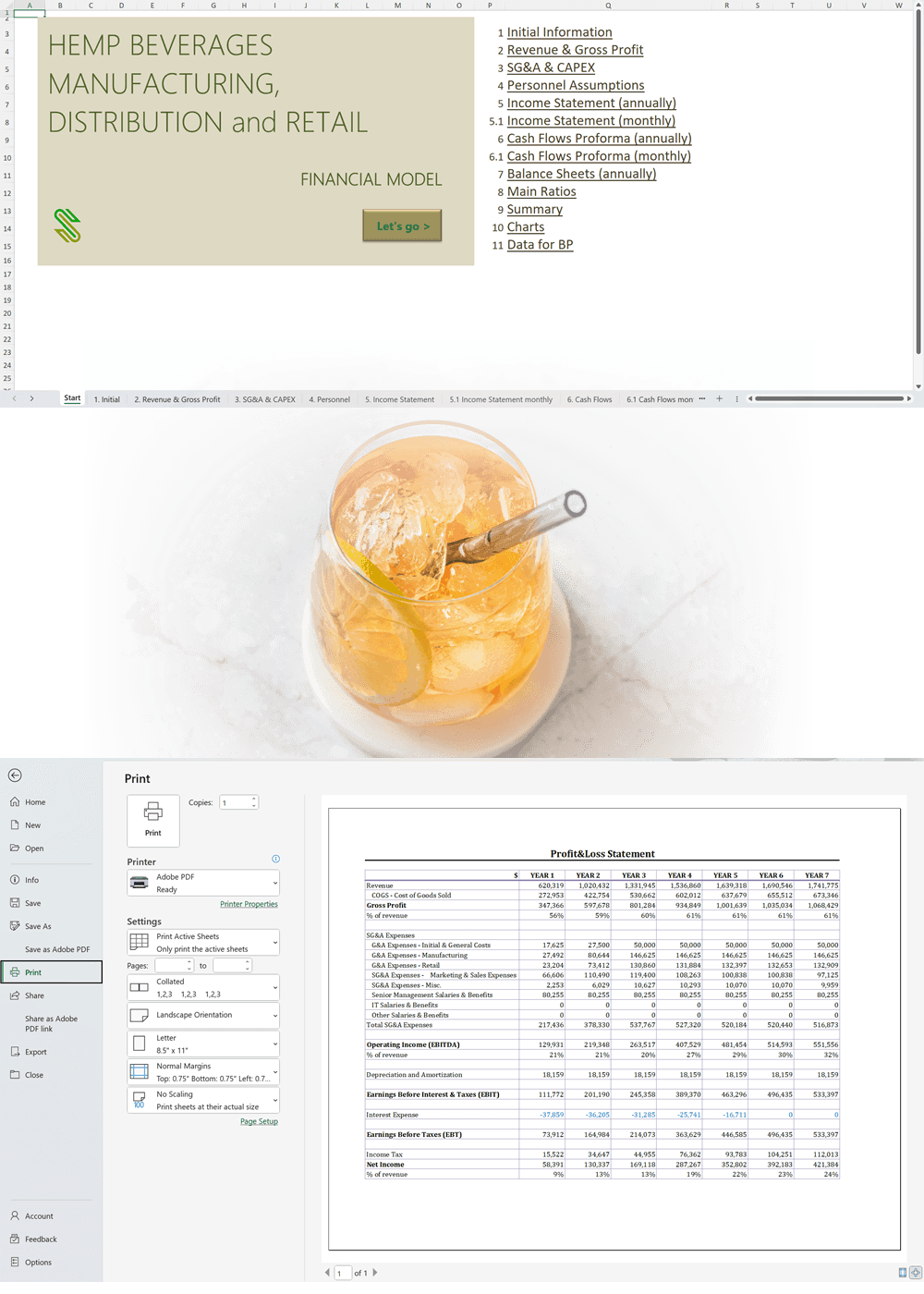
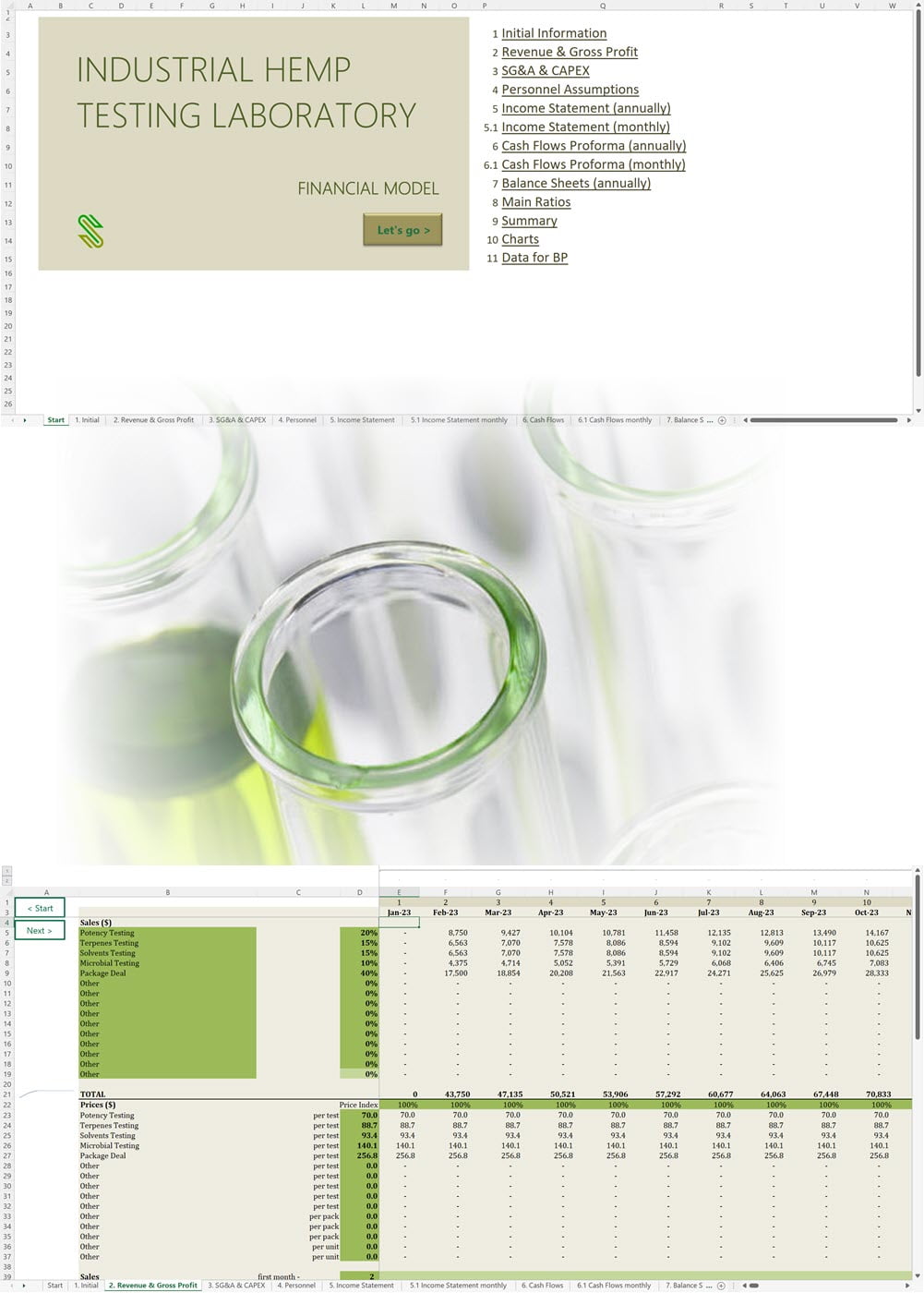
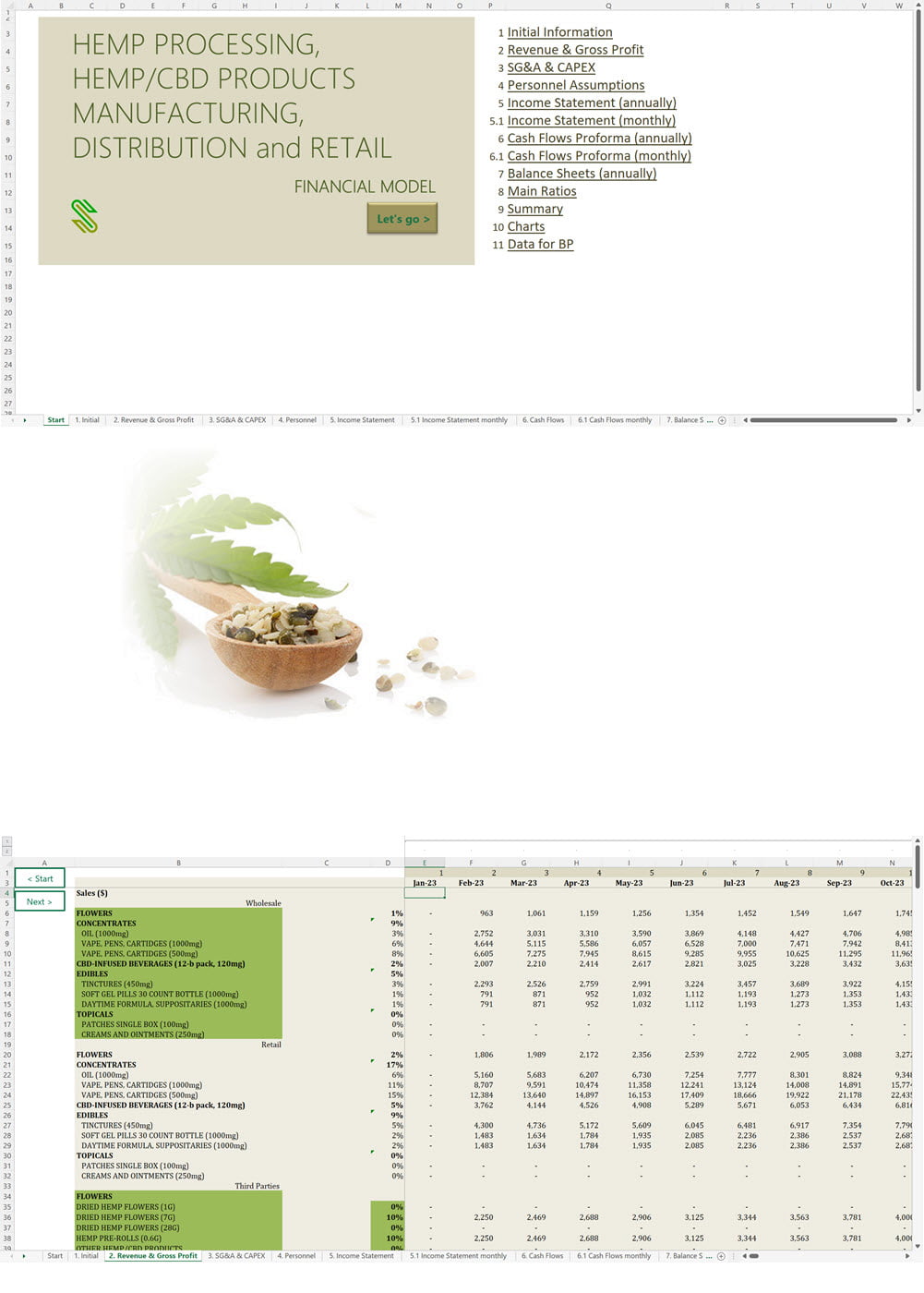
- Excel Financial Model: change variables and immediately see the impact, break down operational and capital costs, know how much it will take to get into the business and the potential profits.
- Word Business Plan: value proposition, market analysis, marketing strategy, operating plan, organizational structure, financial plan and more.
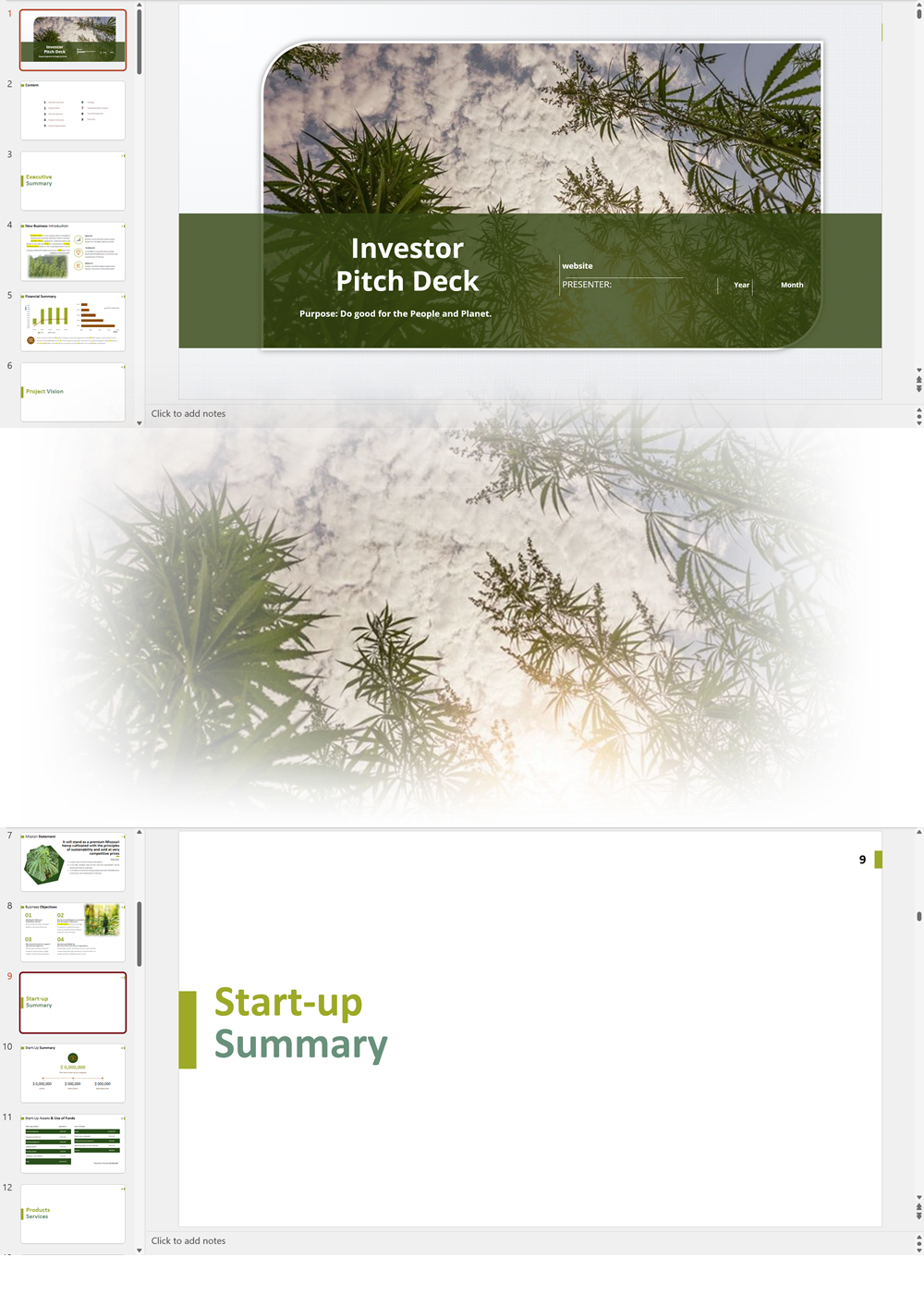
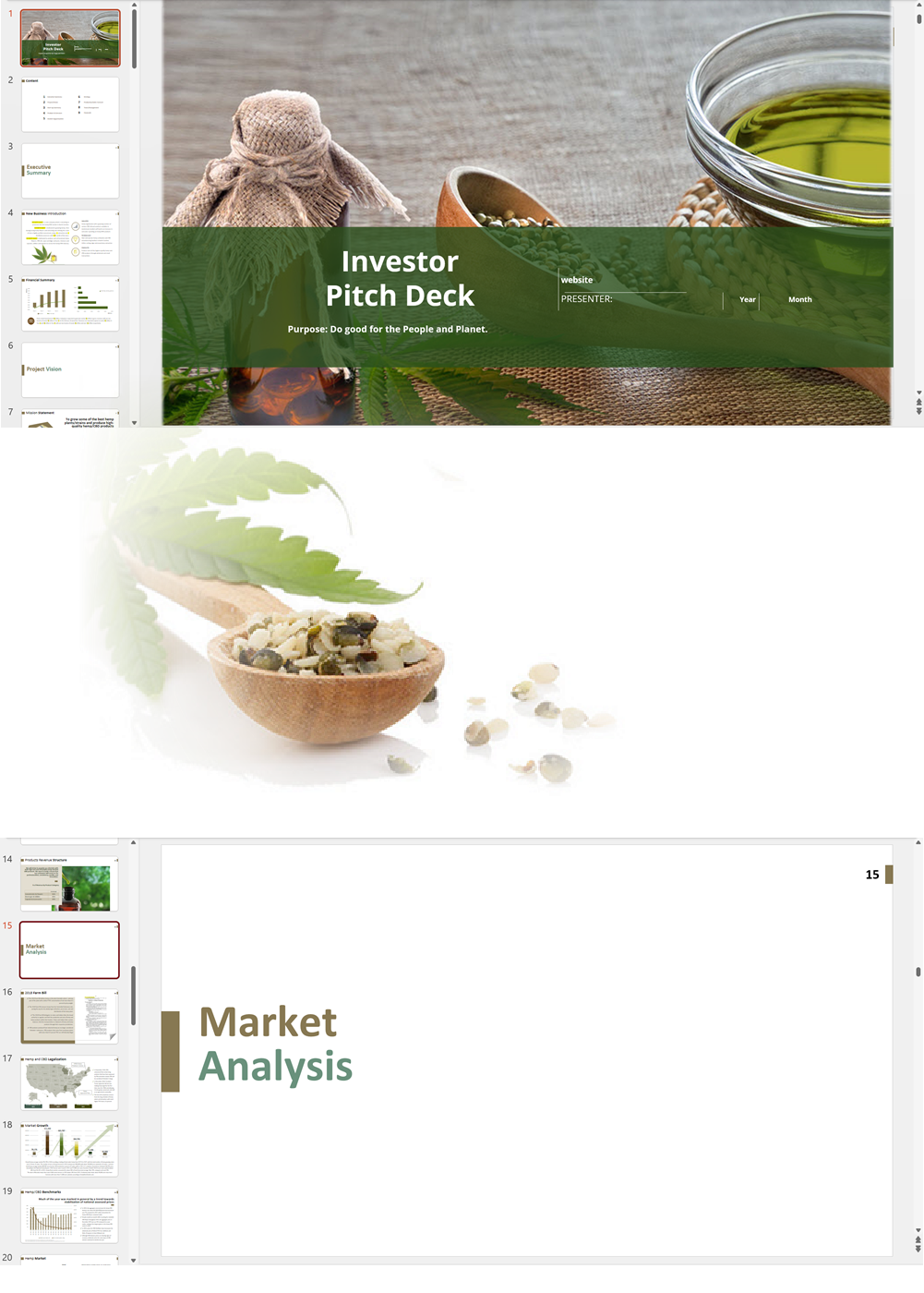
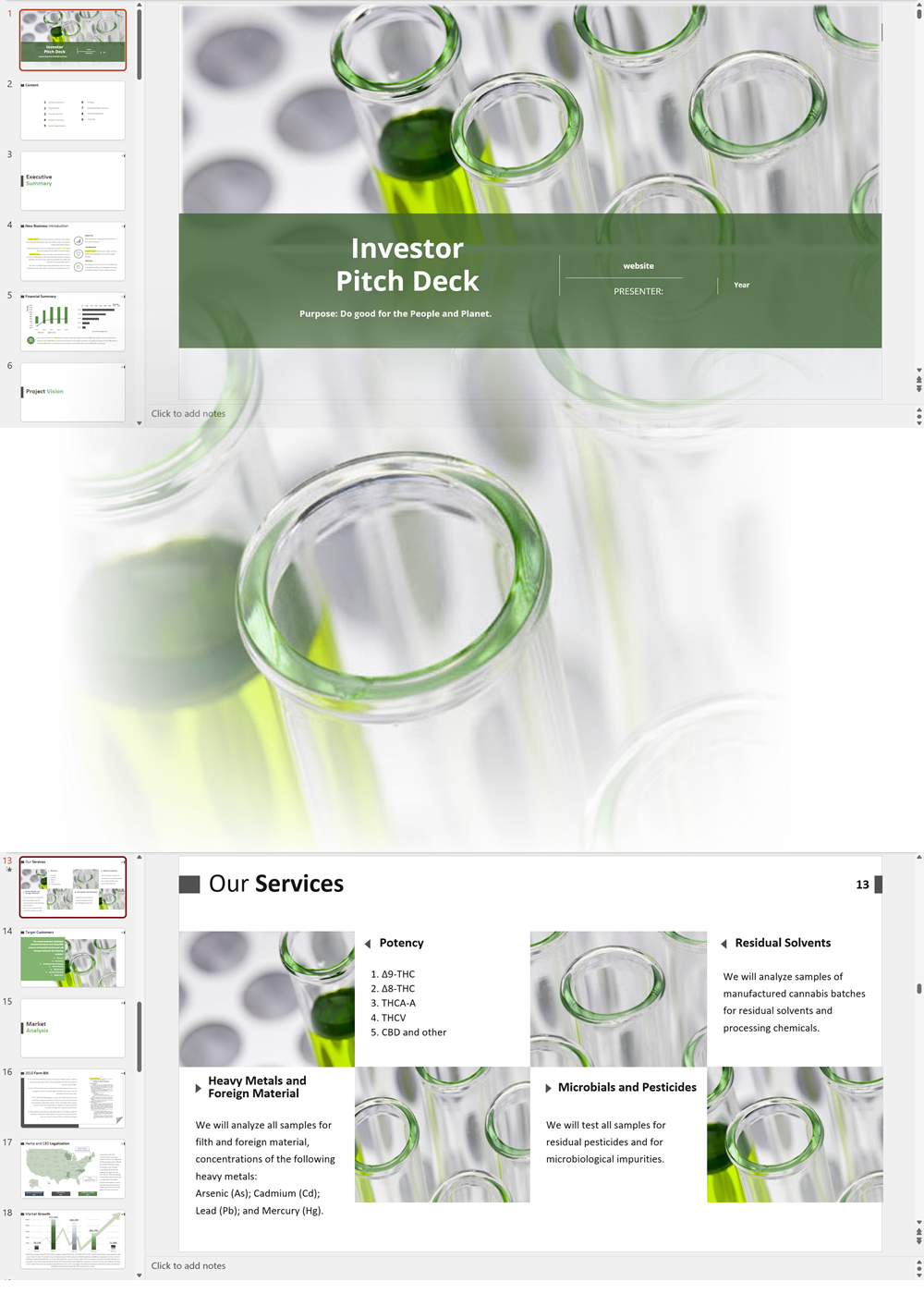
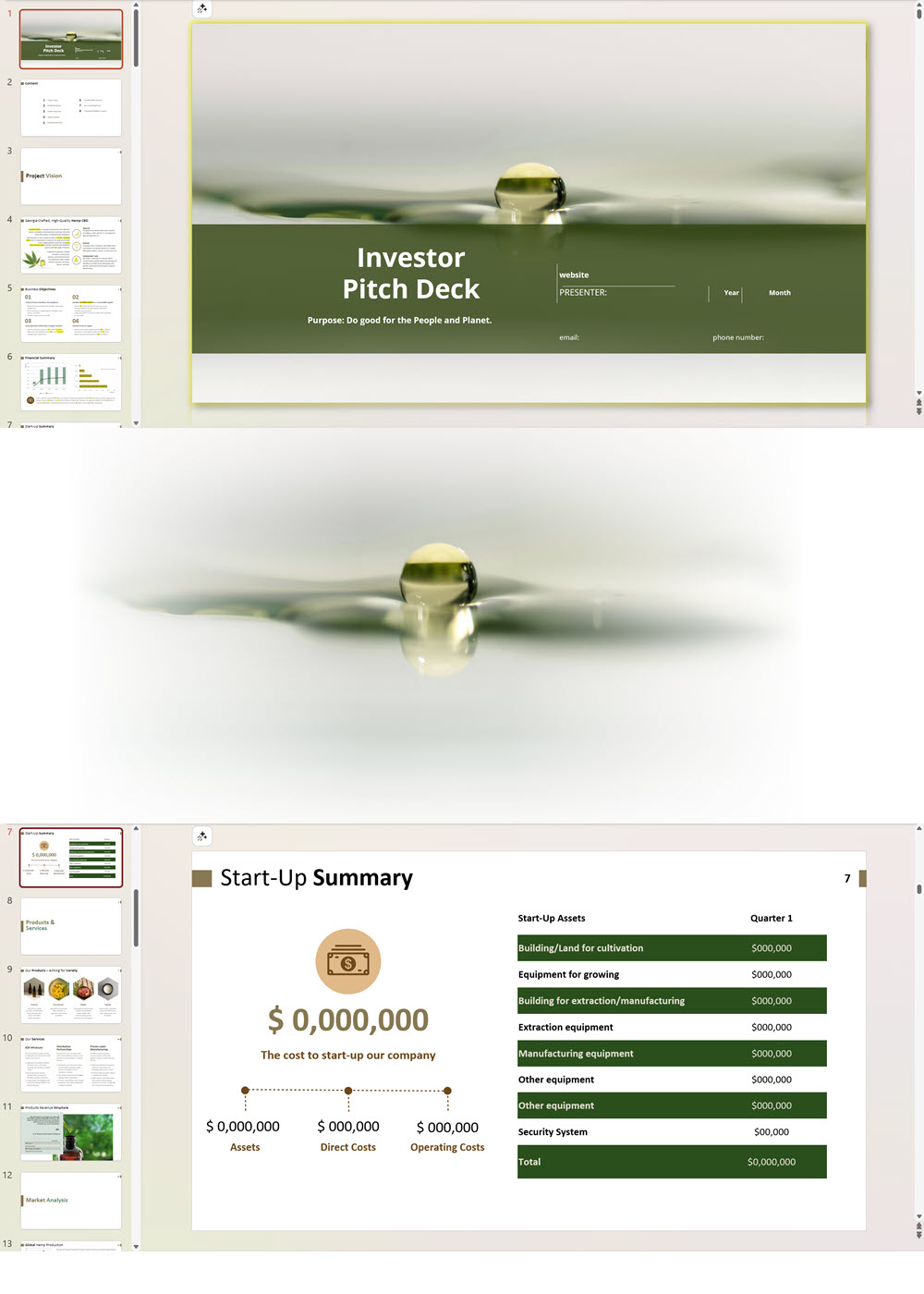
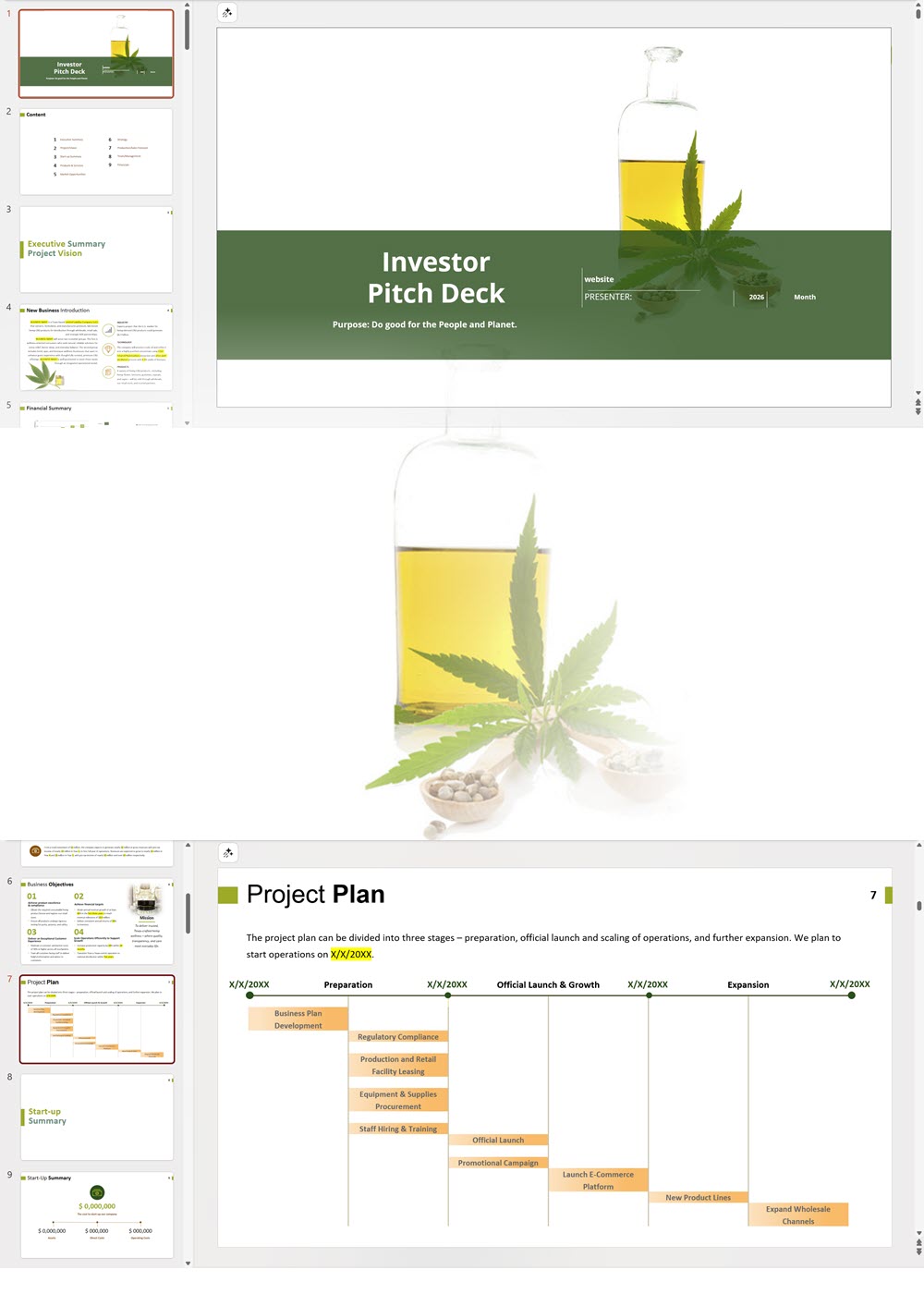
- PowerPoint Pitch Deck: provide a quick overview of your hemp CBD business plan.
'70% ready to go' business plan templates
Our hemp/CBD financial models and business plan templates will help you estimate how much it costs to start and operate your own hemp/CBD business, to build all revenue and cost line-items monthly over a flexible seven year period, and then summarize the monthly results into quarters and years for an easy view into the various time periods. We also offer investor pitch deck templates.
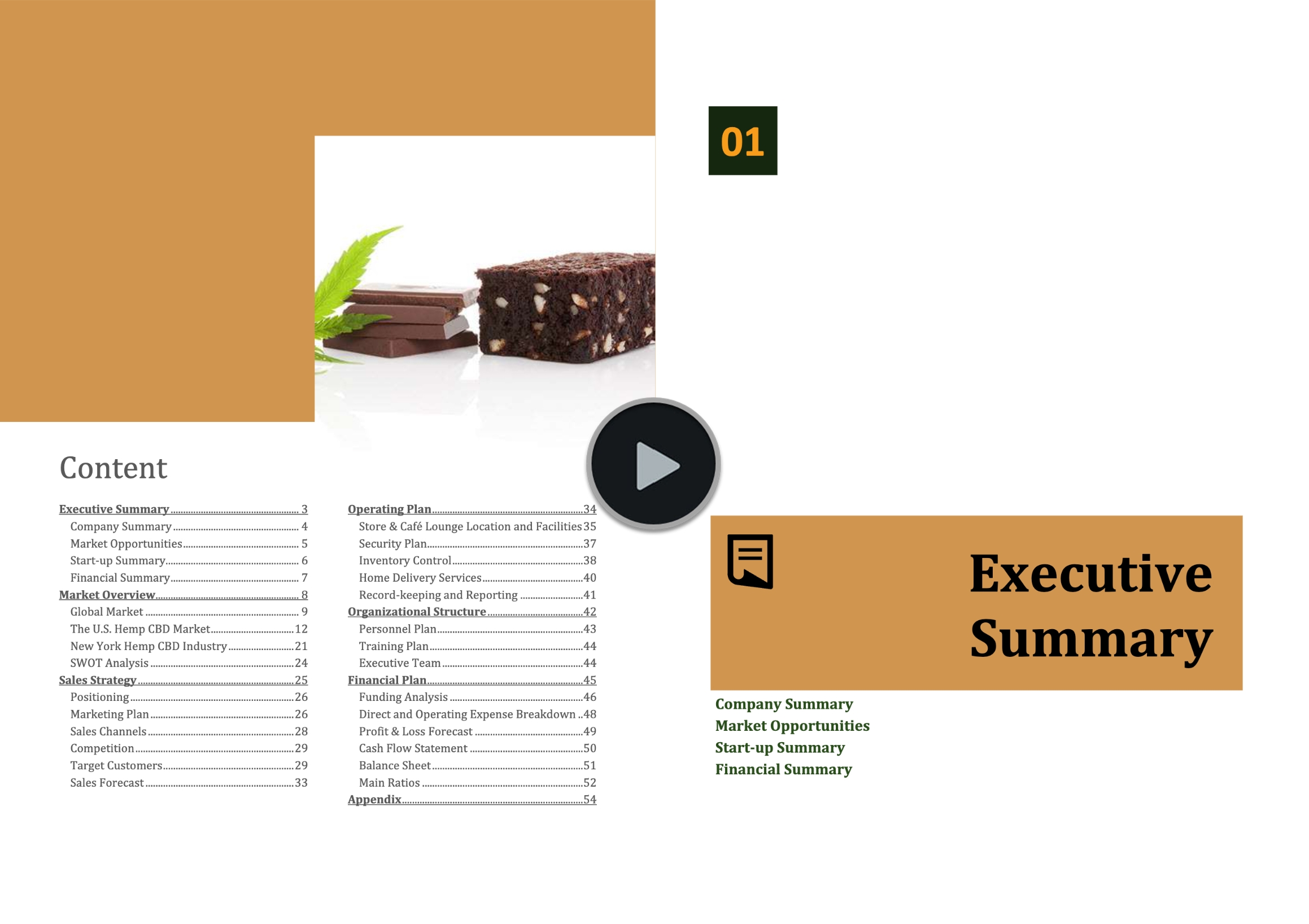
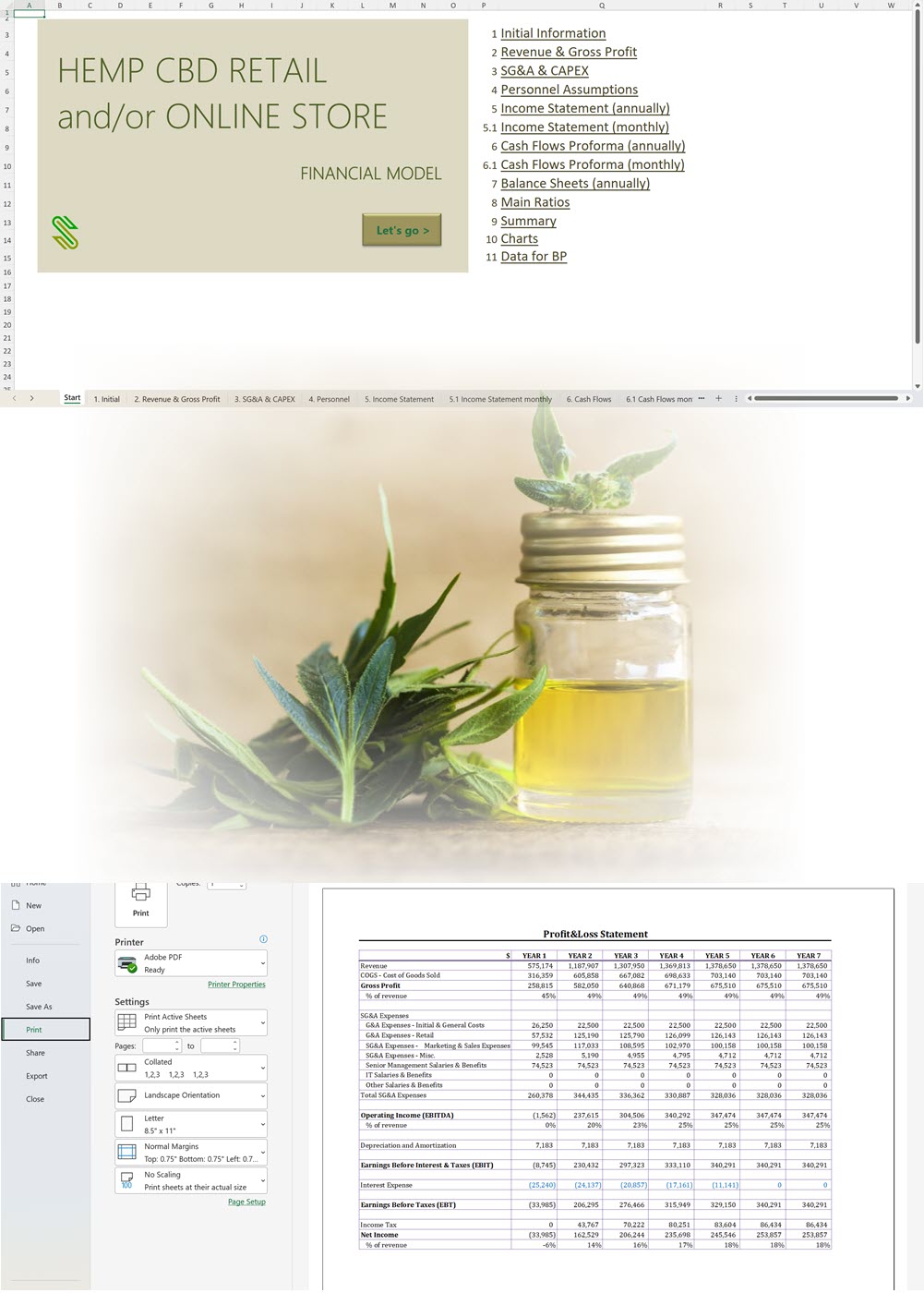
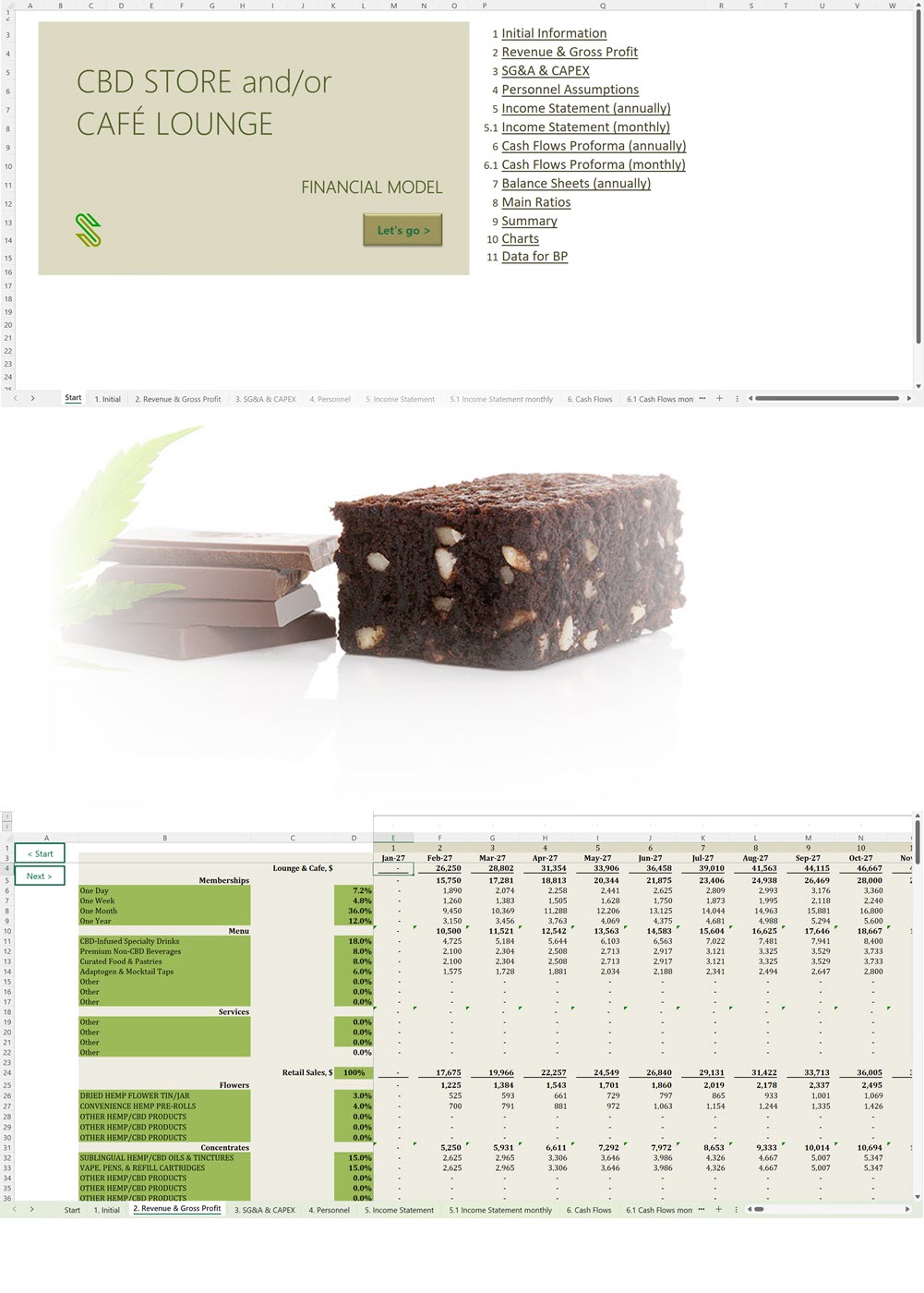
Hemp/CBD Products Retail and Lounge Business Plan Template Sample, New York
Best Selling Templates
-

Hemp Cultivation Business Plan Template
Price range: $75.00 through $275.00 Select options This product has multiple variants. The options may be chosen on the product page -

Hemp CBD Financial Model All in One
$200.00 Select options This product has multiple variants. The options may be chosen on the product page -
CBD Retail Investor Pitch Deck Template
$75.00 Select options This product has multiple variants. The options may be chosen on the product page
We also offer cannabis business plan templates at cannabusinessplans.com.
Our Templates
CBD Store and/or Cafe Lounge Business Plan Template
Price range: $75.00 through $275.00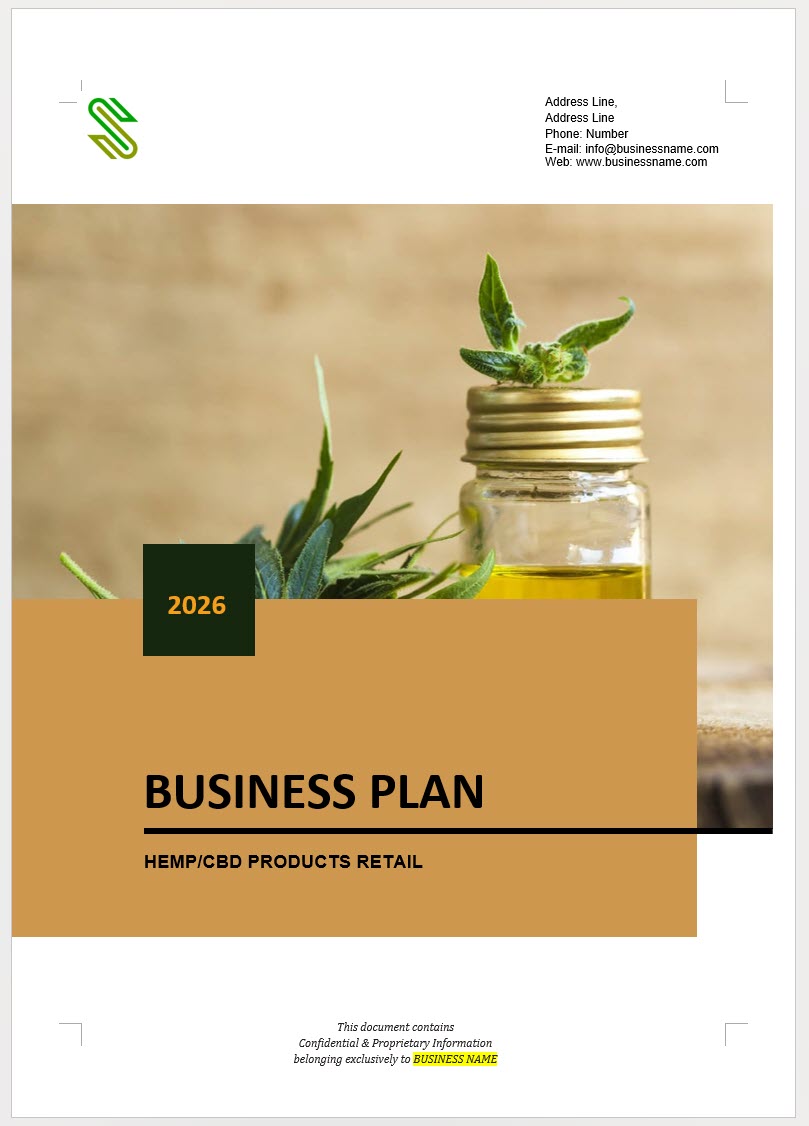
CBD Products Retail/Online Store Business Plan Template
Price range: $75.00 through $275.00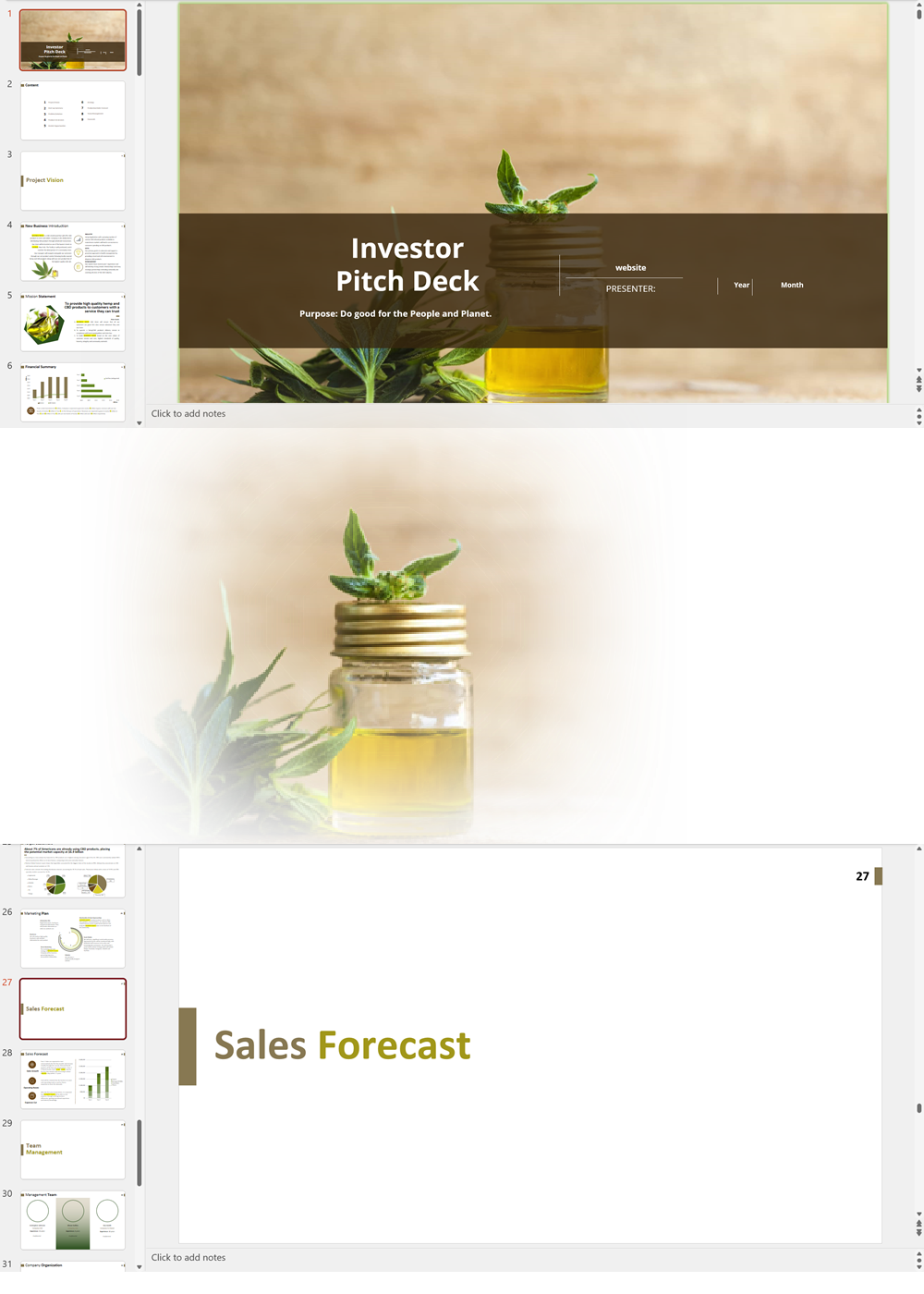
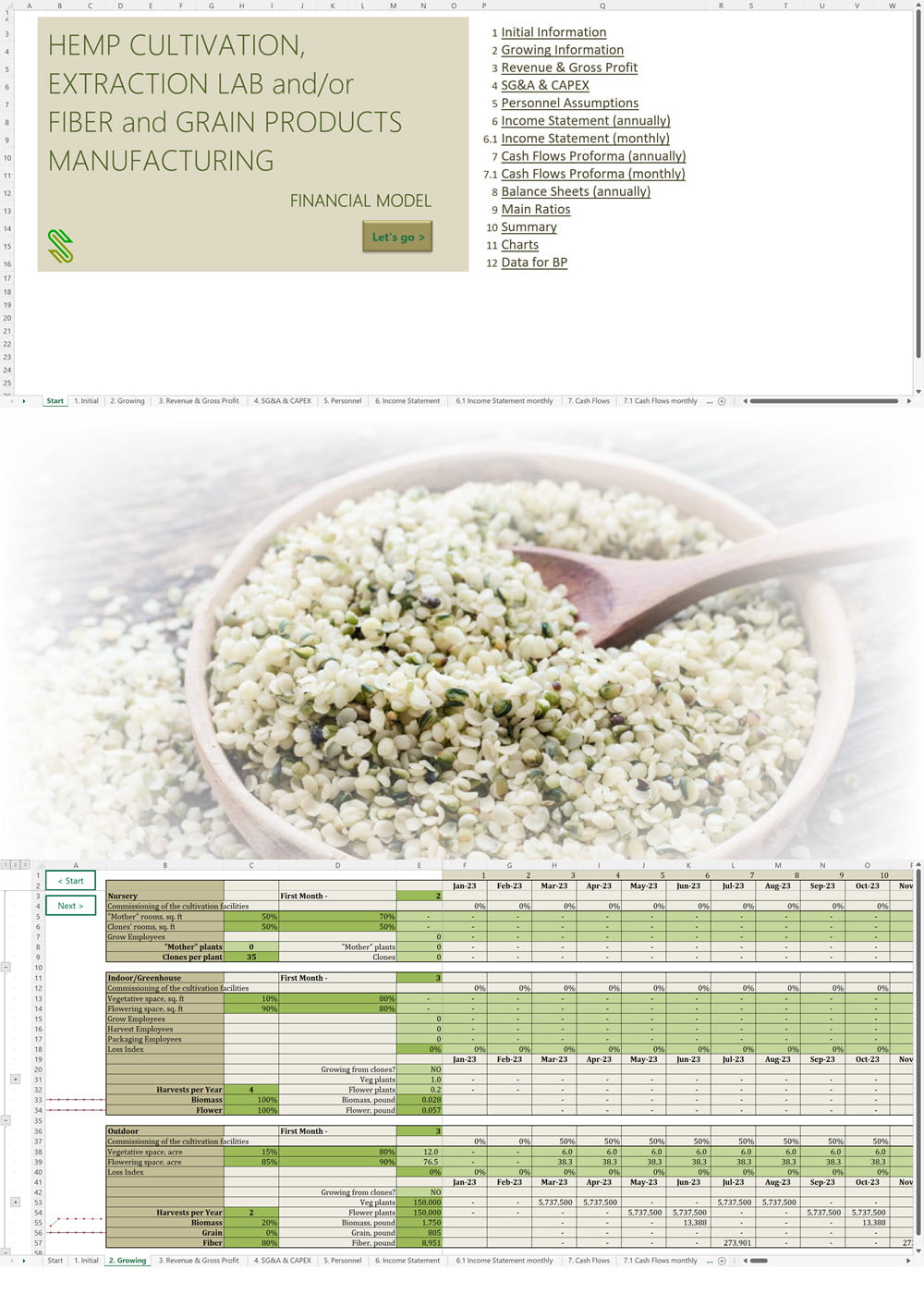
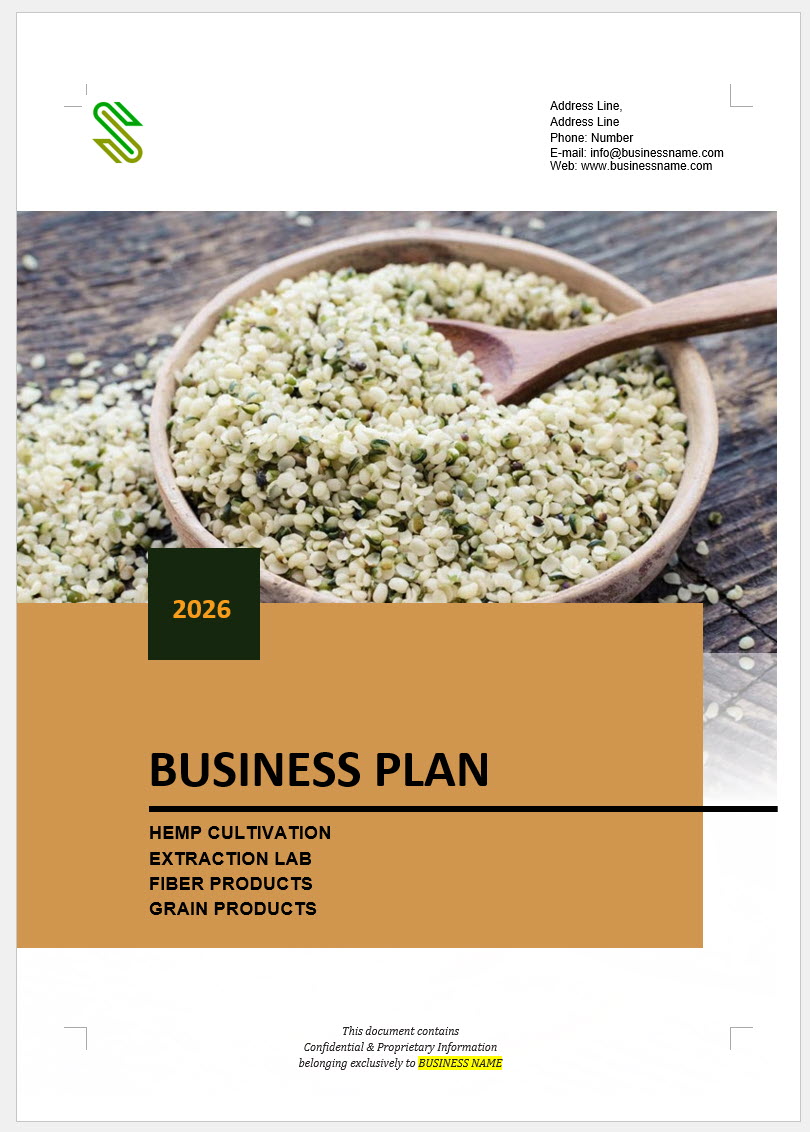
Hemp (Biomass, Fiber, Grain) Cultivation and Processing/ Manufacturing Business Plan Template
Price range: $75.00 through $350.00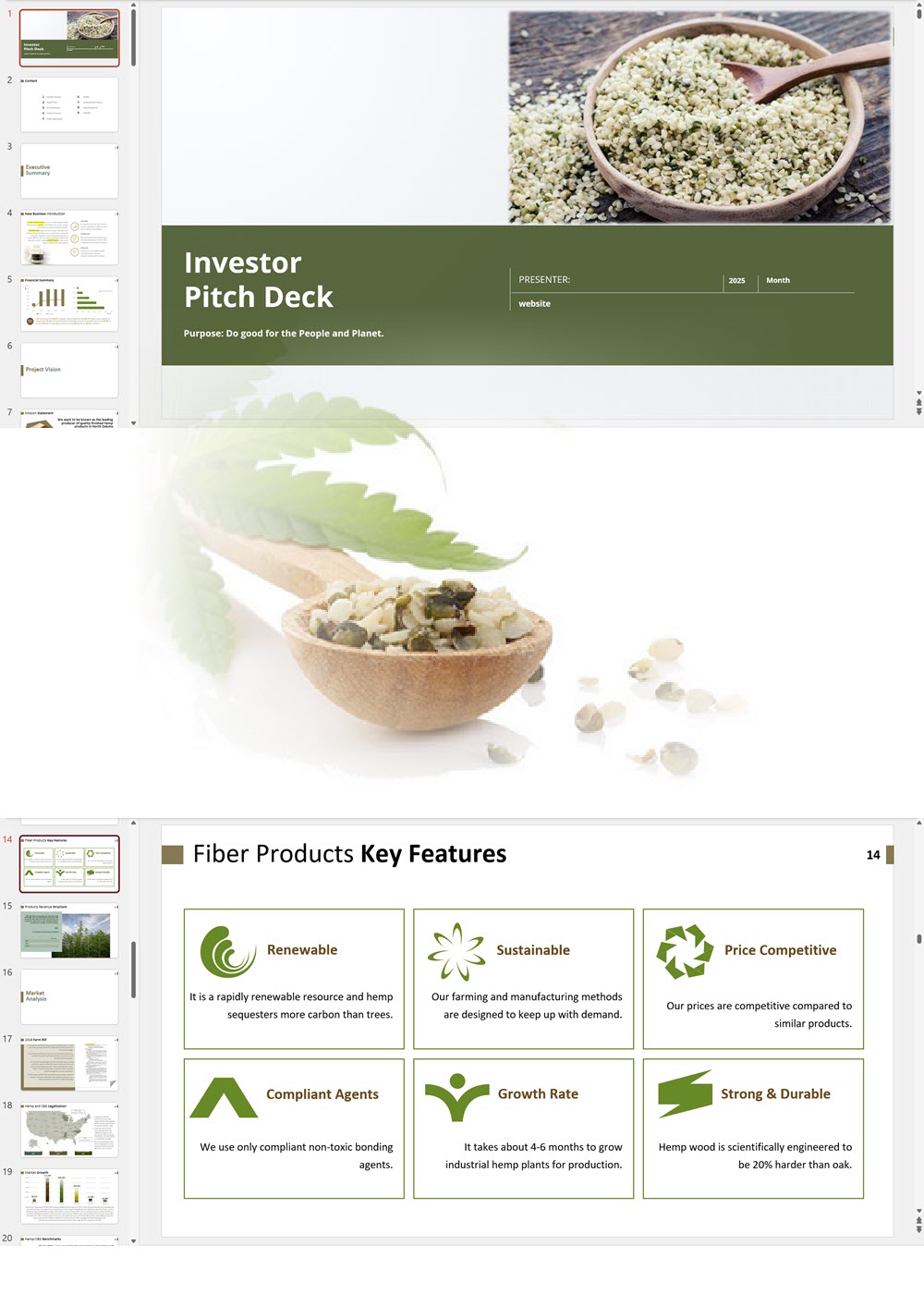
Hemp Cultivation and CBD Oil Extraction and/or Fiber Products Business Plan Template
Price range: $75.00 through $350.00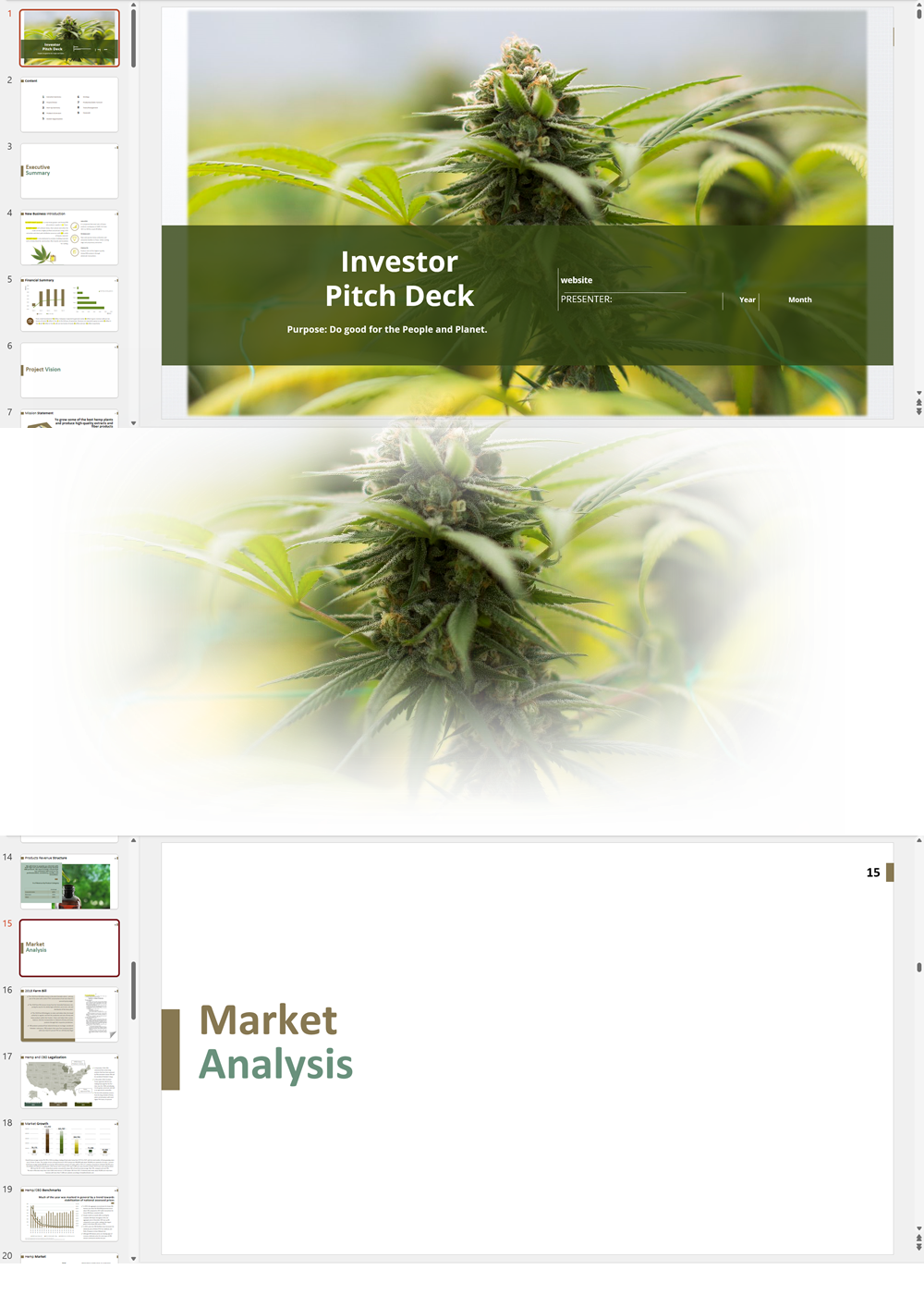
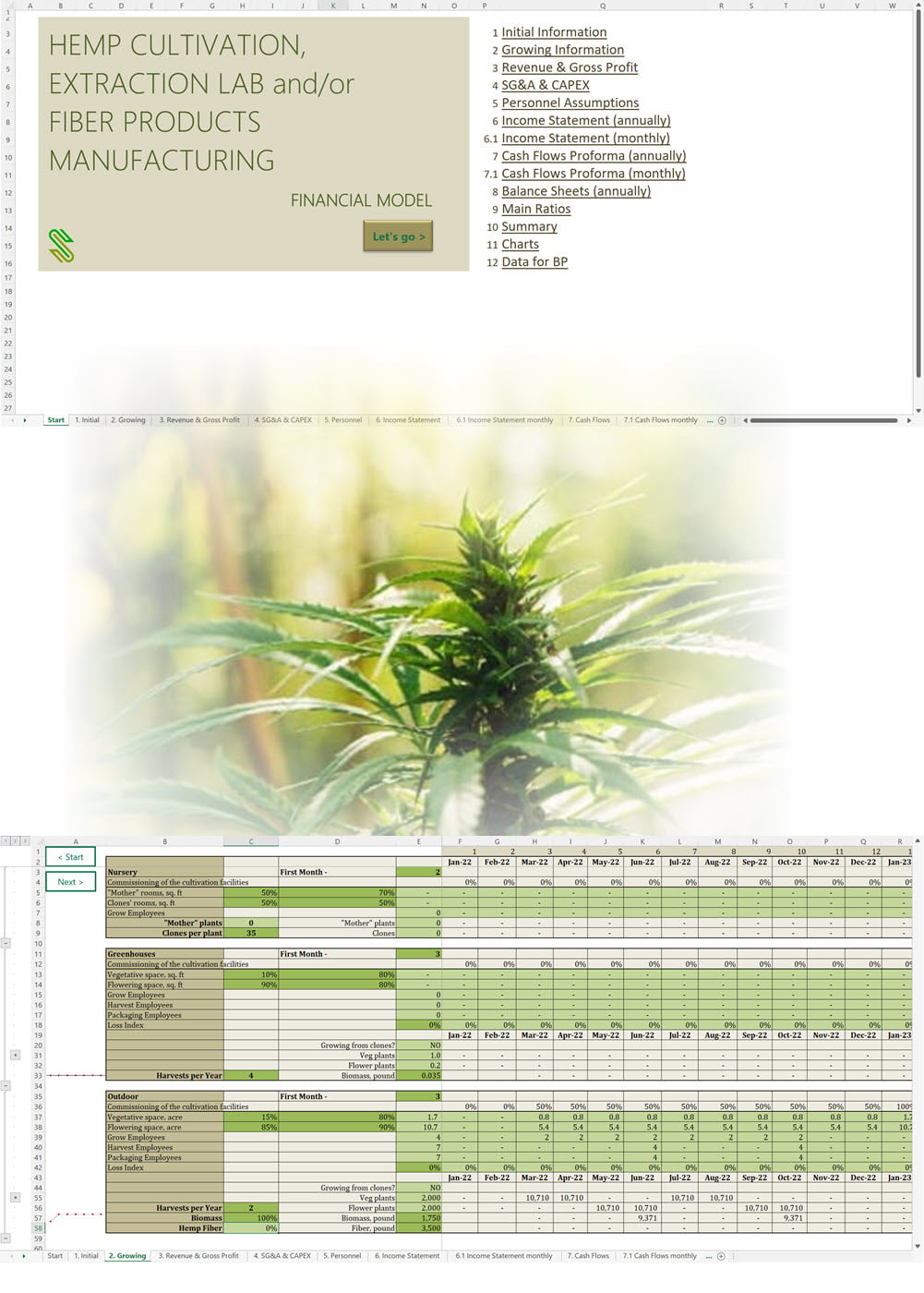
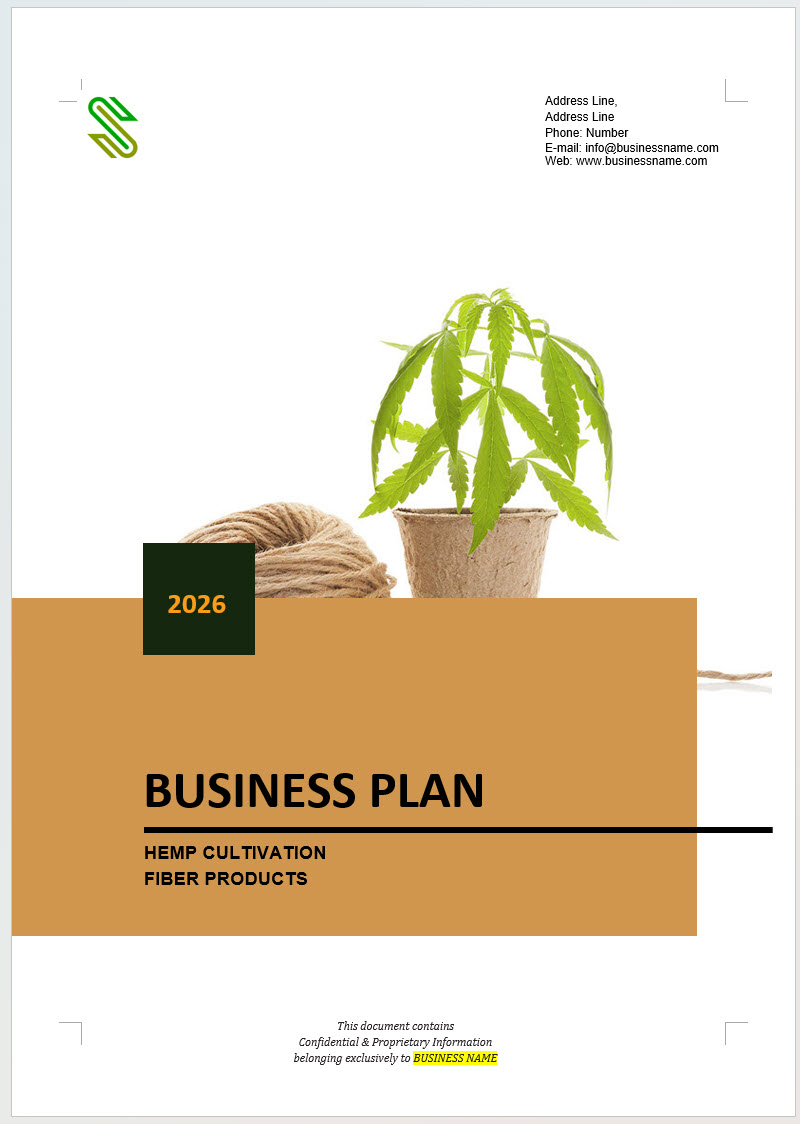
Hemp Fiber Growing and Manufacturing Business Plan Template
Price range: $75.00 through $275.00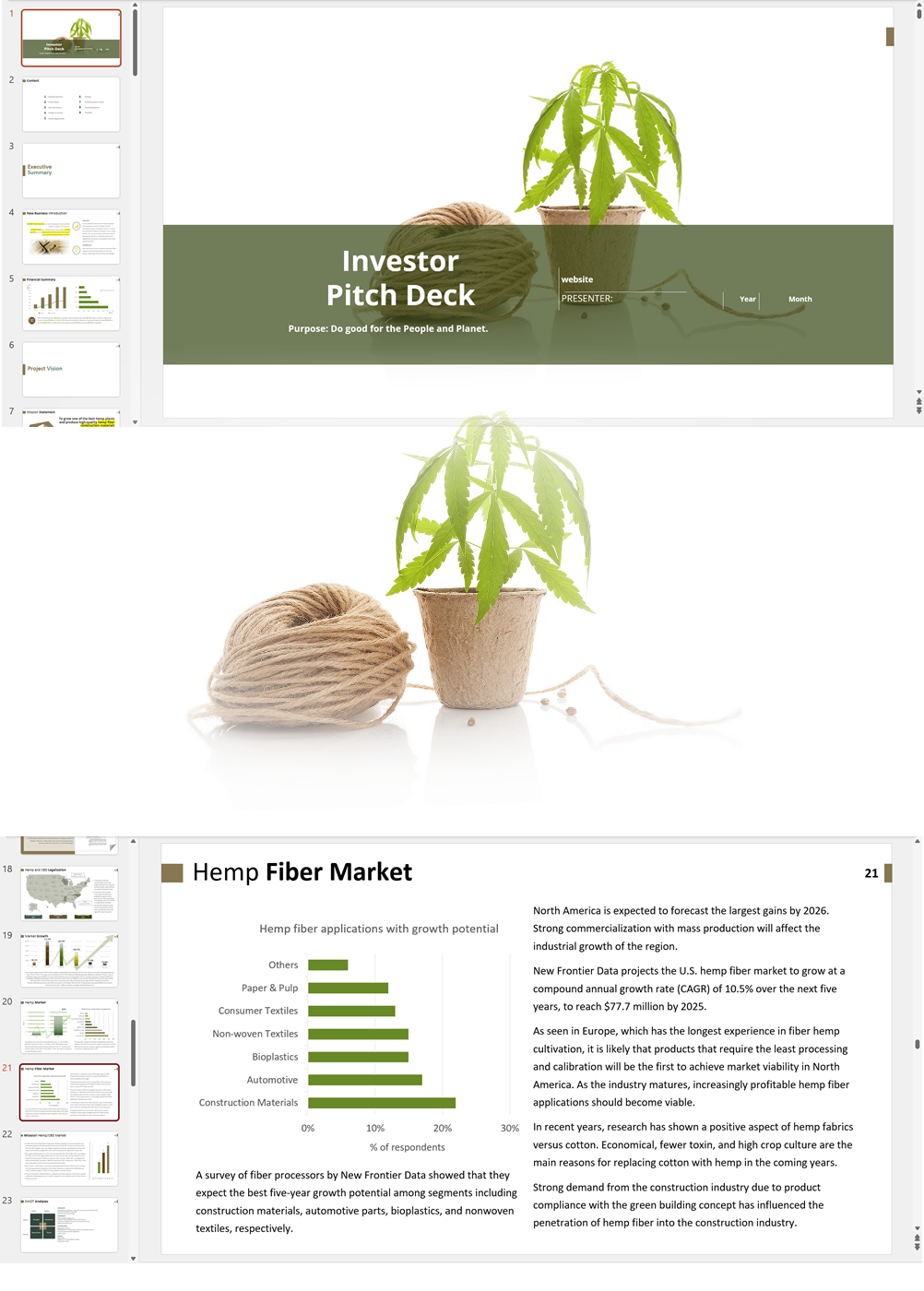
Hemp Cultivation + Extraction + Manufacturing Business Plan Template
Price range: $75.00 through $450.00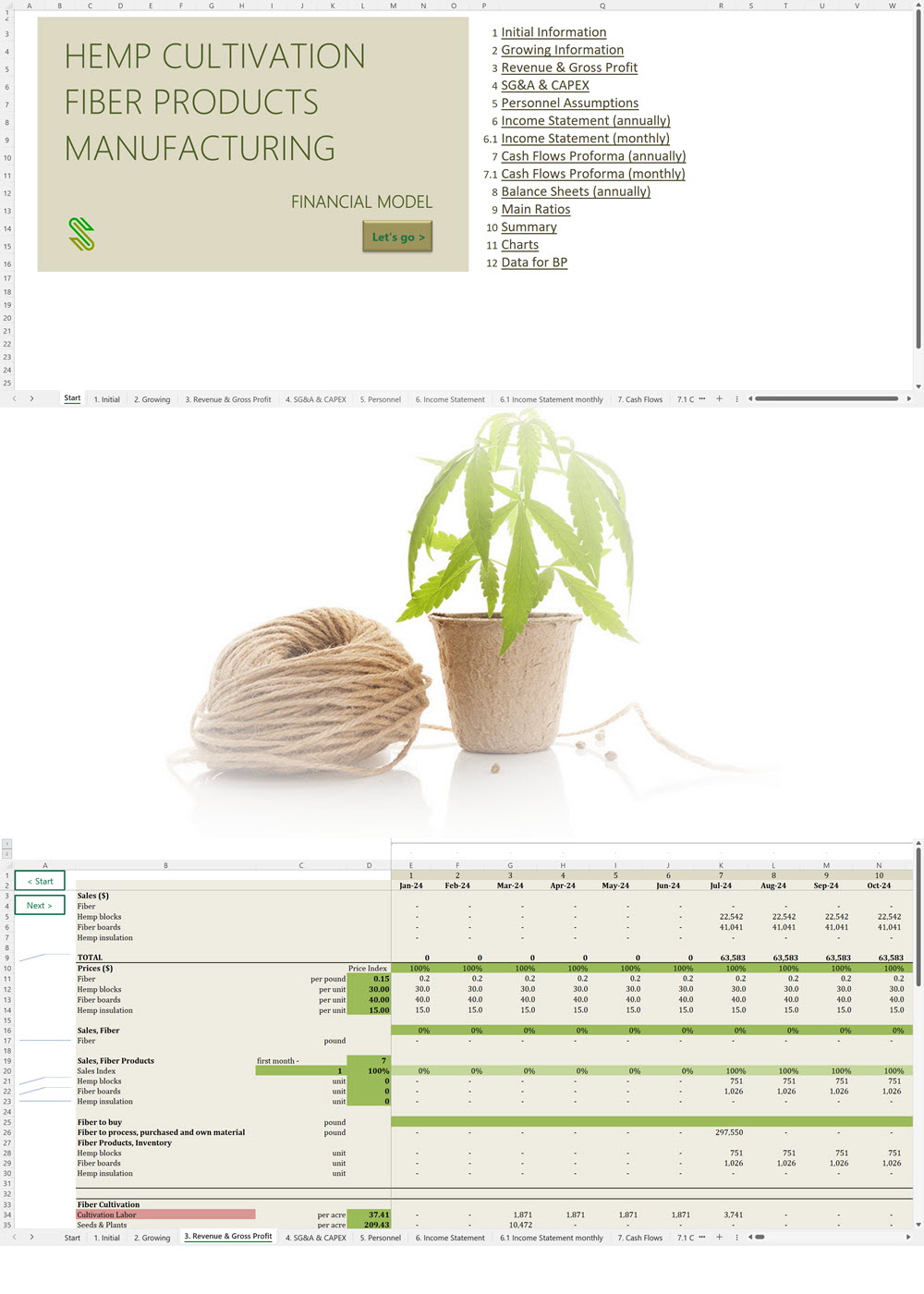
Hemp CBD Extraction + Manufacturing + Retail Business Plan Template
Price range: $75.00 through $450.00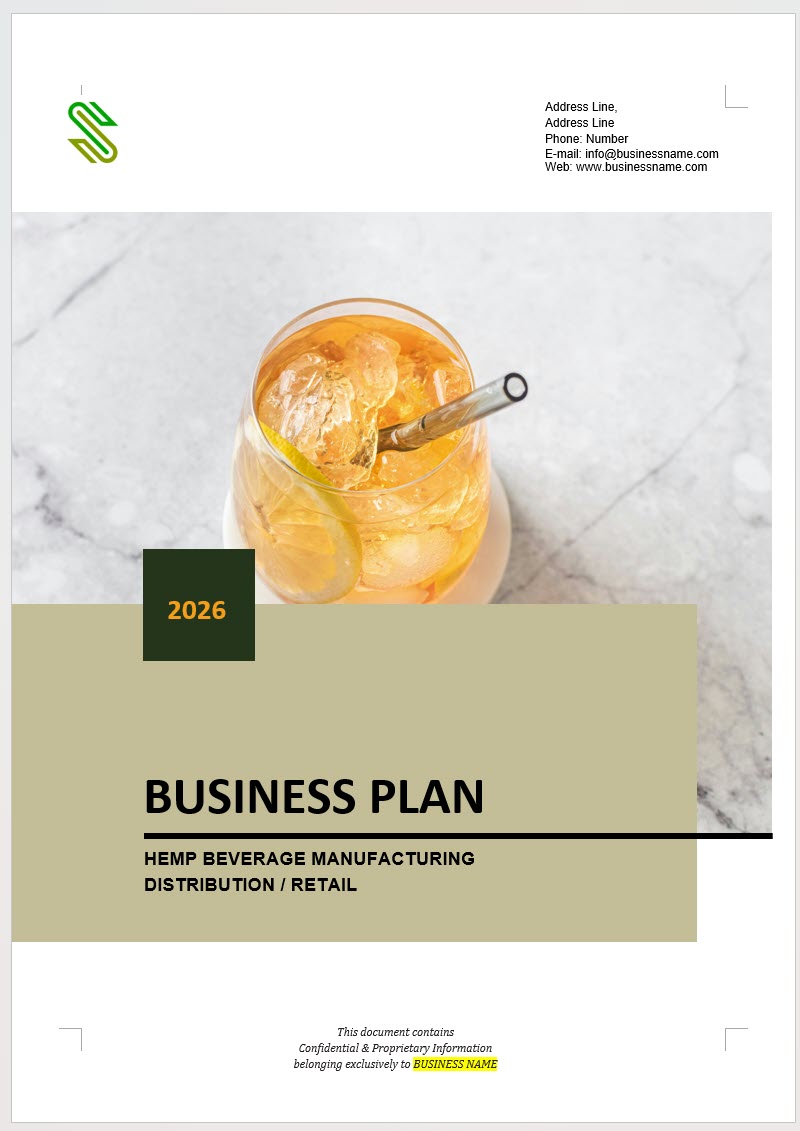
Hemp CBD Beverage Manufacturing, Wholesale and/or Retail Business Plan Template
Price range: $75.00 through $350.00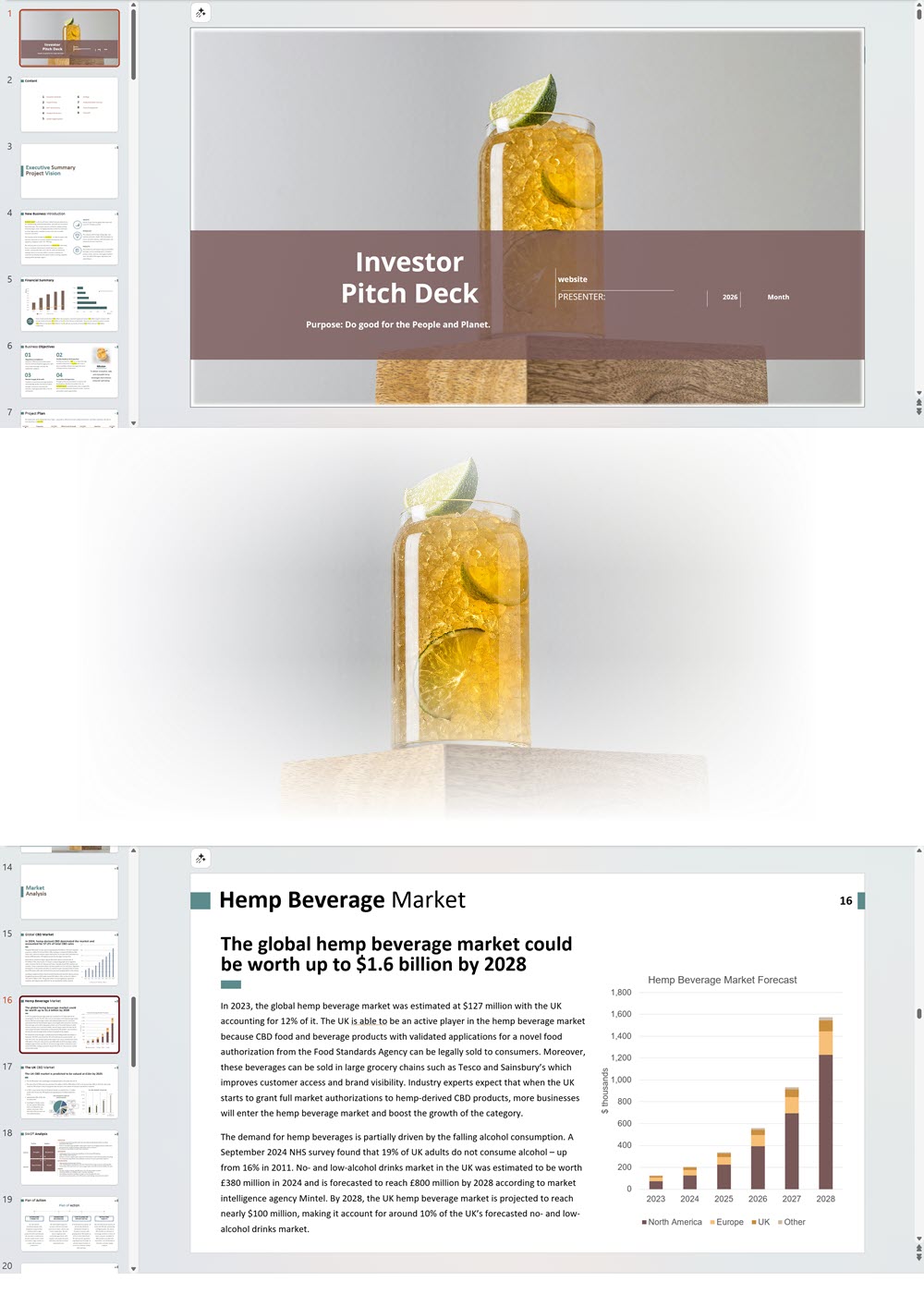
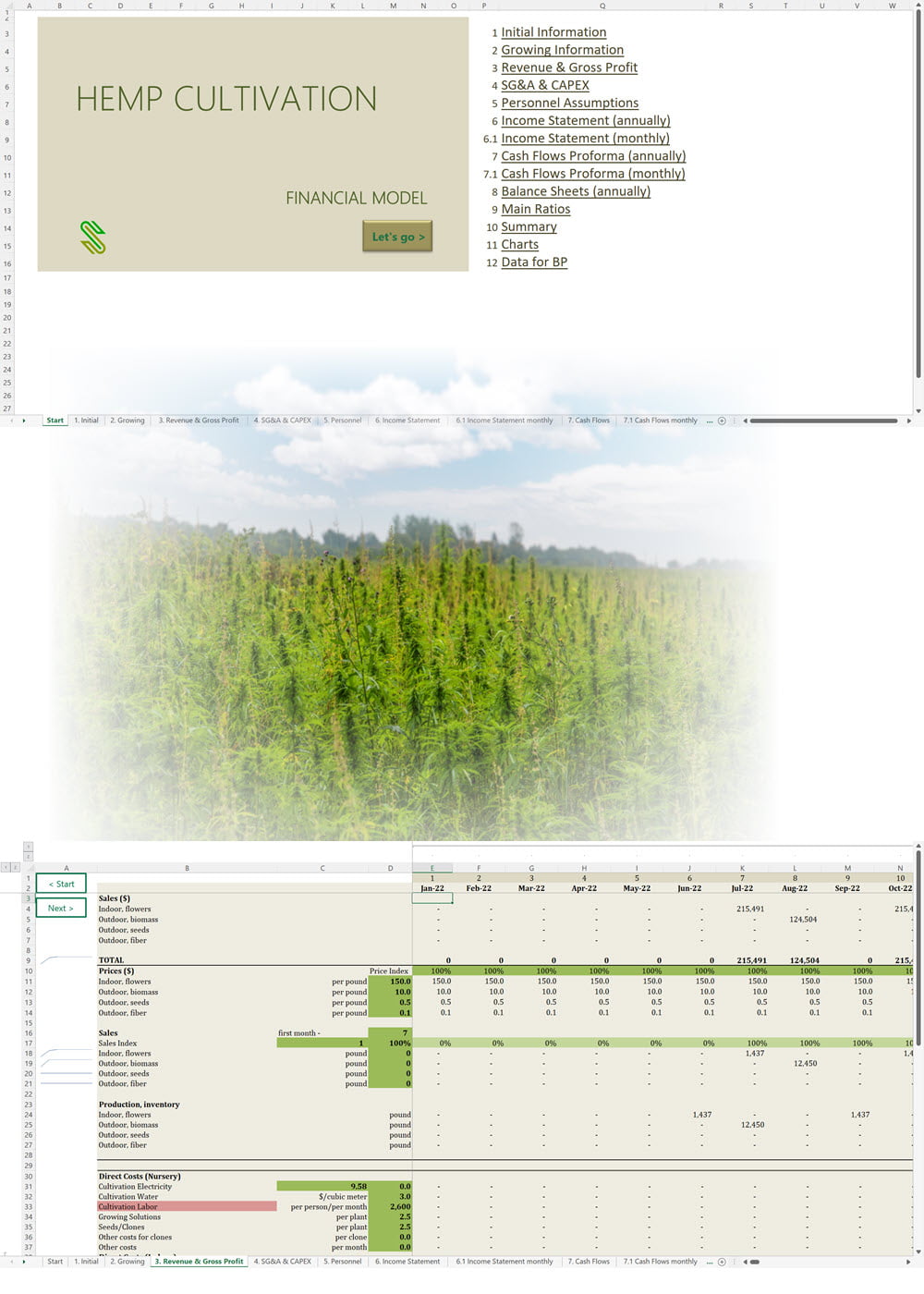
Hemp Cultivation Financial Model
$100.00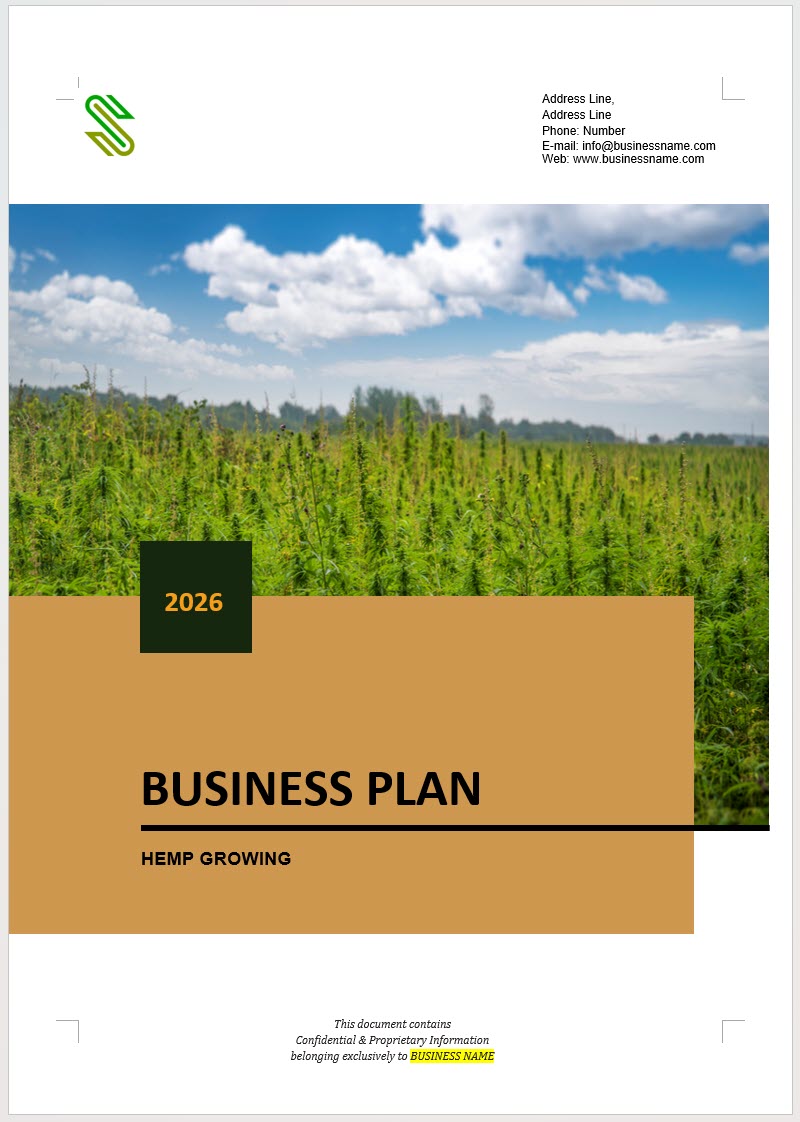
Hemp Cultivation Business Plan Template
Price range: $75.00 through $275.00